Small businesses face unprecedented operational complexity in 2026, juggling multiple software tools, manual processes, and growing customer demands while competing against larger enterprises with sophisticated systems. The question isn’t whether ERP for small businesses is necessary anymore, it’s whether they can afford to operate without it.
Modern ERP solutions have evolved far beyond the expensive, complex systems that once required massive IT departments and six-figure budgets. Today’s cloud-based platforms offer modular, scalable functionality that transforms how small businesses manage everything from customer relationships to project execution, often at a fraction of traditional costs.
Why small businesses need better operations in 2026
Small businesses operating in 2026 face operational challenges that would have been unimaginable just a few years ago. Customer expectations for rapid response times, transparent communication, and seamless service delivery have reached enterprise levels, regardless of company size.
Data fragmentation represents another critical challenge. Without proper ERP for small businesses, data becomes fragmented across multiple tools: customer information lives in one system, project details in another, and financial data in a third, businesses lose visibility into their operations. This fragmentation leads to missed opportunities, duplicated work, and errors that damage customer relationships and profitability.
What makes modern ERP for small businesses different
Modern ERP software bears little resemblance to the monolithic systems that dominated the market a decade ago. Today’s solutions prioritize user experience, rapid implementation, and modular functionality that grows with business needs.
Integration capabilities have transformed dramatically. Modern ERP for small businesses connect seamlessly with existing business tools through APIs and pre-built connectors, allowing businesses to maintain their preferred applications while centralizing data management. This flexibility eliminates the need to replace every system simultaneously, reducing implementation risk and user resistance.
AI-powered intelligence
Artificial intelligence integration represents the most significant advancement in ERP technology. AI-powered ERP for small businesses now provide instant answers to business questions, automated task creation, and predictive insights that were previously available only to enterprises with dedicated business intelligence teams.
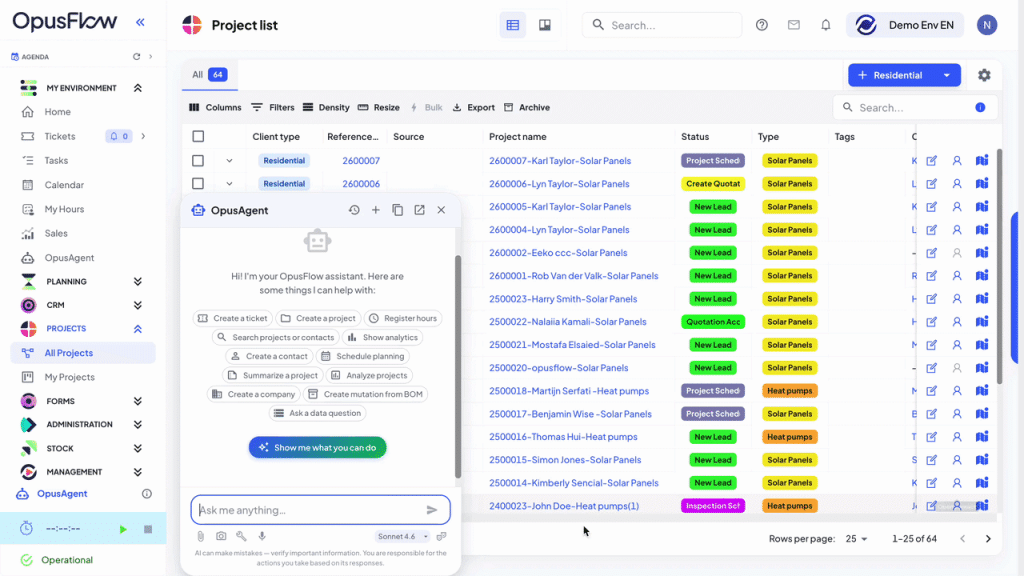
How ERP software transforms small business operations
ERP for small businesses improves financial visibility through integrated invoicing, expense tracking, and reporting capabilities. Business owners gain real-time insights into cash flow, project profitability, and operational costs without waiting for month-end reports or manual data compilation.
Workflow automation benefits
Automation capabilities eliminate repetitive administrative tasks that consume valuable time. Sales processes become more consistent when leads automatically enter the system, tasks generate based on deal progression, and follow-up reminders ensure no opportunities slip through the cracks.
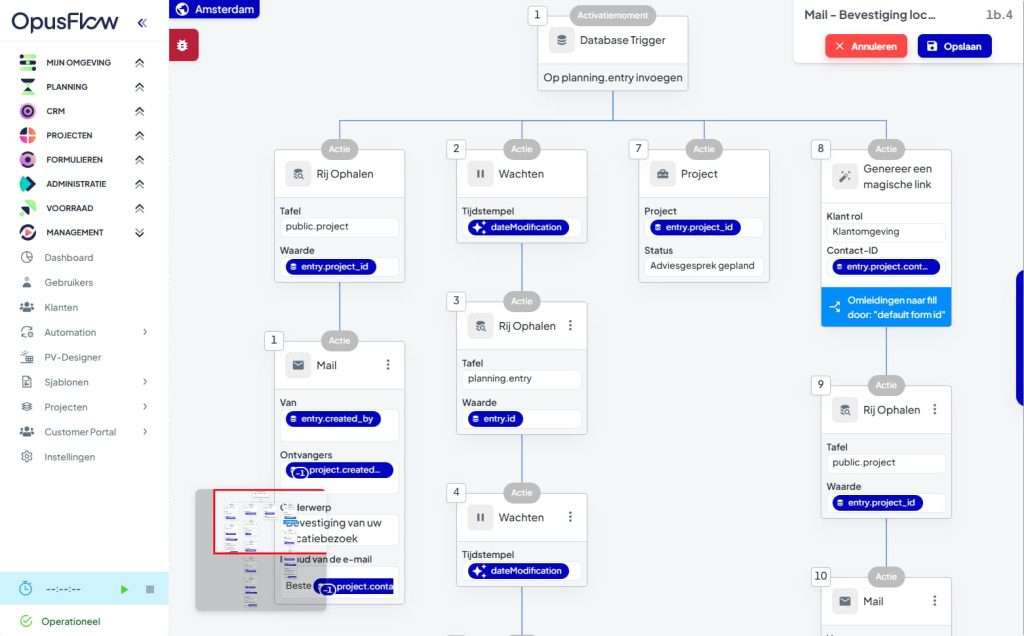
Common ERP implementation challenges for small teams
Budget and resource constraints
One Platform to Run Your Entire Installation Business
Manage leads, projects, stock, and invoicing — everything in one smart system built for sustainable installers.

Choosing the right ERP for small businesses
Industry-specific functionality provides immediate value for businesses in specialized sectors. Generic ERP for small businesses require extensive customization to handle industry-specific workflows, while purpose-built solutions include relevant features and best practices from day one.
Evaluation criteria
How OpusFlow helps small installation companies scale operations
OpusFlow provides a comprehensive ERP specifically designed for sustainable installation companies, addressing the unique operational challenges faced by businesses in the solar, heat pump, and renewable energy sectors. Our platform eliminates the need for multiple software tools by integrating every aspect of your business operations into one streamlined system.
- Automated sales pipeline management with intelligent task creation and deal tracking
- Integrated project management with real-time progress monitoring and resource allocation
- Smart planning capabilities that optimize technician schedules and reduce travel costs
- AI-powered business intelligence through OpusAI, providing instant answers to operational questions
- Seamless integration with existing tools while centralizing all business data
Our modular approach allows businesses to implement core functionality immediately while adding specialized features as operations grow. With dedicated onboarding support and industry-specific workflows built for installation companies, OpusFlow delivers faster implementation and a quicker return on investment than generic ERP solutions. Contact us or book a free demo today to discover how OpusFlow can transform your installation business operations.
Related Articles
- What factors affect how long a home battery lasts on a full charge?
- How do contractors manage subcontractors across different job sites?
- How does ERP software support solar panel installation companies specifically?
- How does ERP software help sustainable installers track their carbon footprint?
- What reporting capabilities should sustainable contractors expect from ERP?