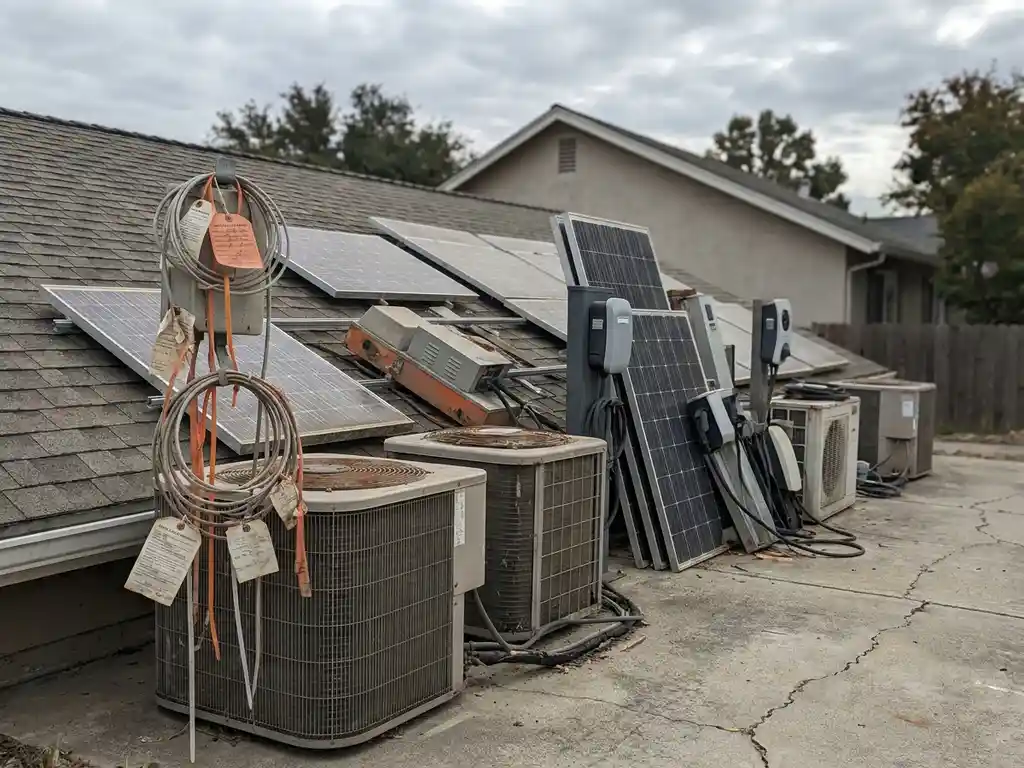
Installation companies across Europe are facing a critical challenge that’s costing them thousands in lost revenue and operational inefficiency. Despite investing heavily in sustainable technologies like solar panels, heat pumps, and EV charging stations, many businesses struggle to maintain accurate records of what equipment has been installed and where. This seemingly simple tracking problem creates cascading issues that impact everything from warranty claims to maintenance scheduling.
The consequences extend far beyond administrative inconvenience. When installation teams can’t quickly locate specific equipment or verify installation details, customer service suffers, compliance reporting becomes nearly impossible, and valuable assets essentially disappear from view. For sustainable installation companies managing hundreds or thousands of installations across multiple locations, this visibility gap represents a significant operational risk that demands immediate attention.
Common Installation Tracking Failures That Cost Companies
Installation tracking failures typically stem from three critical breakdowns that compound over time. The most damaging occurs when companies rely on disconnected systems that don’t communicate with each other, creating information silos where installation data becomes trapped in individual departments or project files.
Paper-based documentation represents another major failure point, especially when installation teams work across multiple job sites. Physical documents get lost, damaged, or filed incorrectly, while critical details like serial numbers, installation dates, and configuration settings disappear entirely. Even when companies attempt digital documentation, inconsistent data entry standards mean that searching for specific installations becomes nearly impossible.
The third common failure involves inadequate handoff processes between sales, installation, and service teams. When project information doesn’t transfer completely between departments, installations get completed without proper documentation reaching the maintenance or customer service teams. This breakdown becomes particularly costly when warranty issues arise or customers require service calls months after installation.
These tracking failures create measurable business impacts including extended service call times, duplicate equipment orders, missed maintenance schedules, and compliance reporting difficulties. Companies often discover these problems only when attempting to scale operations or when external audits reveal gaps in their installation records.
How Manual Processes Create Asset Visibility Gaps
Manual asset tracking processes create systematic visibility gaps that worsen as installation volumes increase. Spreadsheet-based systems, while initially manageable for small operations, become unreliable when multiple team members attempt simultaneous updates or when data entry occurs across different locations and time zones.
The human element introduces additional complications through inconsistent naming conventions, abbreviated notes, and incomplete field documentation. Installation technicians working under time pressure may skip detailed documentation steps, while office staff attempting to reconstruct installation details from incomplete field reports often make assumptions that create inaccurate records.
Email-based communication compounds these issues by scattering installation updates across individual inboxes rather than maintaining centralized records. Critical information about equipment changes, installation modifications, or customer requests gets buried in email threads that become impossible to search effectively. When team members leave the company, their email archives take valuable institutional knowledge with them.
Geographic distribution amplifies manual process problems for companies operating across multiple regions. Local teams develop their own documentation shortcuts and filing systems, creating inconsistencies that make company-wide asset visibility nearly impossible. Regional managers spend excessive time reconciling different documentation approaches rather than focusing on operational improvements.
Digital Asset Management Solutions for Installation Companies
Modern digital asset management solutions address tracking challenges through centralized databases that maintain real-time visibility across all installations. These systems capture equipment details, installation specifications, and location data in standardized formats that enable quick searches and comprehensive reporting.
Cloud-based platforms provide particular advantages for installation companies by enabling field teams to update asset records immediately using mobile devices. Technicians can photograph installations, scan equipment serial numbers, and record configuration details directly into the central system while still on-site. This real-time data capture eliminates the delays and errors associated with manual data entry back at the office.
Integration Capabilities
Effective digital asset management solutions integrate with existing business systems including accounting software, customer relationship management platforms, and scheduling tools. This integration ensures that installation data flows seamlessly between departments without requiring duplicate data entry or manual synchronization processes.
API-first architectures enable custom integrations with specialized equipment monitoring systems or manufacturer databases, creating comprehensive asset profiles that include warranty information, maintenance schedules, and performance data. These integrations transform static installation records into dynamic asset management tools that support proactive maintenance and customer service.
Automation Features
Advanced systems incorporate workflow automation that reduces manual tracking requirements while improving data accuracy. Automated notifications alert relevant team members when installations reach maintenance milestones, warranty periods expire, or performance metrics indicate potential issues.
Smart data validation prevents common tracking errors by enforcing consistent naming conventions, requiring mandatory fields, and flagging duplicate entries. These automated quality controls maintain data integrity without slowing down field operations or creating additional administrative burden.
Building a Systematic Installation Tracking Process
Successful installation tracking requires establishing standardized processes that capture essential information consistently across all projects. The foundation involves defining mandatory data fields that support both immediate operational needs and long-term asset management requirements.
Equipment identification standards should include manufacturer details, model numbers, serial numbers, and installation-specific configurations. Location data must be precise enough to enable quick physical location while supporting geographic analysis and service territory planning. Customer information linkage ensures that asset records connect directly to service history and warranty obligations.
Implementation Strategy
Rolling out systematic tracking processes requires careful change management that addresses both technical and cultural challenges. Training programs should emphasize how improved tracking benefits individual team members rather than focusing solely on company-wide advantages. Field technicians need to understand how accurate documentation reduces the complexity of future service calls.
Pilot programs with select installation teams allow companies to refine processes before company-wide deployment. These pilots identify workflow bottlenecks, data quality issues, and training gaps that could derail broader implementation efforts. Successful pilot results provide compelling evidence for organization-wide adoption.
Quality Control Measures
Ongoing quality control ensures that tracking processes maintain effectiveness over time. Regular data audits identify incomplete records, inconsistent entries, and system gaps that require attention. Automated reporting highlights installations missing critical information or approaching important milestones.
Performance metrics should track both data completeness and operational outcomes like reduced service call times, improved warranty claim processing, and enhanced customer satisfaction scores. These metrics demonstrate the business value of systematic tracking while identifying areas for continued improvement.
How OpusFlow Solves Installation Tracking Challenges
OpusFlow provides comprehensive asset management capabilities specifically designed for sustainable installation companies struggling with equipment tracking challenges. Our integrated platform eliminates the visibility gaps that plague manual tracking systems while providing real-time insights across all installations and service territories.
The platform addresses installation tracking through several key capabilities:
- Centralized Asset Database: Complete equipment records including serial numbers, installation dates, configurations, and location details accessible from any device
- Mobile Field Updates: Real-time data capture enabling technicians to update installation records immediately while on-site
- Automated Workflow Integration: Seamless data flow between project management, installation scheduling, and customer service departments
- Smart Reporting Tools: Comprehensive analytics that transform installation data into actionable business insights
- AI-Powered Search: Toni, our native AI system, enables instant access to installation information through natural language queries
OpusFlow’s API-first architecture integrates with existing business systems while providing the scalability needed for growing installation companies. Our modular approach allows companies to implement asset tracking capabilities alongside project management, customer relationship management, and financial reporting functions within a single platform.
Ready to eliminate installation tracking challenges and gain complete visibility into your sustainable technology assets? Contact our team to discover how OpusFlow can transform your installation management processes and drive operational efficiency across your entire organization.
Related Articles
- How do you calculate the optimal battery size for a 10-panel solar system?
- How do you calculate battery needs for a household with high daytime consumption?
- How do contractors manage subcontractors across different job sites?
- How do you manage quotes, invoices, and projects in one system?
- How does ERP software help sustainable installers track their carbon footprint?