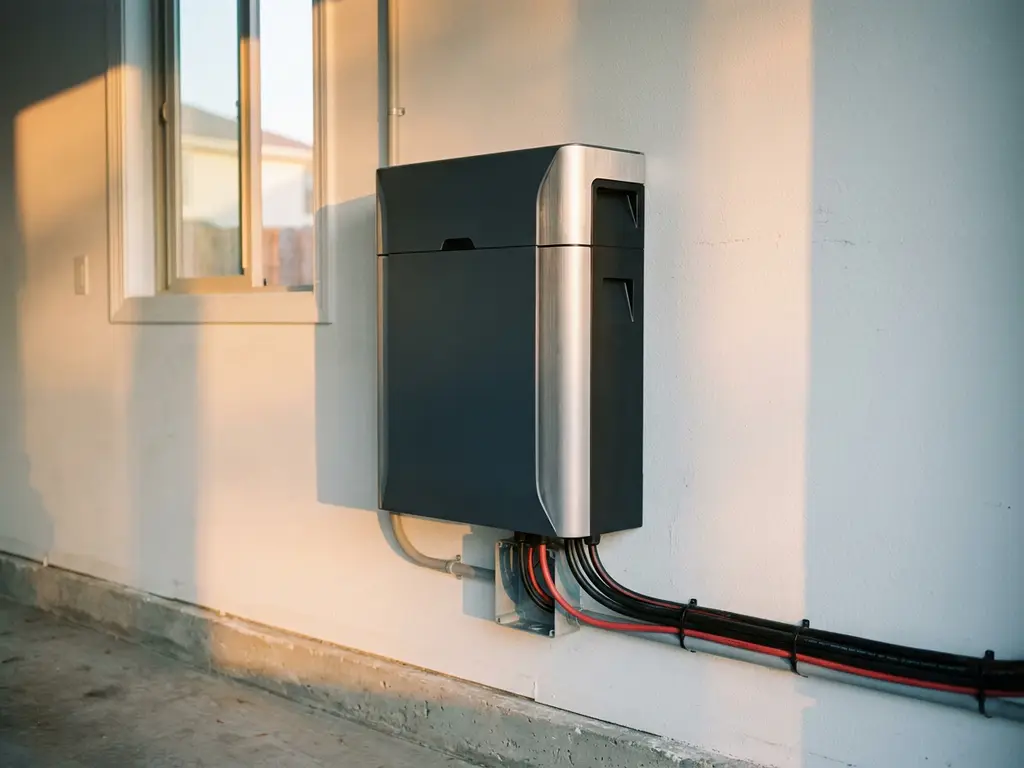
Homeowners investing in solar panels increasingly want to pair their systems with battery storage, and the question that comes up time and again is a simple one: how much capacity is actually enough? Getting the sizing right matters more than most people initially realise. Too little storage means energy gets wasted or exported at low rates; too much means capital gets locked up in hardware that never gets fully used. For solar installers and energy companies advising clients at scale, having a reliable framework for answering this question is essential to delivering projects that genuinely perform.
This guide breaks down the key variables behind battery storage sizing, walks through a practical calculation approach, and highlights the mistakes that lead to undersized or oversized systems. Whether advising a single homeowner or managing a pipeline of residential solar-plus-storage projects, understanding these fundamentals leads to better outcomes and fewer post-installation issues.
Average household energy consumption explained
Before sizing any battery system, it helps to understand what a typical household actually consumes. Across Western Europe, average annual household electricity consumption sits roughly between 2,500 and 4,500 kWh per year, though this varies significantly by country, home size, and occupant behaviour. In the Netherlands and Germany, for example, a mid-sized household might consume around 3,000 to 3,500 kWh annually, which translates to roughly 8 to 10 kWh per day on average.
That daily average, however, does not tell the whole story. Consumption is rarely flat across the day. Morning and evening peaks, driven by cooking, heating, and appliance use, create demand spikes that a battery system needs to handle. Understanding the load profile of a household, not just the total consumption, is what separates a well-sized system from one that falls short in real-world conditions.
Key factors that determine your battery storage needs
Several variables interact to determine the right battery capacity for any given household. There is no single universal answer, which is why a structured assessment matters before any recommendation is made.
Self-consumption goals
A household aiming to maximise self-consumption of solar energy has different requirements than one primarily seeking backup power during outages. Self-consumption optimisation typically requires enough capacity to store afternoon solar surplus for use during evening peaks, while backup-focused systems need to cover essential loads for a defined number of hours or days.
Solar array size
Battery capacity should be proportionate to the solar installation generating the energy. A small 3 kWp array on a north-facing roof will generate significantly less surplus than a 10 kWp south-facing system. Oversizing the battery relative to the array leads to a system that rarely reaches full charge, reducing the return on investment.
Grid connection and tariff structure
In markets where dynamic electricity tariffs are common, the financial case for storage shifts. Households on time-of-use tariffs can benefit from storing cheaper off-peak grid electricity in addition to solar generation. This changes the sizing logic considerably, as the battery needs to cover a wider charging window rather than just solar surplus hours.
Household-specific loads
Electric vehicle charging, heat pumps, and air conditioning units all represent high-draw loads that can dramatically increase the required battery capacity. A household with a heat pump running through winter nights, for instance, needs meaningfully more storage than one relying on gas heating.
How to calculate the right battery capacity
A practical starting point for battery sizing uses daily energy consumption and the proportion of that consumption the battery needs to cover. The core formula is straightforward: required capacity (kWh) = daily consumption to be covered ÷ usable depth of discharge (DoD). Most modern lithium iron phosphate (LFP) batteries offer a usable DoD of around 80 to 90 percent, so a household needing to cover 6 kWh overnight would require a battery with roughly 7 to 7.5 kWh of nameplate capacity.
Beyond the basic formula, a more accurate calculation accounts for system efficiency losses. Inverter efficiency, round-trip battery efficiency, and cable losses typically reduce the effective output by 10 to 15 percent. Factoring in a buffer of around 15 percent on top of the calculated requirement ensures the system performs reliably rather than running at its limits. Using a dedicated solar battery calculator helps installers run these numbers quickly and consistently across multiple project quotes.
For installers managing high volumes of residential projects, standardising this calculation process reduces errors and speeds up the quoting stage. Rather than recalculating from scratch each time, having a repeatable methodology tied to client-specific inputs creates both accuracy and efficiency.
Common battery storage sizing mistakes to avoid
Even experienced installers fall into predictable sizing errors, particularly when working at pace across multiple projects. Recognising these patterns helps avoid the rework and client dissatisfaction that follows a poorly sized system.
Using average consumption without analysing load profiles
Relying solely on annual kWh figures from a utility bill misses the daily and seasonal variation that actually drives battery performance. A household that uses most of its electricity in the evening needs a battery that can reliably discharge over a four to six hour window, not one sized for a flat consumption curve.
Ignoring future load growth
Many households planning a battery installation are also considering an EV or heat pump in the near future. Sizing for current consumption without a conversation about planned additions often results in a system that becomes inadequate within two or three years. Building in a modest capacity buffer at the time of installation is far more cost-effective than retrofitting additional storage later.
Mismatching battery and inverter capacity
Battery capacity and inverter power rating are separate specifications that need to be compatible. A large battery paired with an undersized inverter creates a bottleneck that limits both charging speed and discharge rate, reducing the system’s ability to handle peak demand. This is a common oversight when components are sourced separately or when quoting is done without a full system review.
Overlooking warranty and degradation curves
Batteries degrade over their operational life, typically losing 20 to 30 percent of their capacity over ten years depending on the chemistry and usage pattern. Sizing to meet current needs without accounting for degradation means the system may underperform well before the end of its warranty period.
How solar installers streamline battery project management
Accurate battery sizing is only one piece of the puzzle for installation companies running multiple projects simultaneously. The operational challenge shifts to managing the full workflow: from initial assessment and quoting through to procurement, scheduling, installation, and aftercare. When these steps are handled across disconnected tools or manual processes, errors compound and margins erode.
Installers working at scale increasingly recognise that the gap between a well-designed system and a profitable project often comes down to process efficiency rather than technical knowledge. Delays in procurement, miscommunication between sales and field teams, and inconsistent documentation all contribute to projects running over budget and over time. Connecting the technical sizing process to a broader operational workflow is where significant efficiency gains are found.
For companies managing large volumes of solar-plus-storage projects, standardising the journey from site survey to commissioned installation, with clear handoffs and automated task triggers at each stage, reduces the manual coordination burden that slows teams down. This is particularly relevant as battery storage projects become more complex, often involving multiple product lines, grid approval processes, and post-installation monitoring requirements.
How OpusFlow supports battery storage project delivery
Managing battery storage projects efficiently requires more than good technical knowledge. It demands a connected workflow where quoting, planning, procurement, and aftercare all operate from a single source of truth. That is exactly what we built OpusFlow to deliver for sustainable installation companies.
- Integrated solar and battery calculator: Our built-in battery capacity calculator lets installers size systems accurately and feed results directly into project quotes, eliminating manual data re-entry.
- Quoting and invoicing in one platform: From calculated system design to a professional quote to the final invoice, the entire commercial process runs within OpusFlow, reducing errors and accelerating the sales cycle.
- Planning and field coordination: Assign installation crews, manage scheduling, and track project progress across multiple sites without switching between tools.
- Inventory and procurement management: Keep stock levels visible and trigger purchasing workflows automatically as projects move through the pipeline.
- AI-powered assistance with Toni: Our AI agent Toni supports teams with intelligent task management and process automation, helping larger installation companies scale operations without proportionally increasing headcount.
- End-to-end project tracking: From initial lead to post-installation aftercare, every step is logged, connected, and visible to the teams that need it.
OpusFlow is built specifically for sustainable installation companies, which means battery storage projects are a core use case, not an afterthought. If your team is managing a growing pipeline of solar-plus-storage installations and wants to reduce operational friction, get in touch with us to see how the platform fits your workflow.
Related Articles
- What is the difference between a spreadsheet battery calculation and purpose-built software?
- What does AI actually do inside a business — in plain English?
- How do other companies manage their planning without it turning into chaos?
- How does ERP software help installers manage customer complaints efficiently?
- What training is required for installation teams to use ERP software?