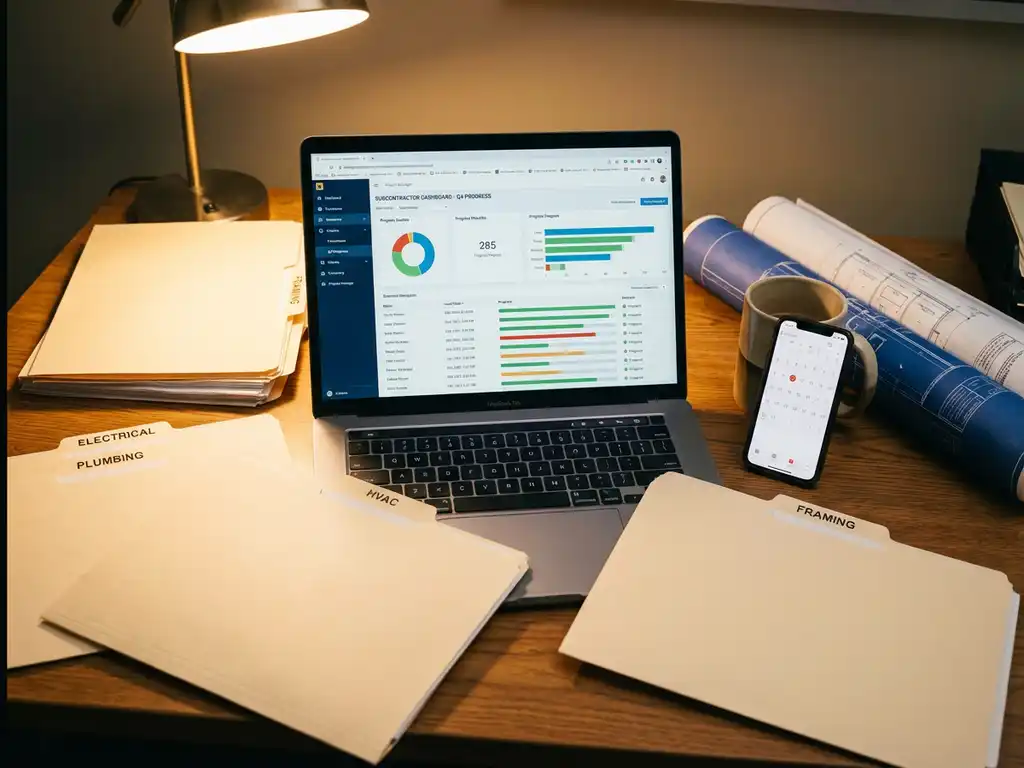
Modern ERP systems offer comprehensive subcontractor management features that centralise contractor coordination, qualification tracking, and project oversight within a single platform. These tools enable installation companies to manage external partners efficiently through automated workflows, real-time communication, and integrated payment processing. For sustainable installation businesses handling complex, multi-trade projects, robust subcontractor management capabilities within an ERP system are essential for maintaining project timelines and quality standards.
What is subcontractor management in ERP systems, and why does it matter for installation companies?
Subcontractor management in ERP systems is a specialised module that coordinates external contractor relationships, qualifications, and project assignments within your business operations. Unlike general project management, it focuses specifically on managing third-party relationships, tracking compliance, and monitoring contractor performance across multiple projects simultaneously.
For sustainable installation companies, effective subcontractor coordination software becomes crucial when managing complex projects involving multiple trades. Solar installations often require electrical contractors, structural engineers, and roofing specialists working together. Heat pump installations require heating engineers, electrical contractors, and sometimes groundwork specialists for ground-source systems.
The integrated approach within an ERP framework ensures that contractor information, certifications, availability, and performance history remain accessible across all departments. This centralisation prevents communication gaps that typically occur when using separate contractor management systems alongside other business software.
Installation companies benefit from having contractor data integrated with project scheduling, inventory management, and financial systems. When a project requires specific expertise, the ERP system can automatically identify qualified contractors based on certifications, availability, and past performance metrics.
What are the core subcontractor management features available in modern ERP systems?
Modern ERP systems for installation companies provide comprehensive contractor onboarding workflows, qualification-tracking databases, automated communication tools, centralised document management, integrated scheduling coordination, and streamlined payment processing capabilities. These features work together to create a complete contractor relationship management ecosystem within your business operations.
Contractor onboarding and qualification tracking form the foundation of effective subcontractor management. The system maintains detailed profiles, including certifications, insurance coverage, safety records, and areas of specialisation. For sustainable installation companies, this includes tracking renewable energy certifications, electrical qualifications, and manufacturer-specific training credentials.
Communication tools within the ERP enable automated notifications, project updates, and document sharing directly with contractors. This eliminates the need for separate communication platforms and ensures all project-related conversations remain documented and searchable.
Document management capabilities store contracts, certificates, compliance documentation, and project-specific requirements in centralised locations. Contractors can access relevant project documents through secure portals while maintaining appropriate access controls.
Scheduling coordination integrates contractor availability with project timelines, automatically identifying conflicts and suggesting alternative arrangements. The system can track multiple contractors across various projects, ensuring optimal resource allocation.
Payment processing features handle contractor invoicing, approval workflows, and payment scheduling. Integration with project management ensures payments align with completed milestones and quality checkpoints.
How does ERP subcontractor management improve project coordination and efficiency?
ERP project management with integrated subcontractor features eliminates communication delays through automated task assignments, real-time progress tracking, and centralised information sharing. This coordination reduces project delays by an average of 15–25% while improving quality control through systematic contractor performance monitoring.
Real-time communication benefits include instant notifications when contractors complete tasks, encounter issues, or require additional resources. Project managers receive automated updates without constantly checking multiple systems or making phone calls. Contractors access current project specifications, changes, and requirements through integrated portals.
Automated task assignments occur when project phases trigger contractor notifications. For example, when electrical rough-in is completed on a solar installation, the system automatically notifies the next contractor phase while updating project timelines for all stakeholders.
Progress tracking capabilities provide visibility into contractor performance against scheduled milestones. The system identifies potential delays before they impact critical project paths, enabling proactive management decisions.
Centralised management reduces miscommunication by maintaining a single source of truth for project specifications, changes, and requirements. All stakeholders access identical information, eliminating confusion caused by outdated documents or verbal communications.
Quality control improves through systematic documentation of contractor work, automated compliance checks, and performance scoring based on objective criteria. This data helps identify top-performing contractors for future projects while addressing performance issues promptly.
What should installation companies look for when evaluating ERP subcontractor management features?
Installation companies should prioritise ERP systems that offer mobile accessibility for field contractors, comprehensive compliance tracking for industry regulations, robust integration capabilities with existing tools, detailed reporting functionality, and rapid implementation within 30 days. Industry-specific features for sustainable installation businesses provide additional competitive advantages.
Integration capabilities determine how effectively the subcontractor management module works with existing business systems. Look for APIs that connect with accounting software, project management tools, and communication platforms. Sustainable installation ERP systems should integrate with manufacturer databases for equipment specifications and warranty tracking.
Mobile accessibility ensures contractors can access project information, submit progress updates, and communicate issues directly from job sites. This real-time connectivity prevents delays caused by contractors having to return to the office to access information.
Compliance tracking becomes essential for installation companies managing multiple contractor certifications, safety requirements, and regulatory obligations. The system should automatically monitor certificate expiration dates, insurance coverage, and safety training requirements.
Reporting functionality should provide insights into contractor performance, project profitability, and resource utilisation. Advanced analytics help identify patterns in contractor performance and project success factors.
Implementation speed ensures the system accommodates immediate business needs without lengthy setup periods. Consider systems that can be fully operational within 30 days, allowing you to start benefiting from improved contractor management immediately.
Industry-specific features for sustainable installation companies include renewable energy certification tracking, manufacturer warranty management, and integration with design tools for solar and heat pump installations. These specialised capabilities provide competitive advantages over generic contractor management solutions.
How OpusFlow transforms subcontractor management for installation companies
OpusFlow delivers the comprehensive subcontractor management capabilities that sustainable installation companies need to thrive in today’s competitive market. Our integrated ERP platform addresses the unique challenges of coordinating multiple contractors across complex renewable energy projects:
Centralised contractor ecosystem: OpusFlow maintains complete contractor profiles with automated certification tracking, insurance monitoring, and performance history. Our system ensures you always work with qualified, compliant contractors while building a database of trusted partners for future projects.
Real-time project coordination: Our platform eliminates communication delays through instant notifications, automated task assignments, and mobile accessibility. Contractors receive project updates immediately while you maintain complete visibility into progress across all active installations.
Industry-specific functionality: OpusFlow understands the unique requirements of solar and heat pump installations. Our system tracks renewable energy certifications, manages manufacturer warranties, and integrates with design tools specifically for sustainable installation projects.
Streamlined payment processing: Our integrated payment workflows handle contractor invoicing, milestone-based approvals, and automated payment scheduling. This reduces administrative overhead while ensuring contractors are paid promptly for completed work.
Rapid implementation: OpusFlow gets your team operational within 1 month, not the 8-12 months typical of other ERP implementations. This means you can start improving contractor coordination and project efficiency immediately.
Advanced analytics and reporting: OpusFlow provides detailed insights into contractor performance, project profitability, and resource utilisation. These analytics help you identify your best-performing partners and optimise future project assignments.
Ready to transform your subcontractor management processes? Contact our team to discover how OpusFlow can help your installation business achieve better project coordination, improved efficiency, and stronger contractor relationships through our proven ERP solution.
Related Articles
- What is the relationship between solar panel kWp and battery storage kWh?
- What does a home battery actually do during a power outage?
- Why does it take so long to get quotes out the door?
- How can installation companies reduce employee turnover with better tools?
- What customization options are available in ERP systems for installers?