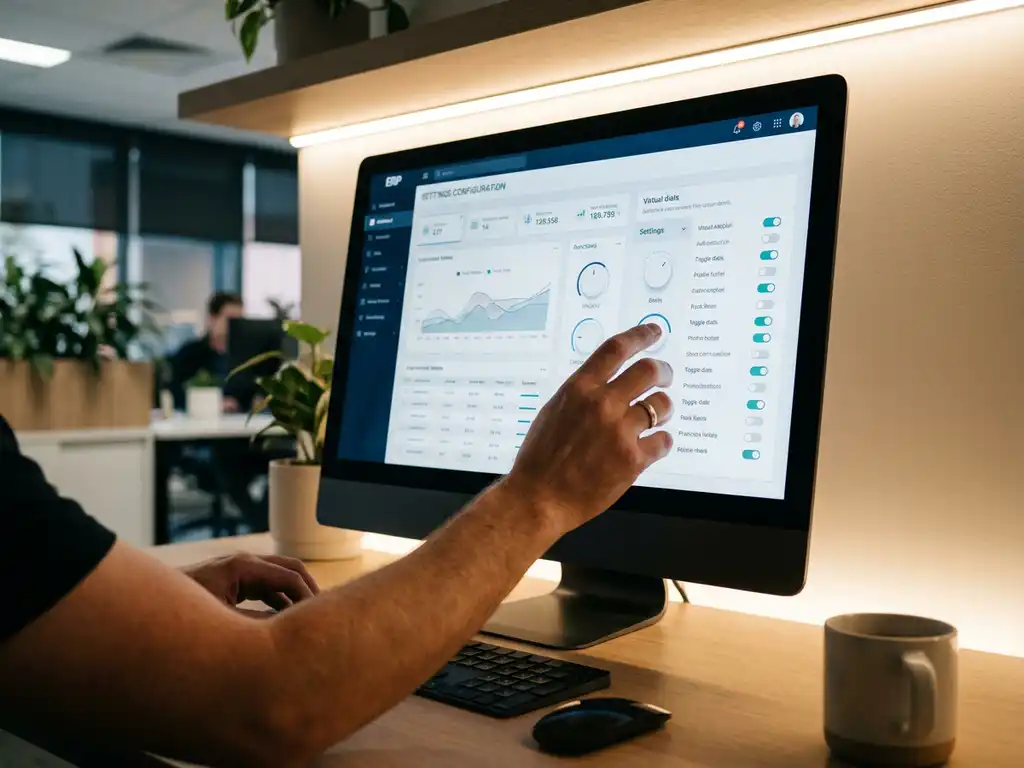
ERP customization options for installers include configurable workflows, industry-specific modules, API integrations, and tailored reporting systems. These customizable ERP solutions allow sustainable installation companies to adapt their software to match unique business processes for solar panels, heat pumps, and other renewable energy technologies. OpusFlow provides comprehensive ERP customization services specifically designed for installation businesses, ensuring seamless integration with your existing operations.
What exactly are ERP customization options, and why do installation companies need them?
ERP customization options are configurable features that allow installation companies to modify standard software functionality to match their specific business requirements. Unlike generic business software, customizable ERP solutions can be tailored to handle industry-specific processes such as solar panel calculations, heat pump sizing, compliance documentation, and multi-stage installation workflows.
Sustainable installation companies require these customization capabilities because their operations differ significantly from those of traditional businesses. Solar installers need integrated PV design tools, heat pump specialists require sizing calculators, and all installation companies must manage complex project timelines with multiple stakeholders. Standard ERP systems cannot accommodate these specialized requirements without extensive customization.
OpusFlow’s modular approach to ERP customization allows installation businesses to select only the functionality they need while maintaining the flexibility to add new capabilities as their operations expand. This prevents companies from paying for unnecessary features while ensuring their software can grow alongside their business needs.
What types of workflows can be customized in ERP systems for installers?
ERP workflow customization for installers covers sales processes, project management sequences, inventory tracking, customer communication flows, scheduling systems, and compliance documentation. Each workflow can be configured to match the specific requirements of different installation types, from residential solar projects to commercial heat pump installations.
Sales workflows can be customized to include automated lead qualification, site assessment scheduling, and proposal generation with industry-specific calculations. Project management sequences can accommodate the unique phases of installation projects, including permitting, equipment procurement, installation scheduling, and commissioning processes.
Inventory tracking workflows can be tailored to manage specialized equipment such as solar panels, inverters, heat pumps, and mounting hardware. These systems can integrate with supplier databases to automatically update stock levels and trigger reorder points for critical components.
Customer communication workflows can be configured to send automated updates at key project milestones, compliance reminders, and maintenance scheduling notifications. This ensures consistent communication while reducing administrative overhead for installation teams.
How do you integrate industry-specific tools with customizable ERP systems?
Integration with industry-specific tools requires an API-first approach that enables seamless data flow between specialized software and the main ERP platform. OpusFlow’s installation company software can connect with PV design applications, heat pump calculators, compliance reporting tools, and supplier databases through standardized interfaces.
PV design software integration allows solar installers to import system specifications directly into their ERP system, automatically generating material lists, labour estimates, and project timelines. Heat pump calculators can feed sizing data into quotation modules, ensuring accurate equipment selection and pricing.
Compliance reporting tools can be integrated to automatically generate required documentation for local authorities, utility companies, and certification bodies. This integration eliminates manual data entry and reduces the risk of errors in critical compliance documents.
Supplier database integration enables real-time pricing updates, availability checks, and automated purchase order generation. This connectivity ensures installation companies always have access to current equipment costs and delivery schedules when preparing quotations and managing projects.
What should installation companies consider when choosing customization options?
Installation companies should evaluate their business size, growth plans, technology focus, budget constraints, implementation timeline, and long-term scalability requirements when selecting ERP customization options. The chosen configuration must support current operations while providing flexibility for future expansion.
Business size determines the complexity of customization required. Smaller installers may need basic workflow automation and reporting, while larger companies require advanced project management, resource planning, and multi-location coordination capabilities.
Technology focus influences which industry-specific modules are essential. Solar-only installers need comprehensive PV design integration, while multi-technology companies require modular systems that can handle various installation types within a single platform.
Budget considerations should include both initial customization costs and ongoing maintenance requirements. Companies should prioritize customizations that deliver immediate operational benefits while planning for future enhancements as their business grows.
Implementation timeline affects the rollout strategy for customized features. Critical workflows should be prioritized for early implementation, with additional customizations added gradually to minimize disruption to ongoing operations.
Understanding these customization options helps installation companies select ERP solutions that truly support their unique operational requirements. OpusFlow specializes in delivering tailored ERP solutions that balance immediate functionality needs with long-term flexibility for business growth and industry evolution in the sustainable installation sector.
Related Articles
- What is the difference between a one-off invoice and a recurring contract?
- How do you upsell a battery to an existing solar customer?
- Why is it hard to know which projects are actually profitable?
- How does ERP software help installation businesses scale from 5 to 50 employees?
- What ERP features do wind farm contractors need most?