The top ERP modules for HVAC installation businesses include project management, inventory control, CRM, scheduling, and customer portals. These modules address specific challenges such as equipment tracking, technician coordination, and compliance management. Modern HVAC companies require integrated systems that handle everything from initial quotes to ongoing maintenance, ensuring operational efficiency and customer satisfaction throughout the installation lifecycle. At OpusFlow, we specialise in implementing these comprehensive ERP solutions tailored specifically for HVAC businesses.
What ERP modules every HVAC installation business needs?
There are five core ERP modules for HVAC installation companies: project management for job coordination, inventory management for equipment tracking, CRM for customer relationships, scheduling for technician deployment, and financial modules for invoicing and purchasing. These modules work together to streamline operations from the initial consultation to project completion.
Project management
Project management module serves as the backbone of HVAC operations, coordinating multiple moving parts across installations. They track equipment specifications, monitor installation progress, and ensure compliance with energy-efficiency standards. This centralised approach prevents costly delays and maintains quality control across all projects.

Inventory management
CRM
CRM module is one of key ERP modules for HVAC businesses that is designed to manage leads, track customer preferences for sustainable solutions, and maintain service histories. The CRM integrates with quotation tools to provide accurate pricing for heat pump installations, air conditioning systems, and other HVAC equipment.
Scheduling
Financials
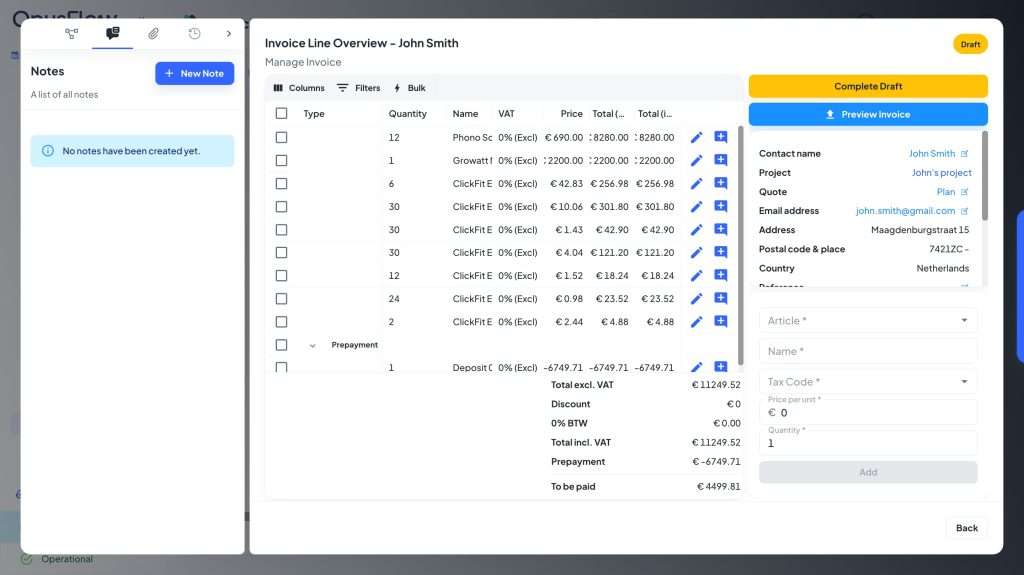
Financial module handles the unique billing requirements of HVAC projects, including progress payments, equipment deposits, and warranty tracking. These systems automate invoice generation based on project milestones and integrate with purchasing modules to maintain accurate cost tracking throughout installations.
How does a project management module benefit HVAC installation workflows?
Project management module eliminates coordination challenges. They provide real-time visibility into installation status, automatically update stakeholders on project milestones, and ensure compliance with sustainable installation standards from consultation through commissioning.
Site coordination and conflict prevention
The system automatically flags potential conflicts, such as specialised equipment arriving before certified technicians are available, preventing costly project delays before they happen.
Quality checkpoints beyond task completion
Progress monitoring in ERP modules for HVAC goes beyond ticking off tasks. The module tracks energy-efficiency testing, system commissioning results, and customer sign-offs, ensuring every installation meets both regulatory requirements and performance expectations.
One Platform to Run Your Entire Installation Business
Manage leads, projects, stock, and invoicing — everything in one smart system built for sustainable installers.

What's the difference between general ERP and ERP modules for HVAC?
General business software treats all products as generic inventory items. ERP modules for HVAC, by contrast, account for equipment specifications, seasonal demand patterns, and compatibility requirements enabling automatic reordering based on installation schedules and preventing orders for incompatible components.
Why do HVAC companies need an integrated inventory and purchasing module?
Integrated inventory modules prevent project delays by automatically tracking HVAC equipment specifications, managing seasonal demand fluctuations, and maintaining supplier relationships. They optimise cash flow through intelligent reordering that aligns stock levels with scheduled installations and equipment lead times.
Managing equipment compatibility at scale
Anticipating seasonal demand
Supplier performance and continuity
Supplier relationship management becomes critical when dealing with specialised HVAC equipment manufacturers. The module tracks supplier performance, manages warranty information, and maintains alternative supplier relationships ensuring continuous equipment availability even when primary suppliers face delays.
How does customer portal integration improve HVAC installation service delivery?
Customer portal integration enhances service delivery through real-time installation progress updates, automated maintenance scheduling, and system performance monitoring. Customers can access project timelines, receive completion notifications, and book ongoing maintenance online improving satisfaction while reducing administrative overhead.
Modern installation businesses require ERP modules for HVAC that address industry-specific challenges without adding operational complexity. Integrating project management, inventory control, customer portals, and HVAC-specific features creates a unified platform that supports sustainable installation practices and customer satisfaction throughout the entire service lifecycle. Our expertise in ERP implementation and digital transformation ensures HVAC companies can successfully deploy these integrated solutions to maximise operational efficiency and profitability.
One Platform to Run Your Entire Installation Business
Manage leads, projects, stock, and invoicing — everything in one smart system built for sustainable installers.
How OpusFlow uses ERP modules for HVAC to support installation businesses
OpusFlow brings all core processes together in one system, combining project management, inventory management, CRM, scheduling, financials, and customer portals with powerful automation, an AI data assistant, and API integrations.
Project management helps teams keep full control over installation workflows, from initial planning to final delivery, ensuring everyone stays aligned and projects move forward without delays.
Inventory management gives real-time insight into stock levels and equipment availability, helping prevent shortages and making sure the right materials are always ready for installation work.
CRM centralises customer data, leads, and communication history, making it easier to manage relationships and follow up on opportunities with accurate, up-to-date information.
Scheduling optimises technician planning by matching the right people to the right jobs, improving efficiency and reducing downtime between appointments.
Financial module streamlines invoicing, purchasing, and project costing, helping maintain clear financial control across all installations.
On top of these core modules, automations reduce repetitive manual work by streamlining routine processes across departments, while the AI data assistant helps teams quickly access insights and make better decisions based on live operational data. API integrations ensure OpusFlow connects seamlessly with other tools and systems already used in the business.
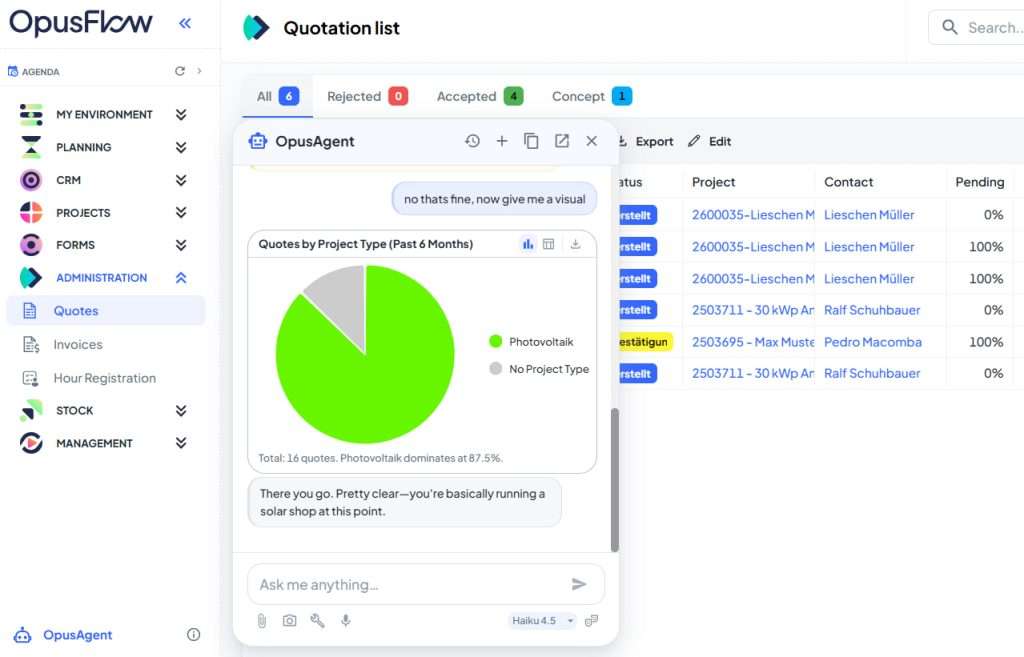
Together, these ERP modules for HVAC create one connected platform that simplifies daily operations and supports scalable growth for installation companies.
Ready to see it in action? Book a demo with OpusFlow and discover how a connected ERP system can transform your HVAC operations.
Related Articles
- How much battery storage does an average household actually need?
- Why do we keep losing track of what's been installed where?
- How do you build a real-time dashboard to monitor your service business?
- How do growing service businesses reduce admin without hiring more staff?
- How can small installation companies benefit from data-driven decision making?