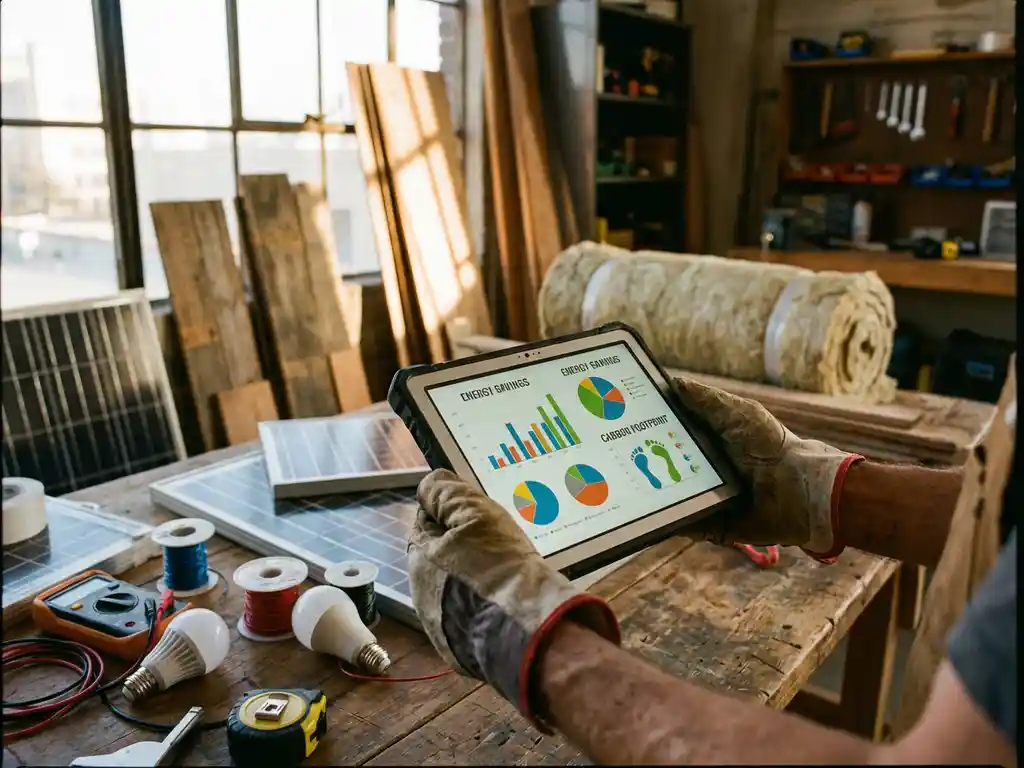
Sustainability metrics for installation companies encompass environmental impact indicators, financial performance measures, and operational efficiency tracking that demonstrate both profitability and environmental benefits. Effective measurement includes carbon footprint reduction, energy-efficiency ratios, project ROI calculations, installation time optimisation, and customer satisfaction validation. These metrics provide comprehensive insight into business performance while supporting the adoption of sustainable technologies.
What sustainability metrics actually matter for installation companies?
The most impactful sustainability metrics for installation companies focus on environmental impact, operational efficiency, and business performance that directly correlate with both profitability and environmental benefits. Core metrics include carbon footprint reduction per project, energy-efficiency ratios achieved, material waste reduction percentages, and renewable energy capacity installed.
Environmental impact measurement should track the total carbon emissions avoided through installations, measured in tonnes of CO2 equivalent. This includes calculating the lifecycle environmental benefits of solar panels, heat pumps, and EV charging stations compared with traditional energy sources. Installation companies benefit from monitoring their own operational carbon footprint, including vehicle emissions, material transportation, and energy consumption during installations.
Financial sustainability metrics encompass project profit margins, cost per kilowatt installed, and customer return-on-investment timelines. These measurements demonstrate business viability while showcasing the economic benefits of adopting sustainable technologies. Operational metrics should include installation completion times, first-time fix rates, and equipment utilisation efficiency.
Customer satisfaction metrics specific to sustainable installations include energy savings validation, system performance monitoring, and long-term maintenance response times. Modern ERP systems designed for sustainable installers can automate much of this data collection, providing real-time dashboards that track performance across all these critical areas simultaneously.
How do you measure environmental impact across different installation types?
Environmental impact measurement varies significantly across installation types, with solar installations focusing on energy generation capacity, heat pump installations measuring heating-efficiency improvements, and EV charging stations tracking emissions reductions from transport electrification. Each technology requires specific metrics that reflect its unique environmental contribution.
Solar panel installations measure environmental impact through annual energy generation (kWh), carbon emissions avoided over the system’s lifetime, and the carbon payback period. Key performance indicators include solar conversion efficiency, system degradation rates, and grid integration effectiveness. Installation companies track these through monitoring systems that provide real-time performance data.
Heat pump installations focus on coefficient of performance (COP), seasonal energy-efficiency ratios, and heating demand reduction compared with traditional systems. Environmental impact includes reduced gas consumption, lower carbon emissions from heating, and improved building energy ratings. Measurement requires ongoing monitoring of system performance across different seasonal conditions.
EV charging station installations measure environmental impact through charging session data, renewable energy integration percentages, and transport emissions reductions in the local area. Metrics include charging efficiency, grid load management effectiveness, and the proportion of renewable energy used for charging.
Comprehensive environmental tracking requires lifecycle assessment approaches that consider manufacturing, transportation, installation, operation, and end-of-life disposal impacts. Installation companies increasingly use integrated software platforms that automatically collect and analyse this data across different project types.
Which financial metrics best track sustainability project success?
Financial metrics that effectively track sustainability project success combine traditional profitability measures with long-term value-creation indicators, including project margin analysis, cost per kilowatt installed, customer payback periods, and recurring revenue from maintenance contracts. These metrics demonstrate both immediate business performance and sustainable value delivery.
Project margin analysis should account for all direct costs, including materials, labour, transportation, and project management time. Successful sustainable installers track gross margins by project type, identifying which installations deliver optimal profitability while maintaining quality standards. Cost per kilowatt installed enables industry benchmarking and helps identify efficiency improvements.
Customer-focused financial metrics include system payback periods, financing success rates, and total cost of ownership calculations. These measurements help installation companies demonstrate value propositions while identifying opportunities to improve customer financial outcomes. Return-on-investment calculations should include energy savings, government incentives, and long-term maintenance costs.
Long-term financial tracking encompasses recurring revenue from maintenance contracts, system performance guarantees, and customer lifetime value. Installation companies benefit from monitoring cash flow patterns, seasonal revenue variations, and the financial impact of warranty claims or system underperformance.
Advanced financial analytics include predictive modelling for project profitability, resource allocation optimisation, and market trend analysis. Modern ERP systems provide automated financial reporting that combines project-level data with business-wide performance metrics, enabling more informed decision-making about resource allocation and growth strategies.
What operational efficiency metrics should sustainable installers monitor?
Operational efficiency metrics for sustainable installers should focus on installation time optimisation, material waste reduction, workforce productivity, and quality control measures that directly impact both environmental outcomes and business profitability. Key performance indicators include project completion times, first-time installation success rates, and resource utilisation efficiency.
Installation time metrics track average completion times by project type, identifying opportunities for process improvement and resource optimisation. Efficient installers monitor setup time, actual installation duration, testing and commissioning periods, and customer handover processes. These measurements help identify bottlenecks and improve scheduling accuracy.
Material waste reduction tracking includes packaging waste, unused materials, and rework requirements. Sustainable installers measure waste percentages per project, material ordering accuracy, and recycling rates for installation waste. This data supports both environmental objectives and cost-reduction initiatives through improved material management.
Workforce productivity metrics encompass billable-hours utilisation, skills development tracking, and safety incident rates. Installation companies benefit from monitoring employee efficiency across different project types, identifying training needs, and optimising team composition for various installation requirements.
Quality control measures include first-time fix rates, customer complaint frequency, warranty claim rates, and system performance validation. These metrics directly correlate with long-term business success and environmental impact effectiveness. Modern planning software enables installation companies to track these metrics through automated data collection and planning functionality that breaks large projects into manageable tasks while maintaining oversight of operational efficiency across all projects.
How can installation companies track customer satisfaction in sustainability projects?
Customer satisfaction tracking in sustainability projects requires energy savings validation, system performance monitoring, maintenance response times, and long-term relationship-building metrics that demonstrate both service quality and environmental benefit delivery. Effective measurement combines technical performance data with customer experience feedback.
Energy savings validation involves comparing actual system performance against projected savings, tracking customer energy bills before and after installation, and monitoring system efficiency over time. Installation companies should provide customers with clear performance dashboards that demonstrate the environmental and financial benefits achieved through their installations.
System performance monitoring includes real-time performance tracking, fault detection and resolution times, and preventive maintenance scheduling. Customer satisfaction correlates directly with system reliability and the company’s responsiveness to performance issues. Automated monitoring systems can alert both customers and installers to performance variations.
Maintenance response times measure how quickly installation companies respond to customer inquiries, schedule maintenance visits, and resolve technical issues. Customer satisfaction metrics should include time to initial response, problem-resolution timeframes, and the quality of customer communication throughout the support process.
Long-term relationship-building metrics encompass customer retention rates, referral generation, and additional service uptake. Sustainable installers benefit from tracking customer engagement with maintenance programmes, system upgrade opportunities, and satisfaction with ongoing support services.
Comprehensive customer satisfaction measurement requires integrated systems that combine technical performance data with customer feedback mechanisms. Modern CRM systems designed for installation companies can automate customer follow-up processes, track service interactions, and maintain structured oversight of customer relationships while preventing missed opportunities for service improvement and business growth.
Related Articles
- Is a digital signature legally binding for a service contract in the EU?
- How does battery degradation affect long-term self-consumption calculations?
- What is an API and why does it matter for installation business software?
- How can ERP software help installers manage customer service requests?
- What customization options are available in ERP systems for installers?