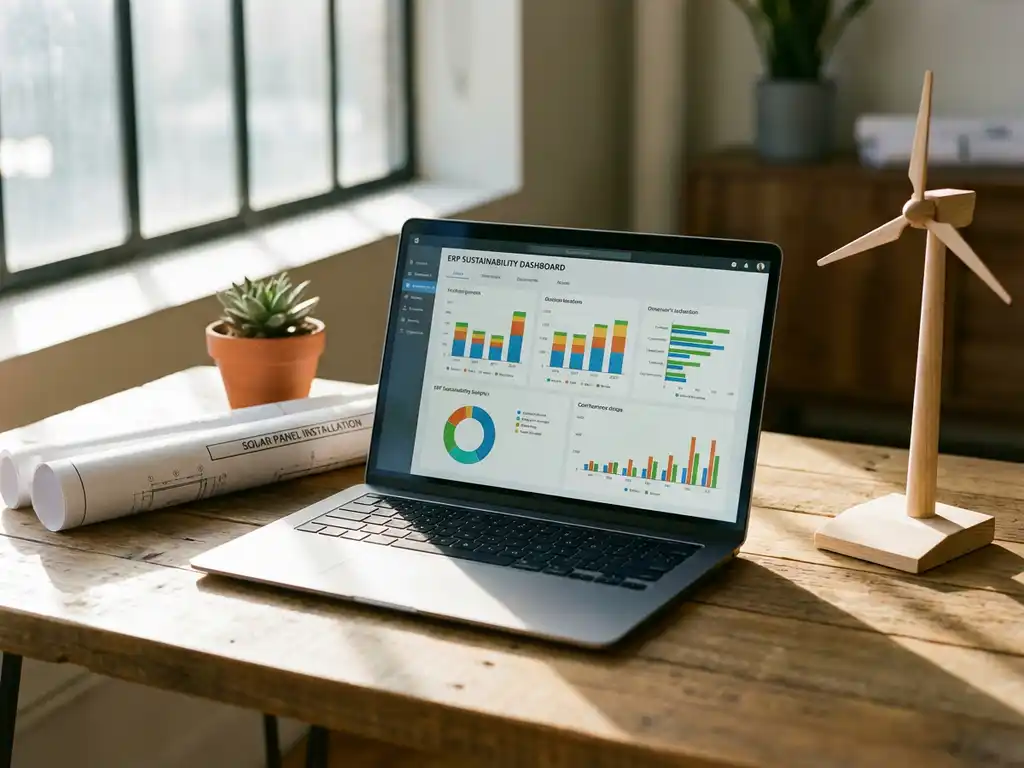
ERP software for sustainable installation companies is a comprehensive business management system specifically designed to address the unique operational challenges faced by renewable energy installers. Unlike generic business software, specialised ERP systems integrate project management, inventory tracking, compliance monitoring, and customer relationship management tailored to solar, heat pump, and other sustainable technology installations.
What is ERP software, and why do sustainable installation companies need it?
ERP (Enterprise Resource Planning) software for sustainable installation companies is an integrated business management platform that centralises all operational processes, from initial customer contact through project completion and aftercare. These systems differ significantly from generic business software by incorporating industry-specific functionality such as PV design tools, heat pump calculators, and renewable energy compliance modules.
Sustainable installation companies face unique operational challenges that generic software cannot address effectively. Solar installers must manage complex technical calculations, comply with varying renewable energy regulations, and coordinate installations across multiple project sites. Heat pump specialists require sophisticated sizing calculations and integration with building management systems. Standard business software lacks these specialised capabilities, forcing companies to use multiple disconnected tools that create inefficiencies and increase error rates.
The renewable energy sector operates under strict regulatory frameworks that change frequently. Installation companies must maintain detailed documentation, track certification requirements, and ensure compliance with local building codes and environmental standards. Specialised ERP systems like OpusFlow automate these compliance processes while maintaining the audit trails necessary for regulatory reporting.
How does ERP software specifically help solar and heat pump installers manage their operations?
ERP software transforms sustainable installation operations by automating workflows, centralising project data, and providing real-time visibility across all business functions. These systems eliminate the need for multiple software packages while delivering integrated functionality spanning initial quotation through final commissioning and maintenance scheduling.
For solar installers, integrated ERP systems provide comprehensive PV design capabilities that automatically calculate system sizing, shading analysis, and energy yield predictions. These tools connect directly to quotation modules, ensuring accurate pricing based on actual system specifications. Project management features track installation progress while coordinating material deliveries, crew scheduling, and inspection requirements.
Heat pump installers benefit from sophisticated calculation engines that determine optimal system sizing based on building characteristics, insulation levels, and heating requirements. The software manages the complex approval processes often required for heat pump installations while tracking manufacturer warranties and maintenance schedules. Integration with customer portals allows homeowners to monitor system performance and schedule service appointments directly through the platform.
Both solar and heat pump operations require extensive inventory management capabilities. ERP systems track component availability, manage supplier relationships, and automate reordering processes. Advanced features include batch tracking for warranty purposes and integration with supplier systems for real-time availability updates.
What’s the difference between generic ERP systems and specialised software for sustainable installers?
Generic ERP systems provide basic business management functionality but lack the industry-specific features essential for sustainable installation companies. Specialised platforms like OpusFlow include built-in design tools, regulatory compliance modules, and automated workflows tailored to renewable energy project lifecycles, eliminating the need for multiple software solutions.
The most significant difference lies in technical capability integration. Generic systems require separate design software for system calculations, leading to data duplication and potential errors when transferring information between platforms. Specialised ERP solutions incorporate these technical tools directly, ensuring seamless data flow from initial design through project completion.
Compliance management represents another critical distinction. Sustainable installation companies must navigate complex regulatory requirements that vary by location and technology type. Specialised systems include built-in compliance tracking, automated documentation generation, and regulatory update notifications. Generic ERP systems lack these capabilities, forcing companies to manage compliance manually or through additional software.
Customer portal functionality also differs significantly. Sustainable technology customers expect detailed system monitoring and performance reporting capabilities. Specialised ERP systems provide integrated customer portals that display real-time system performance, energy production data, and maintenance schedules. Generic systems typically offer basic customer access without the technical integration necessary for meaningful system monitoring.
What key features should sustainable installation companies look for in ERP software?
Essential ERP features for sustainable installation companies include integrated design tools, comprehensive project management, automated workflow capabilities, customer portal functionality, and robust reporting systems. These core components should work together seamlessly while providing industry-specific functionality for renewable energy technologies and compliance requirements.
Technical design integration is the most critical requirement. Look for systems that include PV design capabilities for solar installations, heat pump sizing calculators, and integration with manufacturer specification databases. These tools should automatically generate accurate quotations based on technical specifications while maintaining detailed project documentation.
Project management functionality must accommodate the complex workflows typical of sustainable installations. Advanced scheduling capabilities should coordinate multiple crews, manage equipment deliveries, and track regulatory approvals. The system should provide real-time project visibility while automating task creation and deadline management.
Customer relationship management features should extend beyond basic contact management to include detailed system monitoring and maintenance scheduling. Integration with monitoring equipment allows customers to track system performance while enabling proactive maintenance scheduling based on actual system data rather than arbitrary timelines.
Financial management capabilities must include sophisticated quotation systems that accommodate complex pricing structures, progress billing for large projects, and integration with accounting systems. Look for platforms that automate invoice generation based on project milestones while maintaining detailed cost tracking throughout the project lifecycle.
The most effective ERP solutions for sustainable installation companies combine all these features within a single, integrated platform like OpusFlow. This approach eliminates data silos while providing the specialised functionality necessary for successful renewable energy project delivery and long-term customer satisfaction.
Related Articles
- How does grid arbitrage work and when does it improve battery ROI?
- Can ERP software improve job costing accuracy?
- What happens to your existing data when you switch to a new ERP system?
- What is the difference between AI and automation in field service software?
- ERP and accounting software integration: What options exist for installers?