As battery storage becomes a standard part of solar installations, the inverter choice has never mattered more. Hybrid inverters sit at the heart of modern solar-plus-storage systems, yet many installation companies still encounter confusion about when they genuinely add value and when a simpler setup might serve the project better. Understanding the mechanics behind hybrid inverters helps teams make smarter equipment decisions, quote more accurately, and deliver systems that perform as promised over the long term.
Whether a company is scaling up its residential solar portfolio or taking on larger commercial projects with complex energy management requirements, getting the inverter specification right from the start avoids costly retrofits and unhappy clients. This guide walks through the key distinctions, components, and decision points every professional installer should have a firm grip on.
How a hybrid inverter differs from a standard solar inverter
A standard solar inverter performs one core job: it converts the direct current (DC) electricity produced by solar panels into alternating current (AC) electricity that can be used in a building or fed into the grid. It does this efficiently, but it has no built-in ability to interact with a battery system. Once the panels stop producing, the inverter stops working, and the installation has no stored energy to draw from.
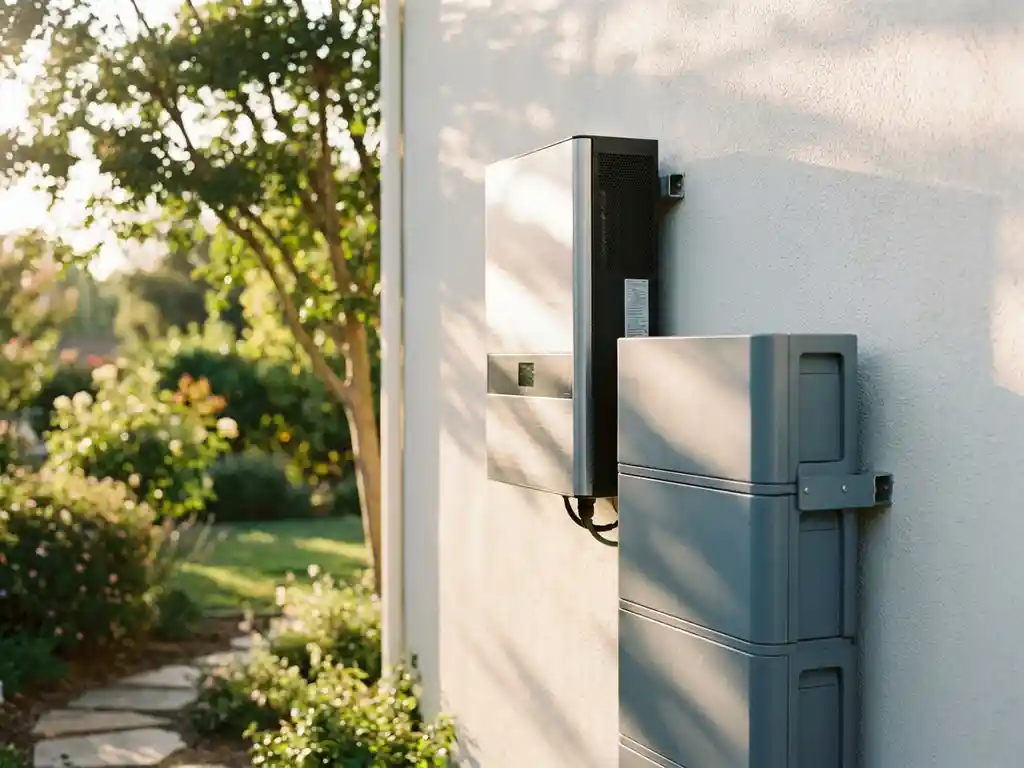
A hybrid inverter expands on this foundation by integrating battery management directly into the same unit. It manages the flow of energy between the solar array, the battery bank, the building’s loads, and the grid, all simultaneously. This means it can charge a battery from solar panels during the day, discharge that battery in the evening, and switch to grid power when both sources are insufficient, without requiring separate control systems to coordinate those actions. The result is a more seamless and intelligent energy management setup within a single piece of hardware.
Key components that make hybrid inverters work
The functionality of a hybrid inverter depends on several integrated subsystems working together. Understanding these components helps installers specify the right unit for the load profile and battery chemistry involved.
The bidirectional DC-DC converter
Unlike a standard inverter that only moves energy in one direction, a hybrid inverter contains a bidirectional DC-DC converter. This component handles charging the battery from the solar array and also allows the battery to discharge back through the inverter to supply AC loads. The efficiency of this converter directly affects round-trip energy losses in the storage system.
Battery management system integration
Most modern hybrid inverters communicate directly with the battery’s built-in battery management system (BMS) via a communication protocol such as CAN bus or RS485. This link allows the inverter to monitor the state of charge, cell temperatures, and fault conditions in real time, adjusting charge and discharge rates to protect battery longevity. Compatibility between the inverter brand and the battery brand is a critical specification check before any installation begins.
Grid management and backup capability
Many hybrid inverters also include an automatic transfer switch or similar functionality that enables backup power operation when the grid goes down. This is a distinct feature from standard grid-tied inverters, which are required by regulation to shut down during a grid outage. The backup capability adds installation complexity but is increasingly requested by clients who want energy resilience alongside self-consumption benefits.
When battery storage actually makes sense for your installation
Battery storage is not the right fit for every solar project, and recommending it indiscriminately does clients a disservice. The strongest case for battery storage exists when the energy consumption profile of the site does not align well with the solar generation profile.
A commercial site that consumes most of its energy in the early morning and evening, for example, will see limited self-consumption from a solar-only system. Adding storage allows that midday solar generation to be captured and used when it is actually needed. Similarly, sites with high peak demand charges can use batteries to shave those peaks, reducing energy costs beyond what solar alone can achieve. Using a solar battery calculator during the design phase helps quantify these benefits accurately before any equipment is specified, giving both the installer and the client a clear picture of expected performance.
On the other hand, sites with flat, consistent daytime consumption and no peak demand issues may see a very long payback period on battery storage. In those cases, a well-sized standard solar system will often deliver better financial returns, and a hybrid inverter adds cost without proportional benefit. The decision should always be grounded in actual load data, not assumptions.
Hybrid inverter vs. separate inverter and battery inverter setup
When battery storage is the right choice, installation teams face a secondary decision: use a single hybrid inverter or pair a separate string or microinverter setup with a dedicated battery inverter. Both approaches can deliver excellent results, but they have meaningfully different implications for installation complexity, cost, and long-term serviceability.
A hybrid inverter simplifies the installation by consolidating hardware into one unit. There is one point of configuration, one communication interface, and typically one warranty to manage. This can reduce installation time and lower the risk of integration issues between components from different manufacturers. For straightforward residential and light commercial projects, this streamlined approach is often the most practical choice.
A separate inverter and battery inverter setup, sometimes called an AC-coupled system, offers greater flexibility. The solar array can be installed and commissioned independently of the battery, which is useful when a client wants to add storage to an existing installation or when the project phasing requires it. AC-coupled systems also allow more freedom in matching battery capacity to inverter capacity without being constrained by a single manufacturer’s product range. The trade-off is added installation complexity and the need to ensure reliable communication between two separate systems. For larger commercial or industrial projects where flexibility and scalability matter more than simplicity, this approach often makes more sense.
Choosing the right hybrid inverter for a solar project
Selecting the appropriate hybrid inverter involves balancing several technical and commercial factors. Getting this right at the quotation stage prevents problems during commissioning and over the system’s operational life.
Power rating is the starting point. The inverter must be sized to handle both the peak output of the solar array and the peak charge and discharge rates of the battery system. Undersizing the inverter creates bottlenecks that reduce system performance, while oversizing adds unnecessary cost. Battery compatibility is equally important: not every hybrid inverter supports every battery chemistry or brand, and mismatches can void warranties or cause communication failures.
Grid regulations and certification requirements vary by country and region. An inverter that is fully certified for use in the Netherlands may require additional approval processes in Germany or Spain, which affects project timelines. Installation companies working across multiple European markets need to track these requirements carefully to avoid compliance issues on delivery.
Software and monitoring capabilities are increasingly relevant as clients expect visibility into system performance. Inverters with strong monitoring platforms and open APIs allow integration with energy management systems and third-party monitoring tools, which is particularly valued by larger commercial clients who manage multiple sites. Evaluating the inverter’s software ecosystem alongside its hardware specifications leads to better long-term outcomes for both the installer and the end client.
How OpusFlow supports hybrid inverter projects from quote to aftercare
Managing hybrid inverter and battery storage projects efficiently requires more than good equipment knowledge. It requires a workflow that connects sales, design, planning, and aftercare without things falling through the gaps. That is exactly where we come in.
OpusFlow is the most complete ERP platform built specifically for sustainable installation companies, and our tools are designed to support the full lifecycle of complex solar-plus-storage projects:
- Accurate battery and solar sizing at the quotation stage using our integrated battery calculator for solar, so proposals are grounded in real performance data rather than estimates
- Calculation and quotation modules that allow teams to build detailed, professional quotes for hybrid inverter projects without manual spreadsheet work
- Project management and planning tools that keep installation crews aligned and ensure the right materials and certifications are in place before work begins
- Workflow automations that move deals through the pipeline automatically, creating tasks and notifications so nothing is missed between sales and installation
- Toni, our AI agent, the first AI-agentic capability in the sustainable installation ERP space, helping teams handle repetitive operational decisions and surface insights across projects
- Aftercare and asset management to track installed systems and support service agreements over time
For installation companies looking to scale their battery storage and hybrid inverter projects without adding administrative overhead, OpusFlow brings everything into one platform. Get in touch with our team to see how we can support your operations.
Related Articles
- What is the difference between a one-off invoice and a recurring contract?
- How do I know if a job was done right if I'm not on site?
- How can installation businesses use software to meet ESG reporting requirements?
- How do you build a live performance dashboard for an installation business?
- What role does business software play in making installation companies more sustainable?