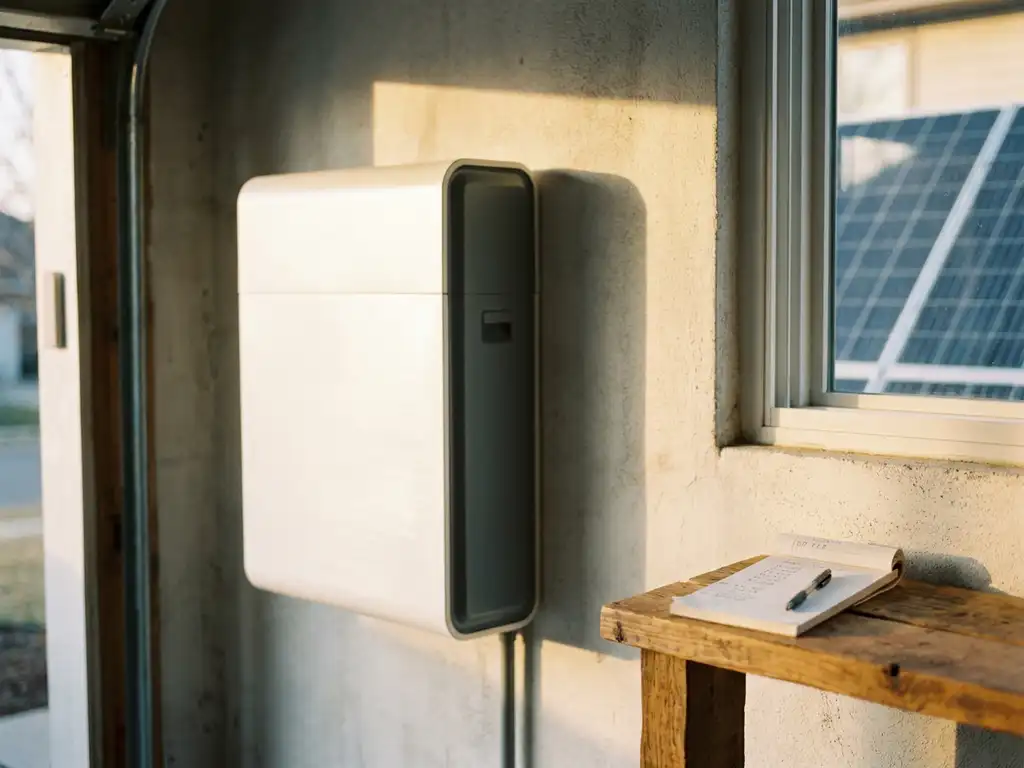
Home batteries have moved well beyond early-adopter territory. As energy prices remain volatile and grid export tariffs continue to shrink in many European markets, more households and businesses are asking the same question: does a home battery actually pay for itself? In 2026, the honest answer is that it depends heavily on a handful of variables, and understanding those variables is what separates a smart investment from an expensive disappointment. This article walks through what realistic returns look like, what drives them, and where most buyers go wrong.
Average payback periods for home batteries in 2026
Payback periods for home battery systems in 2026 typically range between 6 and 12 years, depending on system size, local electricity tariffs, and how the battery is used. That range has narrowed compared to a few years ago, largely because battery hardware costs have continued to fall while retail electricity prices in most European markets have stayed elevated.
A 10 kWh lithium-iron-phosphate (LFP) battery installed in the Netherlands or Belgium, for example, might cost between €5,000 and €8,000 fully installed. If that battery allows a household or small business to shift 8 to 10 kWh of self-generated solar energy per day away from grid export and into self-consumption, annual savings can reach €600 to €1,200 at current tariff levels. That puts the payback window firmly within the warranty lifespan of most modern batteries, which is typically 10 years or more at 80% remaining capacity.
Germany and Spain show slightly different dynamics. In Germany, high grid tariffs make self-consumption especially valuable. In Spain, net metering compensation has been limited, which makes storing solar energy for evening use a more financially compelling option than exporting it.
Key factors that determine your battery ROI
Return on investment for a home battery is not a fixed number. It is the result of several interacting variables, and changing any one of them can shift the outcome significantly.
Electricity tariff structure
The single biggest driver is the gap between what electricity costs to import from the grid and what is received for exporting it. Where that gap is wide, storing self-generated energy and using it later creates real financial value. Where export compensation is generous, the case for a battery weakens. In 2026, most European markets have moved toward lower export rates, which strengthens the battery ROI argument.
Battery capacity and daily cycling
A battery that cycles once per day delivers far more value over its lifetime than one that sits partially charged for long periods. Sizing the battery correctly to match actual daily consumption patterns is critical. Oversizing leads to underutilization; undersizing means leaving savings on the table. Using a solar battery calculator to model realistic cycling patterns before purchasing is one of the most practical steps any buyer can take.
Installation quality and system integration
A poorly configured inverter or a battery that is not properly integrated with the solar system can reduce effective capacity by 10 to 20%. This is where the quality of the installation company matters enormously. Battery runtime and charge efficiency are directly affected by how well the components communicate with each other.
How pairing solar panels with a battery boosts returns
A solar and battery combination consistently outperforms either technology installed in isolation. The reason is straightforward: solar panels generate energy when the sun shines, which often does not align with peak consumption hours. A battery bridges that gap, storing midday generation for use in the evening or overnight.
When modelling a solar-to-battery setup, the combined self-consumption rate can rise from around 30 to 40% with solar alone to 70 to 85% with a well-sized battery added. That improvement in self-consumption directly translates into fewer kilowatt-hours purchased from the grid, which is where the financial return is realized. Running a proper battery capacity calculator before installation helps identify the optimal battery size relative to the solar array, avoiding the common mistake of pairing a small battery with a large PV system.
Beyond the financial case, the combination also provides a degree of energy resilience. During grid outages, a solar-plus-battery system can maintain power to critical loads, which has become an increasingly valued feature for both residential and commercial installations.
Common mistakes that reduce home battery ROI
Several recurring errors consistently drag down real-world returns, and most of them happen before the system is even switched on.
- Oversizing the battery relative to solar output: A large battery paired with a small solar array will rarely charge fully, reducing effective utilization and stretching the payback period.
- Ignoring dynamic tariffs: Many energy suppliers now offer time-of-use pricing. Failing to configure the battery management system to charge during cheap off-peak hours and discharge during expensive peak hours leaves significant savings uncaptured.
- Choosing the lowest-cost installer: Poor installation quality affects battery longevity and system efficiency. A substandard installation can reduce the effective battery lifespan by years.
- Not accounting for degradation: Battery capacity declines over time, typically by 2 to 3% per year. ROI calculations that assume constant capacity throughout the warranty period will be optimistic.
- Skipping a battery usage calculator at the planning stage: Without modelling actual load profiles and solar generation data, it is easy to make sizing decisions based on marketing material rather than real consumption patterns.
What a realistic ROI calculation looks like
A grounded battery charge calculator approach starts with three inputs: the cost of the installed system, the annual savings generated through self-consumption and tariff arbitrage, and the expected degradation curve over the battery’s life. From those inputs, a net present value calculation gives a far more honest picture than a simple payback period.
Consider a practical example. A 10 kWh battery installed for €6,500 in the Netherlands, paired with an existing 8 kWp solar system, might realistically save €900 per year in year one, declining gradually as capacity degrades. Over a 12-year horizon, total savings could reach €9,500 to €10,000 in nominal terms, representing a positive return even after accounting for degradation. That is a reasonable outcome, not a best-case scenario.
The calculation changes materially if electricity prices rise, if the household adds an EV that can charge from the battery overnight, or if grid export compensation is reduced further by regulation. Building those scenarios into the model, rather than relying on a single-point estimate, produces a more robust investment decision.
How OpusFlow supports battery installation businesses
For installation companies managing multiple home battery projects across different markets, the operational complexity behind each installation is just as important as the financial case for the end customer. Quoting accurately, scheduling crews efficiently, tracking stock, and managing aftercare all determine whether a battery installation business is actually profitable at scale.
OpusFlow is built specifically for sustainable installation companies handling exactly this kind of work. Our platform helps installation businesses:
- Generate accurate quotes and proposals using built-in calculation tools, including a solar and battery calculator that models system performance before the sale is closed
- Connect sales directly to planning, so confirmed deals automatically trigger scheduling and procurement workflows without manual handoffs
- Track job costs in real time, reducing the risk of projects going over budget
- Manage inventory across multiple crews and locations, ensuring the right components are available when needed
- Automate aftercare follow-ups and maintenance scheduling, turning one-time installations into long-term customer relationships
Whether a business is running five installations a month or fifty, the same operational challenges apply. OpusFlow replaces the patchwork of spreadsheets and disconnected tools with a single platform designed for the realities of sustainable installation work. Get in touch with our team to see how OpusFlow can help your installation business scale without adding unnecessary complexity.
Related Articles
- What is a self-consumption scenario comparison and why does it matter in a battery quote?
- What happens to your existing data when you switch to a new ERP system?
- Why does communication break down between the office and field teams?
- How does ERP software help installation businesses scale from 5 to 50 employees?
- How can ERP software improve productivity for renewable energy contractors?