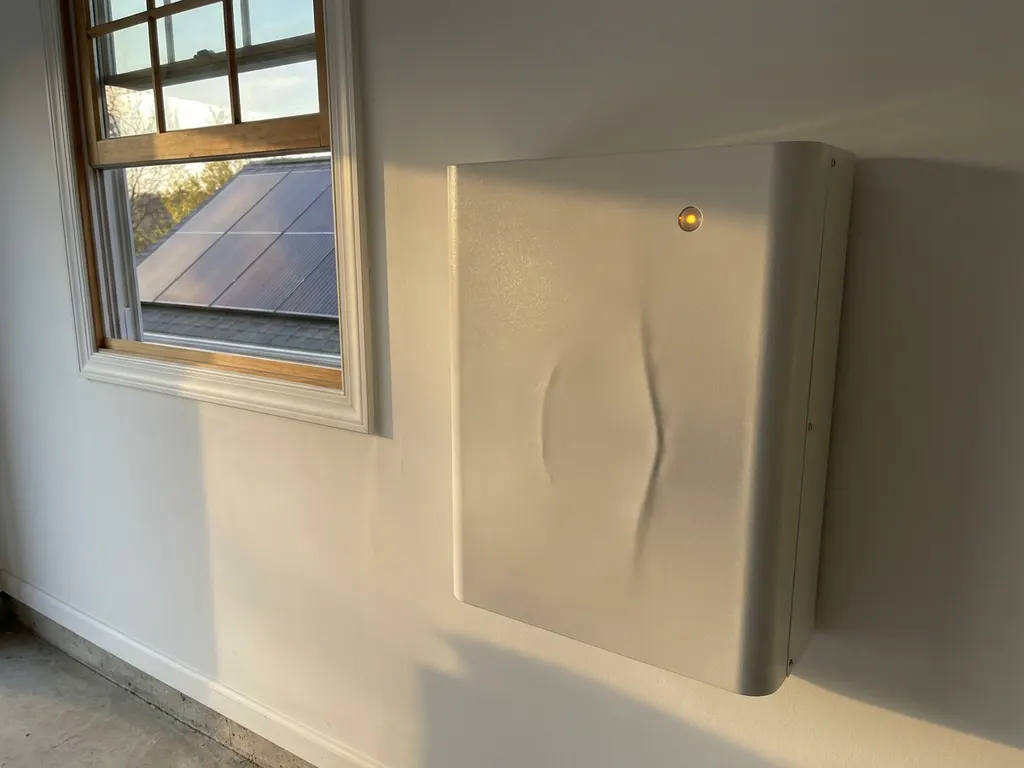
Battery duration refers to how long a home battery can supply power to your household before it runs out of stored energy. For most residential battery systems, this ranges from a few hours to a full day or more, depending on the battery’s capacity and your energy consumption. The sections below break down the key questions installation professionals and their clients need to understand about battery duration and how to calculate it accurately.
How long can a home battery actually power your house?
A typical home battery can power a house for anywhere between 4 and 24 hours, depending on its usable capacity and the total load of the appliances being run. A standard 10 kWh battery powering a moderate household drawing around 1 kW per hour will last approximately 10 hours under ideal conditions.
In practice, the actual runtime depends on which appliances are active at any given time. Running high-draw devices such as electric ovens, heat pumps, or EV chargers simultaneously will drain a battery significantly faster than powering lights, a refrigerator, and a few smaller devices. For households aiming to run entirely on stored solar energy overnight, a battery with higher usable capacity or multiple stacked units is often necessary.
It is also worth noting that most battery systems have a usable capacity that is slightly lower than their rated capacity. Manufacturers typically limit discharge to protect battery health, so a 13.5 kWh battery may deliver around 13 kWh of usable energy in practice.
What factors affect how long a battery lasts?
Battery duration is influenced by four primary factors: usable capacity, household energy demand, depth of discharge, and the efficiency of the inverter or battery management system. Each of these variables directly determines how many hours of backup or self-consumption a battery can deliver.
- Usable capacity: The amount of energy the battery can actually deliver, expressed in kilowatt-hours (kWh). Higher capacity means longer runtime.
- Household energy demand: The total power draw of active appliances at any moment, measured in kilowatts (kW). The higher the load, the faster the battery depletes.
- Depth of discharge (DoD): Most batteries are designed to discharge only to a certain percentage of their total capacity to preserve battery health. A battery with a 90% DoD rating delivers more usable energy than one limited to 80%.
- Inverter and system efficiency: Energy is lost during conversion between DC and AC. A more efficient inverter or hybrid system retains more of the stored energy for actual use.
- Temperature: Extreme cold or heat can reduce effective battery output, particularly in outdoor or poorly insulated installations.
For installation companies advising clients on battery sizing, understanding how these factors interact is essential to recommending the right system for each property’s actual consumption profile.
What’s the difference between battery capacity and battery duration?
Battery capacity is the total amount of energy a battery can store, measured in kilowatt-hours (kWh). Battery duration is how long that stored energy lasts under a given load, measured in hours. Capacity is a fixed specification of the hardware; duration is a variable outcome that depends on how the battery is used.
Think of it this way: capacity is the size of the fuel tank, and duration is how far you can drive before it empties. Two homes with identical 10 kWh batteries will experience very different battery durations if one household draws 0.5 kW per hour and the other draws 2 kW per hour.
This distinction matters when advising clients. A battery with a large capacity does not automatically guarantee long duration if the household’s energy demand is high. Accurate battery sizing calculations must account for both the stored energy available and the expected consumption pattern throughout the day and night.
How is battery duration calculated?
Battery duration is calculated by dividing the battery’s usable capacity (in kWh) by the average power demand (in kW). The resulting figure gives the estimated runtime in hours. For example, a 10 kWh battery with a usable capacity of 9 kWh powering a 1.5 kW load will last approximately 6 hours.
The formula is straightforward:
- Determine the battery’s usable capacity in kWh (rated capacity multiplied by the depth of discharge percentage).
- Calculate the household’s average power demand in kW, based on appliance usage and consumption data.
- Divide usable capacity by average demand to get estimated duration in hours.
In real-world scenarios, this calculation becomes more complex because energy demand fluctuates throughout the day. A more accurate approach uses hourly consumption profiles rather than a single average figure. This is where a battery duration calculator becomes particularly useful, allowing installers to model different usage scenarios and match battery specifications to actual client needs. Tools that integrate consumption data from smart meters or energy monitors produce significantly more reliable estimates than manual calculations.
Does battery duration change over time?
Yes, battery duration decreases gradually over time as the battery’s capacity degrades through repeated charge and discharge cycles. Most lithium-based home batteries retain around 70 to 80 percent of their original capacity after 10 years of regular use, which means the effective runtime shortens accordingly.
The rate of degradation depends on several factors. Batteries that are regularly charged to 100% and discharged to near zero experience faster wear than those kept within a more conservative charge range. High operating temperatures also accelerate degradation. Quality battery management systems mitigate these effects by optimizing charge cycles and maintaining safe operating conditions.
For installation companies managing long-term client relationships and service contracts, tracking battery health over time is an important part of aftercare. Monitoring degradation allows for proactive maintenance recommendations and helps clients plan for eventual battery replacement or capacity upgrades before performance becomes noticeably poor.
What battery duration do you need for solar storage?
For solar storage, the required battery duration depends on when solar generation occurs versus when the household consumes energy. In most cases, a battery needs to bridge the gap between peak solar production during the day and evening or nighttime demand. For a typical residential property, this means a battery capable of delivering 6 to 12 hours of runtime at average household load is sufficient.
The goal of solar storage is generally to maximize self-consumption of generated energy rather than to provide full backup power. This means the battery only needs to cover the hours when the solar panels are not producing enough to meet demand, typically from late afternoon through the night until morning generation resumes.
Larger properties, homes with heat pumps, or businesses with higher overnight consumption will require greater capacity to achieve meaningful self-sufficiency. A proper battery duration calculator that factors in the solar system’s output profile, the property’s consumption pattern, and seasonal variation in generation will produce far more accurate recommendations than rule-of-thumb sizing.
How OpusFlow supports battery duration calculations for installers
For installation companies advising clients on home battery systems, having accurate calculation tools and streamlined workflows makes a significant difference in both sales conversion and project quality. OpusFlow is built specifically for sustainable installation businesses and addresses battery duration planning as part of a broader operational workflow.
- Integrated battery calculator: OpusFlow includes a dedicated solar battery calculator that allows installers to model capacity, duration, and self-consumption scenarios based on actual client data.
- Calculation and quotation module: Generate accurate, professional quotes that reflect the correct battery sizing for each project, reducing errors and back-and-forth with clients.
- Project management from sales to aftercare: Track battery installations, schedule maintenance visits, and monitor long-term system performance all within one platform.
- Workflow automation: Automate follow-up tasks as deals progress, ensuring no client is left without timely advice on battery upgrades or replacements as systems age.
- AI-powered support with Toni: OpusFlow’s AI agent Toni helps teams work faster by surfacing relevant data and supporting decision-making across the sales and installation process.
Whether you manage a mid-size installation business or a large enterprise running hundreds of projects simultaneously, OpusFlow gives your team the tools to handle battery projects with precision and efficiency. Get in touch with OpusFlow to see how the platform can support your battery installation workflow.
Related Articles
- What is the difference between a one-off invoice and a recurring contract?
- How does ERP software support solar panel installation companies specifically?
- What tax and compliance features should installers look for in business software?
- What role does customer data play in growing an installation business?
- How can ERP software help installation companies track employee hours?