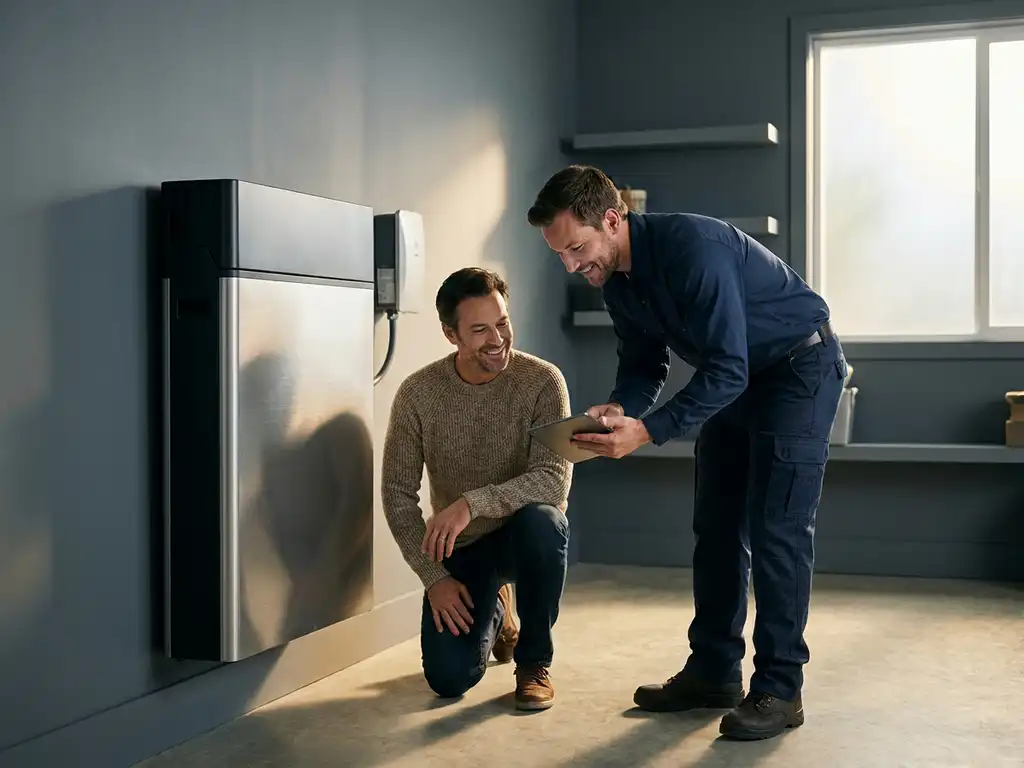
Home battery installations have become one of the fastest-growing segments within the sustainable energy sector. As more households and businesses invest in battery storage systems, the role of the installer does not end at commissioning. In fact, the quality of after-sales service often determines whether a customer becomes a long-term advocate or a source of negative reviews. For installation companies operating at scale, understanding what battery customers genuinely expect after the sale is not just good practice. It is a competitive necessity.
The expectations around home battery aftercare are rising in parallel with adoption rates. Customers are more informed, more connected, and more vocal than ever before. Installation businesses that treat aftercare as a secondary concern tend to discover this the hard way, through churn, complaints, and missed referral opportunities. The companies that thrive are those that build structured, repeatable aftercare processes from day one.
Why home battery aftercare shapes long-term customer loyalty
After-sales service is the single biggest driver of customer loyalty in the home battery market. Unlike a solar panel installation, which is largely passive once commissioned, a battery system interacts dynamically with solar generation, grid pricing, and household consumption. Customers feel this interaction daily, which means any performance issue becomes immediately visible and personal.
When an installer provides proactive, reliable aftercare, customers associate the positive performance of their system with the company that installed it. That emotional connection translates directly into repeat business, referrals, and long-term service contracts. Conversely, a single unresolved issue or a slow response to a fault can undo months of goodwill built during the sales and installation process. Aftercare is not a cost centre. It is a revenue driver.
The most common after-sales expectations of home battery owners
Battery customers arrive with a clear set of expectations, even if they do not always articulate them upfront. Understanding these expectations allows installation businesses to design aftercare offerings that feel natural and reassuring rather than reactive and disorganised.
- System performance transparency: Customers want to understand how their battery is performing, including charge cycles, capacity retention, and energy savings. A clear monitoring interface or regular performance summary goes a long way.
- Fast fault resolution: When something goes wrong, customers expect a response within hours, not days. Delays in fault resolution are consistently the top driver of negative reviews in the installation sector.
- Warranty clarity: Customers expect the installer to be their first point of contact for warranty claims, not a manufacturer’s call centre. Owning the warranty process builds trust.
- Guidance on system optimisation: Many customers do not fully understand how to get the most out of their battery. Installers who offer periodic optimisation advice position themselves as ongoing partners rather than one-time vendors.
- Proactive communication: Customers do not want to chase their installer. They expect to be informed about firmware updates, scheduled maintenance, or any performance anomalies before they notice them.
Meeting these expectations consistently requires more than good intentions. It requires operational systems that make aftercare delivery predictable and scalable, especially as the customer base grows.
How response time and communication quality affect satisfaction
Response time is the most measurable dimension of aftercare quality, and it carries disproportionate weight in customer satisfaction. Research across field service industries consistently shows that the speed of initial response matters more to customers than the speed of resolution. Acknowledging a problem quickly signals competence and care, even before a fix is in place.
Communication quality matters just as much as speed. A fast response that is vague or confusing can frustrate customers more than a slightly slower response that is clear and actionable. Customers want to know what the problem is, what is being done about it, and when they can expect a resolution. Installers who communicate in plain language, without technical jargon, and who follow up proactively throughout the process consistently outperform competitors on satisfaction scores.
For companies managing dozens or hundreds of battery installations, maintaining this level of communication manually becomes unsustainable. Structured workflows, automated status updates, and centralised customer records are what separate companies that scale well from those that lose quality as they grow. This is where battery system planning tools and integrated project management become genuinely valuable.
Maintenance schedules and monitoring: what customers consider standard
The definition of “standard” aftercare is shifting upward. What felt like premium service two years ago is increasingly the baseline expectation in 2026. Customers now consider remote monitoring, annual maintenance checks, and proactive performance alerts to be part of the installation package, not optional add-ons.
Remote monitoring as a baseline
Most modern home battery systems come with manufacturer monitoring portals, but customers expect their installer to actively monitor that data, not just hand over login credentials. Proactive monitoring means the installer identifies a degrading cell or an unusual discharge pattern before the customer notices a problem. This shift from reactive to predictive service is what defines best-in-class aftercare in the battery sector.
Scheduled maintenance visits
Annual or biannual maintenance visits are becoming standard practice among leading installation companies. These visits typically cover physical inspection of connections, firmware verification, capacity testing, and a brief customer consultation on system usage. Customers who receive scheduled visits report significantly higher satisfaction and are far more likely to refer the installer to others.
Offering structured maintenance contracts also provides installation companies with a predictable recurring revenue stream, which improves financial stability and reduces dependence on new project acquisition alone. For companies focused on sustainable installation business scalability, service contracts are one of the most effective tools available.
How ERP software helps installers meet aftercare demands at scale
Delivering consistent aftercare across a growing customer base is fundamentally an operational challenge. The quality of the service depends on how well the company manages information, schedules, communication, and follow-up across every customer and every technician simultaneously. Without the right systems, quality degrades as volume increases.
This is the core tension that many installation businesses face as they grow. The processes that worked well for fifty customers begin to break down at two hundred. Spreadsheets, email threads, and disconnected tools create gaps where customers fall through, appointments get missed, and service requests go unresolved. The result is not just a poor customer experience. It is lost revenue and reputational damage.
Modern ERP platforms built for the installation sector address this directly by connecting sales, planning, project management, and aftercare into a single operational workflow. When a customer reports a fault, the right technician can be dispatched with full system history visible, the visit can be logged against the project record, and the customer can receive automated updates throughout. This kind of end-to-end visibility is what allows companies to manage installation projects more efficiently without proportionally increasing headcount. For companies exploring how aftercare fits into their broader operations, understanding ERP solutions for installers is a natural starting point.
How OpusFlow helps installers deliver professional home battery aftercare
We built OpusFlow specifically for sustainable installation companies that need to manage complex workflows, including aftercare, without losing quality as they scale. Our platform connects every stage of the customer lifecycle, from initial quotation through to ongoing service management, in one centralised system.
Here is how OpusFlow supports aftercare delivery in practice:
- Automated task creation: When a service request comes in, tasks are automatically assigned to the right team member based on availability and skill set, eliminating manual coordination.
- Full project history: Every technician arrives on site with complete visibility of the installation record, previous visits, system specifications, and any open issues.
- Customer portal: Customers can log requests, track service status, and access their system documentation without needing to call or email, reducing inbound workload for the office team.
- Planning and scheduling: Maintenance visits and follow-up appointments are managed within the same planning module used for new installations, keeping capacity visible across the entire operation.
- Workflow automations: Proactive communication triggers, such as service reminders and status updates, run automatically, ensuring no customer is left without an update.
For installation companies that want to build a scalable, repeatable aftercare operation without hiring a large support team, OpusFlow provides the infrastructure to make that possible. Get in touch with our team to see how we can help your business deliver aftercare that genuinely sets you apart.
Related Articles
- What is automated invoicing and how does it save time for installers?
- How do growing installation businesses use AI to scale without adding headcount?
- How do service companies improve operational efficiency?
- What is the difference between AI and automation in field service software?
- Can ERP systems help installation companies comply with environmental regulations?