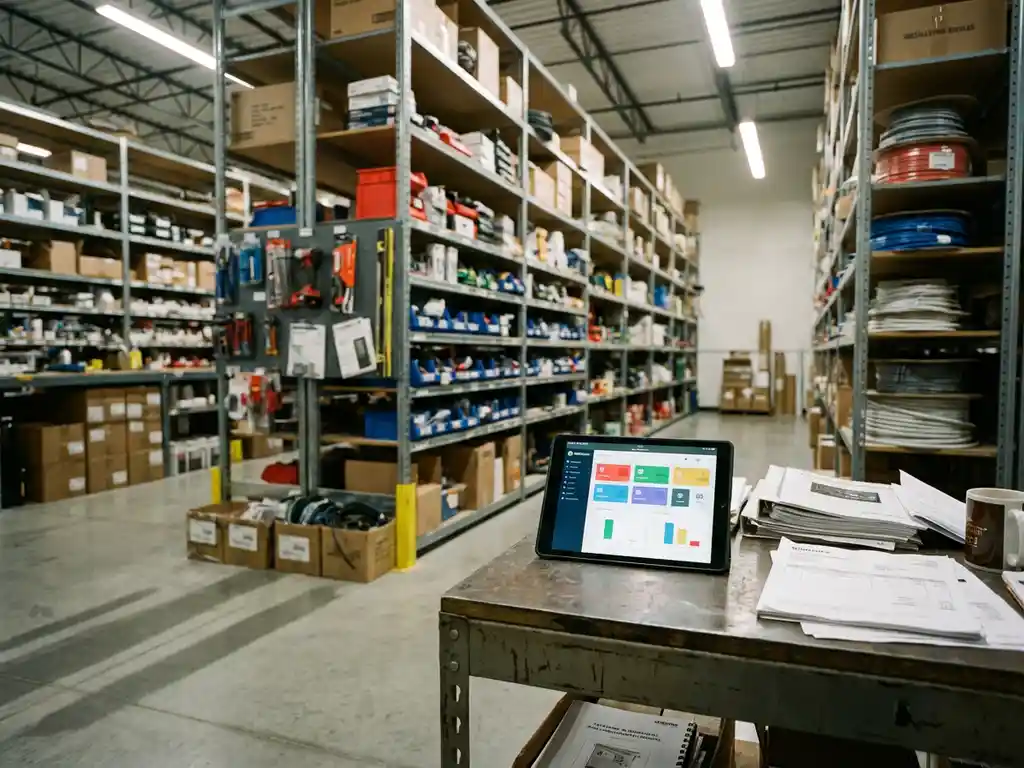
ERP software helps installation companies manage inventory through real-time tracking, automated stock control, and centralised visibility across multiple project sites. It prevents costly stockouts, reduces overstocking of expensive equipment, and coordinates materials between warehouses and active installations. Modern ERP systems provide automated reorder points, supplier integration, and multi-location inventory management specifically designed for sustainable installation businesses handling solar panels, heat pumps, and electrical components.
What is ERP inventory management, and why do installation companies need it?
ERP inventory management is a centralised system that tracks, controls, and optimises stock levels across all business locations and projects. For installation companies, it provides real-time visibility into component availability, automates purchasing decisions, and coordinates materials between warehouses and job sites through integrated modules.
Installation companies face unique inventory challenges that standard warehouse management cannot address. Unlike traditional retailers, sustainable installers must manage diverse, high-value components, including solar panels, heat pumps, charging stations, and electrical equipment, across multiple simultaneous projects. Each installation requires specific technical specifications, with components that cannot be substituted between different manufacturers or models.
The complexity increases when managing inventory across various project stages. Materials needed for site surveys differ from installation components, while maintenance services require a different spare-parts inventory. ERP systems designed for sustainable installation companies understand these workflows, providing specialised tracking for equipment warranties, certification requirements, and project-specific component matching.
Installation businesses also deal with expensive, slow-moving inventory that requires careful cash-flow management. A comprehensive ERP platform like OpusFlow eliminates the need for multiple software packages, centralising inventory control alongside project management, purchasing, and financial planning to support better decision-making.
How does ERP software track inventory across multiple installation projects?
ERP software tracks inventory through real-time synchronisation between warehouses, job sites, and project schedules. It monitors stock movements automatically, updates availability instantly when materials are allocated to projects, and provides multi-location visibility that prevents double-booking of components across different installations.
The tracking system works through integrated modules that connect inventory management with project planning and scheduling. When project managers assign materials to specific installations, the ERP system automatically reserves those components, updating available stock levels across all locations. This prevents the common problem of promising equipment to multiple projects simultaneously.
Real-time tracking capabilities include barcode scanning, mobile access for field teams, and automated status updates when materials move between locations. Installation teams can check component availability, confirm deliveries, and update project progress directly from job sites, ensuring accurate inventory records throughout the installation process.
Multi-location inventory visibility allows managers to see stock levels across central warehouses, regional depots, and active project sites from a single dashboard. The system tracks which specific components are allocated to which projects, when they are scheduled for delivery, and which items are available for new installations.
Advanced ERP systems also integrate with supplier systems, automatically updating delivery schedules and tracking inbound shipments. This coordination ensures installation teams have accurate information about component availability and can adjust project timelines accordingly.
What inventory challenges do sustainable installation companies face without ERP?
Without ERP systems, installation companies struggle with stockouts during critical project phases, overstocking expensive equipment that ties up cash flow, and manual tracking errors that lead to project delays. They lack visibility into component availability across multiple locations and cannot coordinate inventory effectively between different installation teams.
Stockouts represent the most costly challenge, particularly when they occur during active installations. Solar panel installations cannot continue without inverters, while heat pump projects halt without specific refrigerant lines or electrical components. Manual inventory systems cannot provide real-time updates, leading to situations where teams arrive at job sites only to discover that essential components are unavailable.
Overstocking creates equally serious problems for sustainable installers. Heat pumps, solar panels, and charging stations represent significant capital investment, with some components costing thousands of pounds. Without accurate demand forecasting and automated reorder points, companies often maintain excessive safety stock that strains cash flow and warehouse space.
Manual tracking errors compound these challenges through spreadsheet mistakes, miscommunication between teams, and outdated information. Installation coordinators cannot accurately promise delivery dates to customers without real-time inventory visibility, leading to project delays and customer dissatisfaction.
The lack of integration between inventory management and project planning creates additional inefficiencies. Teams cannot easily determine which components are allocated to which projects, leading to confusion about material availability and poor resource allocation across multiple installations.
How can ERP software prevent costly inventory mistakes in installation businesses?
ERP software prevents inventory mistakes through automated reorder points, real-time stock alerts, and integrated supplier systems that maintain optimal inventory levels. It eliminates double-booking errors, provides accurate availability information, and automates purchasing decisions based on project schedules and historical usage patterns.
Automated reorder points ensure critical components never reach dangerously low levels. The system monitors usage patterns for different types of installations and automatically generates purchase orders when stock falls below predetermined thresholds. This prevents both stockouts and emergency ordering at premium prices.
Real-time stock alerts notify managers immediately when inventory levels change, components are allocated to projects, or delivery schedules shift. These notifications allow proactive management of potential shortages before they impact installation schedules.
Integration with supplier systems streamlines the entire procurement process. ERP platforms can automatically send purchase orders to approved suppliers, track delivery confirmations, and update inventory levels when shipments arrive. This reduces manual processing errors and ensures accurate stock records.
Preventing double-booking across multiple projects is another crucial benefit. When installation coordinators allocate components to specific projects, the ERP system immediately updates availability across all locations, preventing other teams from promising the same equipment to different customers.
Advanced inventory management modules also provide predictive analytics, helping installation companies forecast demand based on project pipelines, seasonal patterns, and historical usage. This enables more accurate purchasing decisions and optimal cash-flow management for expensive sustainable technology components.
How OpusFlow delivers comprehensive inventory management for installation companies
OpusFlow provides a comprehensive ERP solution specifically designed for sustainable installation companies, addressing all the inventory management challenges discussed above. Our platform integrates seamlessly with your existing workflows to deliver:
• Real-time inventory tracking across multiple locations and project sites
• Automated reorder points and purchasing workflows for sustainable technology components
• Integrated project management that prevents double-booking and optimises resource allocation
• Mobile access for field teams to update inventory status directly from job sites
• Predictive analytics for demand forecasting and cash-flow optimisation
• Centralised dashboard providing complete visibility across warehouses, job sites, and supplier networks
OpusFlow’s inventory management capabilities are built specifically for the unique requirements of solar, heat pump, and EV charging installation businesses. Our system understands the complexities of managing high-value components, technical specifications, and project-based allocation that traditional inventory systems cannot handle.
Transform your installation business with intelligent inventory management that reduces costs, prevents delays, and improves customer satisfaction. Contact our team today to discover how OpusFlow can streamline your inventory operations and eliminate the costly mistakes that impact your bottom line.
Related Articles
- Why do customers say they need to think about it after a battery quote?
- How do you generate a battery ROI report that exports directly into a PDF proposal?
- What is a hybrid inverter and when do you need one for battery storage?
- Is AI only for big companies or can small installation businesses use it too?
- How does an AI assistant reduce calls between the office and field technicians?