Effective material tracking forms the backbone of successful installation projects, yet many companies struggle with visibility into their inventory levels, purchase orders, and material costs. When installation teams arrive on-site only to discover missing components or incorrect quantities, projects face costly delays and customer dissatisfaction. Modern ERP software transforms this challenge by providing comprehensive material tracking capabilities that integrate seamlessly with project workflows and financial systems.
For sustainable installation companies managing complex projects involving solar panels, heat pumps, and charging stations, material tracking becomes even more critical. These specialized components often have longer lead times, specific storage requirements, and higher costs than standard installation materials. A robust material tracking system ensures that every component is accounted for from procurement through installation completion.
Real-Time Material Visibility Across Projects
Real-time material visibility provides installation managers with instant access to current inventory levels, material locations, and allocation status across all active projects. This transparency eliminates the guesswork that leads to project delays and cost overruns.
Modern ERP systems track materials at multiple levels, from warehouse stock to project-specific allocations. Installation managers can view which materials are reserved for specific projects, what quantities remain available for new work, and where materials are physically located within storage facilities. This granular visibility extends to tracking materials that have been shipped to job sites but not yet installed, ensuring complete accountability throughout the supply chain.
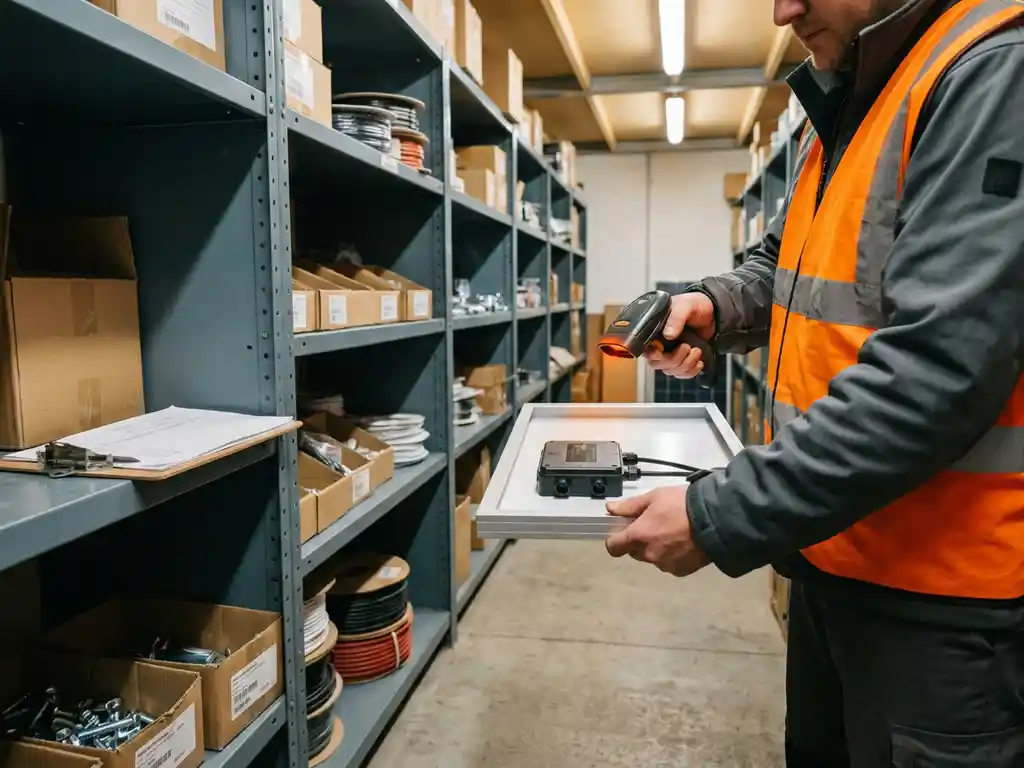
The system automatically updates inventory levels as materials move through different stages of the installation process. When technicians scan components during installation or mark items as used in mobile applications, inventory levels adjust immediately. This real-time updating prevents the common scenario where multiple projects compete for the same materials because outdated information suggested adequate availability.
Advanced material tracking also includes lot tracking and serial number management, which is essential for warranty management and regulatory compliance in sustainable installations. Solar panels, inverters, and battery systems require detailed tracking for warranty claims and performance monitoring throughout their operational lifespan.
Automated Purchase Order Generation
Automated purchase order generation streamlines procurement by creating orders when inventory levels reach predetermined thresholds or when project requirements exceed available stock. This automation reduces manual ordering tasks while preventing stockouts that could delay project timelines.
The system analyzes upcoming project requirements against current inventory levels and automatically generates purchase orders for needed materials. Smart algorithms consider factors such as supplier lead times, minimum order quantities, and bulk pricing discounts when determining optimal order timing and quantities. This intelligent ordering helps maintain adequate stock levels while minimizing carrying costs and storage requirements.
Integration with supplier systems further enhances automation by enabling electronic purchase order transmission and automated order confirmations. Many ERP systems can receive electronic delivery confirmations and automatically update inventory levels when shipments arrive. This seamless data flow reduces administrative overhead while improving accuracy in material tracking.
The automation extends to handling special-order items common in sustainable installations. When projects require custom solar mounting systems or specialized heat pump components, the system can automatically generate purchase orders with project-specific details and delivery requirements. This ensures that unique materials arrive precisely when needed without requiring manual intervention from procurement teams.
Material Cost Tracking and Project Profitability
Material cost tracking provides detailed visibility into how material expenses impact individual project profitability and overall business performance. Accurate cost tracking enables better pricing decisions and identifies opportunities for cost optimization across the business.
The system captures material costs at multiple points, including initial purchase price, freight charges, handling fees, and any price adjustments. This comprehensive cost tracking ensures that project profitability calculations reflect true material expenses rather than estimated costs. When material prices fluctuate, as often occurs with solar panels and battery systems, accurate cost tracking becomes essential for maintaining profit margins.
Advanced cost tracking includes landed cost calculations that factor in all expenses associated with getting materials to job sites. Transportation costs, storage fees, and handling charges are allocated appropriately to projects, providing a complete picture of material-related expenses. This detailed cost visibility helps installation companies identify which projects generate the highest returns and which material suppliers offer the best overall value.
The system also tracks material waste and unused components, providing insights into procurement efficiency and installation practices. When projects consistently have leftover materials, this data can inform future ordering decisions and help optimize material quantities for similar installations. AI-powered analytics can identify patterns in material usage that lead to more accurate project estimates and improved profitability.
Integration with Installation Workflows
Material tracking integration with installation workflows creates seamless connections between material management and field operations. This integration ensures that material information flows automatically between office systems and field teams without requiring duplicate data entry or manual updates.
Field technicians access real-time material information through mobile applications that sync with the central ERP system. They can verify material availability before traveling to job sites, confirm receipt of materials upon delivery, and update usage quantities as installations progress. This mobile integration eliminates communication gaps that often lead to project delays or material shortages.
The workflow integration includes automated material allocation when projects move through different phases. As projects advance from design approval to installation scheduling, the system automatically reserves required materials and updates availability for other projects. This automated allocation prevents double-booking of materials while ensuring that approved projects have guaranteed access to necessary components.
Quality control processes integrate with material tracking to ensure that only approved components are used in installations. The system can flag materials that haven’t passed inspection procedures or that have exceeded recommended storage timeframes. For sustainable installations where component quality directly impacts system performance and warranty coverage, this quality integration provides essential protection against defective installations.
How OpusFlow Helps with Material Tracking
We provide comprehensive material tracking capabilities designed specifically for sustainable installation companies managing complex inventories of solar panels, heat pumps, batteries, and charging stations. Our integrated approach eliminates the need for separate inventory management systems while providing real-time visibility across all projects and locations.
Key features of our material tracking solution include:
- Real-time inventory visibility with automatic updates from field operations
- Automated purchase order generation based on project requirements and stock levels
- Comprehensive cost tracking including landed costs and project-specific allocations
- Mobile integration enabling field teams to update material status instantly
- Serial number and lot tracking for warranty management and compliance
- Automated material allocation when projects advance through workflow stages
Our AI-powered system, Toni, transforms material data into actionable insights, helping you optimize inventory levels, reduce carrying costs, and prevent stockouts that delay projects. Ready to streamline your material tracking processes? Contact us to discover how our ERP solution can transform your material management operations and improve project profitability.
Related Articles
- How do you manage battery stock levels across multiple installation crews?
- Can a home battery power the whole house during a blackout?
- How do I know if my team is actually profitable per job?
- How does ERP software connect with accounting tools like DATEV or Xero?
- What is an API and why does it matter for installation business software?