The solar installation industry has reached a critical juncture where traditional project management approaches are proving inadequate for the complex demands of modern sustainable energy projects. As installation companies scale their operations and handle increasingly sophisticated solar deployments, the limitations of spreadsheets, basic scheduling tools, and fragmented software systems become painfully apparent. Artificial intelligence is emerging as a transformative solution, revolutionizing how solar installation companies plan, execute, and optimize their project workflows.
AI project management represents a fundamental shift from reactive, manual coordination to proactive, intelligent automation that anticipates challenges before they arise. For solar installation businesses managing multiple concurrent projects across diverse locations, this technological evolution offers unprecedented opportunities to enhance efficiency, reduce costs, and deliver superior customer experiences while maintaining the precision required for complex renewable energy installations.
Why Traditional Project Management Falls Short for Solar Installers
Traditional project management systems were designed for predictable, linear workflows that rarely exist in the dynamic world of solar installations. Solar projects involve intricate coordination between site assessments, permitting processes, equipment procurement, weather dependencies, and skilled technician scheduling across multiple locations.
Manual scheduling creates significant bottlenecks when installation teams must coordinate complex equipment deliveries with optimal weather windows while managing permit approval timelines. Traditional tools lack the sophisticated data processing capabilities needed to optimize resource allocation across multiple projects simultaneously. Installation companies frequently experience cost overruns and delayed completions because conventional project management approaches cannot adapt quickly to the variables inherent in solar deployments.
The fragmented nature of traditional project management creates information silos that prevent teams from accessing real-time project status updates. When project managers rely on separate systems for scheduling, inventory management, customer communication, and financial tracking, critical information gaps emerge that compromise decision-making quality. These disconnected workflows result in duplicated efforts, miscommunication between departments, and reduced visibility into project profitability until completion.
What AI-Powered Project Management Brings to Solar Installation
AI-powered project management transforms solar installation operations by providing intelligent automation that learns from historical project data to optimize future performance. Machine learning algorithms analyze patterns across completed projects to identify optimal scheduling sequences, predict potential delays, and recommend resource allocation strategies that maximize efficiency.
Intelligent task automation eliminates manual coordination overhead by automatically triggering appropriate actions when project milestones are reached. When permits are approved, AI systems can instantly notify installation teams, update material delivery schedules, and adjust customer communication timelines without human intervention. This seamless coordination ensures that project momentum continues without the delays typically associated with manual handoffs between departments.
Predictive analytics capabilities enable solar installation companies to anticipate challenges before they impact project timelines. AI systems analyze weather patterns, equipment availability, technician schedules, and permit processing times to identify potential conflicts weeks in advance. This foresight allows project managers to implement mitigation strategies proactively rather than responding to problems after they occur, significantly improving project completion rates and customer satisfaction.
How AI Streamlines Solar Project Planning and Execution
AI streamlines solar project planning through intelligent resource optimization that considers multiple variables simultaneously to generate optimal scheduling recommendations. Advanced algorithms evaluate technician skills, geographic proximity, equipment availability, and weather forecasts to create efficient project sequences that minimize travel costs while maximizing billable hours.
Automated workflow management ensures that project phases transition smoothly without manual intervention or oversight gaps. When site surveys are completed, AI systems automatically generate material lists, update procurement schedules, and notify installation teams about upcoming project requirements. This seamless coordination eliminates the administrative burden that traditionally consumes significant project management time while reducing the risk of overlooked tasks that can delay project completion.
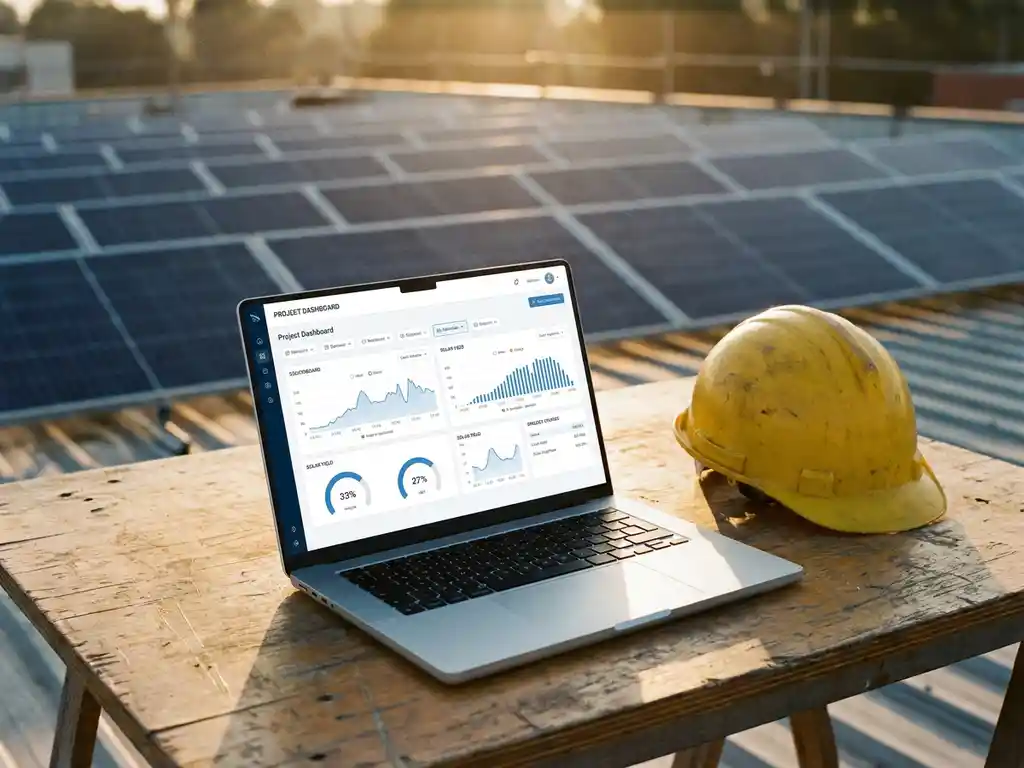
Real-time project monitoring through AI for ERP provides installation companies with unprecedented visibility into project performance across their entire portfolio. Machine learning algorithms continuously analyze project metrics to identify efficiency improvements and flag potential issues before they escalate into costly problems. This proactive monitoring capability enables project managers to maintain optimal performance standards while focusing their attention on strategic decision-making rather than routine administrative tasks.
Real-World Benefits Solar Companies See From AI Implementation
Solar installation companies implementing AI project management report significant improvements in project completion times and resource utilization efficiency. Intelligent scheduling algorithms typically reduce project duration by 15-25% by optimizing technician assignments and eliminating scheduling conflicts that traditionally cause delays. Companies also experience substantial cost savings through improved route optimization and reduced equipment downtime.
Enhanced customer satisfaction emerges as a primary benefit when AI systems provide accurate project timelines and proactive communication about potential changes. Automated customer updates keep clients informed throughout the installation process without requiring manual intervention from project coordinators. This improved communication transparency builds trust and reduces customer service overhead while enabling installation teams to focus on technical execution rather than administrative coordination.
Financial performance improvements become evident through better project profitability tracking and resource allocation optimization. AI systems provide real-time insights into project costs, labor efficiency, and material utilization that enable installation companies to identify profitable project types and optimize their service offerings. Companies report improved cash flow management through more accurate project completion forecasting and an enhanced ability to schedule projects for optimal financial performance.
Overcoming Common AI Adoption Challenges in Solar Installation
Implementation concerns about AI complexity often stem from misconceptions about the technical expertise required for successful adoption. Modern AI project management solutions are designed with user-friendly interfaces that require minimal technical training while providing comprehensive onboarding support to ensure smooth transitions from existing systems. Installation companies benefit from working with providers that offer dedicated implementation specialists who understand the unique requirements of solar project workflows.
Data integration challenges can be addressed through platforms that offer robust import capabilities and seamless connectivity with existing business tools. Successful AI adoption requires careful attention to data migration processes that preserve historical project information while establishing clean data foundations for future AI optimization. Companies should prioritize solutions that provide comprehensive integration support and flexible data management capabilities.
Staff adoption resistance typically decreases when employees experience the direct benefits of reduced administrative workload and improved project visibility. Training programs that focus on demonstrating time savings and efficiency improvements rather than technical complexity help teams embrace AI capabilities more readily. Installation companies achieve the best adoption results when they involve key team members in the implementation process and provide ongoing support throughout the transition period.
How OpusFlow Helps with AI Project Management for Solar Installation
OpusFlow revolutionizes solar installation project management through our integrated AI system, Toni, which transforms complex project data into actionable insights without requiring separate dashboards or business intelligence tools. Our comprehensive ERP platform combines intelligent project coordination with automated workflow management specifically designed for sustainable installation companies.
Our AI-powered solution delivers measurable improvements through:
- Intelligent resource optimization that automatically assigns the right teams based on skills and location
- Automated client communication and reminder systems integrated with calendar applications
- Real-time project tracking with predictive analytics for proactive issue resolution
- Strip planning functionality that divides complex projects into manageable tasks with clear visibility
- Workflow automation that eliminates manual coordination and reduces administrative overhead
Ready to transform your solar installation project management with AI? Contact OpusFlow today to discover how our AI-powered ERP platform can optimize your project workflows and accelerate your business growth in the competitive sustainable energy market.
Related Articles
- What maintenance does a home battery require after installation?
- How do you build a real-time dashboard to monitor your service business?
- How does ERP software help sustainable installers track their carbon footprint?
- What is an API and why does it matter for installation business software?
- How can ERP software help installation companies track material costs?