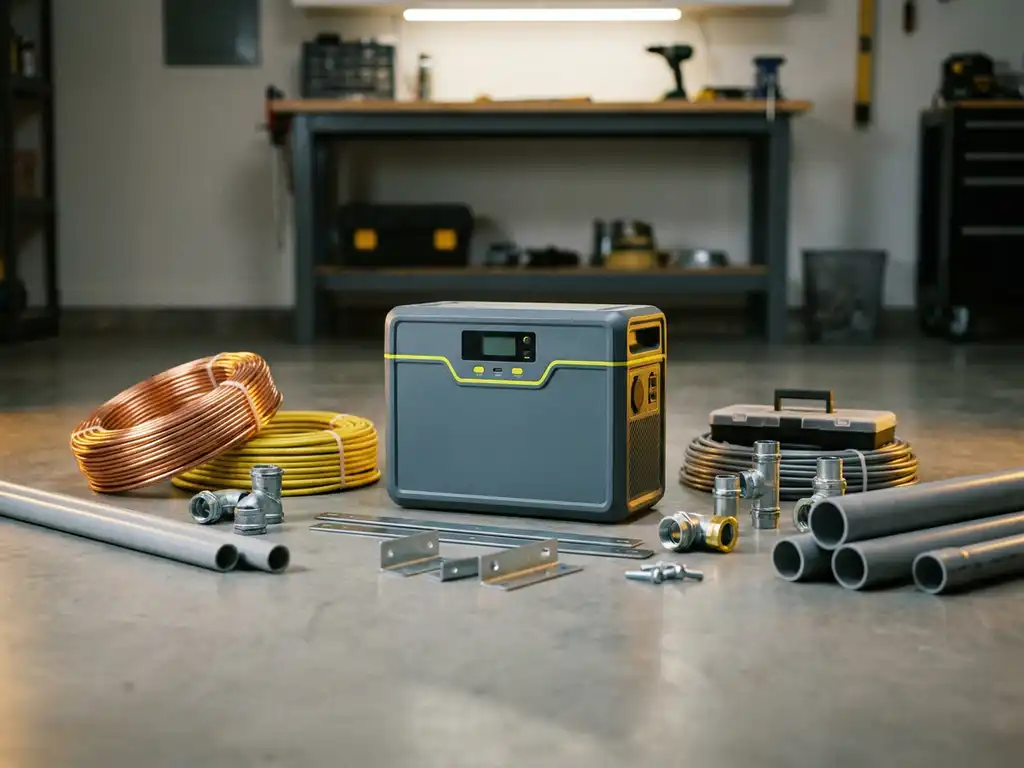
Installation day for a home battery system is where preparation meets execution. Unlike a straightforward electrical job, battery installations involve a mix of high-voltage components, precise cabling requirements, and compliance obligations that leave very little room for a last-minute trip to the supplier. For installation businesses running multiple crews across different sites, having the right materials on the van before the job starts is not just a matter of convenience. It is a direct factor in whether a job stays on budget and on schedule.
Getting this right consistently requires more than experience. It requires a structured approach to stock management that connects what is planned on a job sheet to what actually leaves the warehouse. This article breaks down exactly what needs to be on hand for a home battery installation, from the core hardware to the small consumables that are easy to overlook until you are already on site.
Core components every home battery installation requires
Every home battery installation starts with a defined set of primary components that must be present before work begins. Missing any of these means the job cannot be completed, which directly affects your job costing and crew utilisation.
The battery system itself is obviously central, but the surrounding hardware is equally critical. A standard installation typically requires the following core components:
- The battery unit and any associated expansion modules, pre-configured to the correct capacity for the installation
- The hybrid or battery inverter, matched to the battery system and the property’s existing solar setup if applicable
- DC and AC isolators rated appropriately for the system voltage and current
- AC and DC cabling in the correct cross-section, typically 6mm² or 10mm² DC cable for battery connections and appropriate AC cable for the grid connection
- Cable trays, conduit, and fixings to route and protect cables cleanly and in line with local wiring regulations
- Mounting brackets or wall fixings specific to the battery model being installed
- The energy meter or CT clamp for monitoring grid import and export, if not already installed during a prior solar job
Using a solar battery calculator during the quoting stage helps ensure the right battery capacity is specified before the job is even booked, reducing the risk of arriving on site with undersized or incompatible equipment.
Consumables and small materials that are easy to forget
The components that cause the most installation delays are rarely the big-ticket items. It is the small consumables that run out, get left behind, or simply never make it onto the picking list in the first place.
These are the materials that experienced installation managers include in every job pack as standard, regardless of what the job sheet says:
- Cable ties and tie mounts in multiple sizes for neat cable management
- Wire end ferrules in the relevant sizes for terminating stranded cable correctly
- Terminal blocks and busbar connectors for distribution points within the installation
- Self-amalgamating tape and electrical insulation tape for weatherproofing outdoor connections
- Gland plates and cable glands for clean, sealed entry points into enclosures
- DIN rail sections and DIN rail end stops if a small enclosure or sub-board is being installed
- Rawlplugs, screws, and anchor bolts in a range of sizes for wall fixings across different surface types
- Warning labels and voltage stickers required for compliance and safe isolation marking
Standardising a consumables kit per installation type and replenishing it after every job is one of the simplest ways to prevent avoidable delays. When this process is tied into your inventory management system, stock depletion becomes visible before it becomes a problem on site.
Safety and compliance materials to keep on the van
Home battery installations involve working with high-voltage DC systems, which carry specific safety and regulatory obligations that go beyond standard electrical work. Compliance is not optional, and the materials supporting it need to be treated as permanent van stock rather than something pulled together job by job.
Personal protective equipment
Every crew member working on a battery installation should have access to arc flash rated PPE, including insulated gloves rated to the appropriate voltage class, safety glasses, and non-conductive footwear. These items should be checked and replaced on a regular schedule rather than waiting until they show visible wear.
Safe isolation equipment
A calibrated voltage tester or multimeter, lockout-tagout devices, and a proving unit are essential for safe isolation procedures. These are not items to borrow from another crew or improvise around. Each van should carry a complete isolation kit as a fixed inventory item.
Documentation and compliance materials
Depending on the market, a completed battery installation typically requires on-site documentation including test certificates, grid notification forms, and handover documentation for the end customer. Having these prepared and printed, or available digitally through a field service workflow, prevents sign-off delays and protects the business in the event of a future inspection.
Keeping compliance materials consistent across all crews becomes significantly easier when job documentation is managed centrally rather than left to individual technicians to handle ad hoc.
How to align your stock levels with installation planning
The real challenge for growing installation businesses is not knowing what materials are needed. It is ensuring those materials are available, allocated, and on the right van at the right time, across multiple crews and job types running simultaneously.
When sales, planning, and stock management operate as separate systems, materials fall through the gaps. A job gets booked, the planner assigns a crew, but nobody has triggered a stock reservation or checked whether the specified battery model is actually in the warehouse. By the time the gap is discovered, the crew is already on the way.
Effective stock alignment requires a few structural habits:
- Attach a materials list to every job at the quoting stage, not just before installation. This gives the warehouse team enough lead time to procure and stage equipment.
- Set minimum stock thresholds for high-frequency consumables so replenishment is triggered automatically rather than reactively.
- Review upcoming job schedules weekly to identify any stock gaps before they become day-of problems.
- Track what is actually used per job against what was planned, to refine your standard materials lists over time.
For businesses managing multiple installation crews, this level of coordination is only sustainable when job planning and inventory are connected within the same platform. Disconnected tools create manual handoffs, and manual handoffs create errors.
How OpusFlow supports smarter battery installation management
OpusFlow is built specifically for sustainable installation companies, and the challenges described in this article are exactly the operational gaps our platform is designed to close. From the moment a battery job is quoted to the day the crew completes the installation, OpusFlow connects every step in a single system.
Here is what that looks like in practice:
- Integrated solar and battery calculator to specify the right system during the sales process, reducing equipment mismatches on site
- Stock and purchasing management that links directly to job planning, so materials can be reserved and tracked against specific installations
- Planning and project management modules that give operations teams full visibility over crew assignments, job status, and material readiness
- Digital forms and documentation to standardise compliance sign-off and handover documentation across every crew
- Workflow automations that trigger stock checks, procurement requests, and task assignments automatically as jobs move through the pipeline
- Toni, our AI agent, which helps teams surface operational bottlenecks and keep jobs on track without adding administrative overhead
If your installation business is ready to move beyond disconnected tools and build a process that scales, get in touch with our team to see how OpusFlow fits your operations.
Related Articles
- Why do battery deals close faster when ROI is calculated on-site rather than sent later?
- How long does a typical home battery installation take from survey to commission?
- How do you prevent material shortages on installation job sites?
- How to get your technicians to actually use a new app in the field
- What ERP features do wind farm contractors need most?