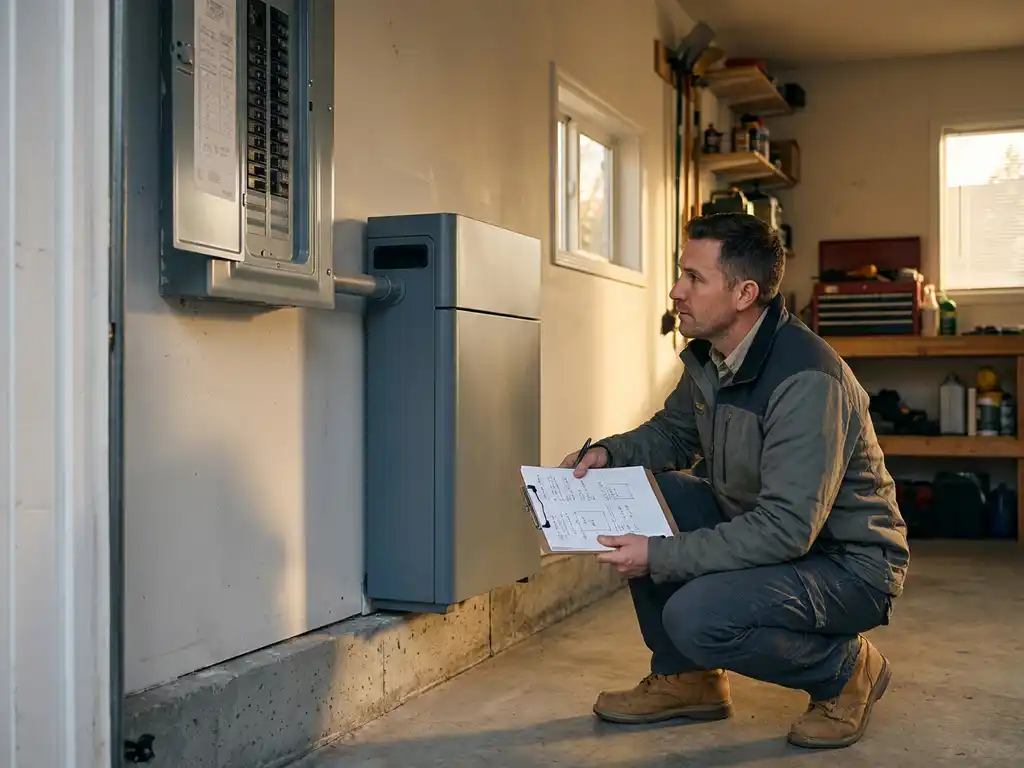
Getting battery sizing right starts long before any equipment arrives on site. A poorly scoped site visit leads to undersized systems, frustrated customers, and costly return visits that eat directly into project margins. For installation companies handling growing volumes of residential and commercial battery projects, the quality of data collected during that initial visit determines whether the system performs as promised or falls short. A structured, repeatable approach to site surveys is one of the most effective ways to eliminate guesswork and protect profitability across every job.
Whether the project involves a standalone battery installation or a combined solar and battery system, the variables at play are numerous. Using a reliable solar battery calculator is a strong starting point, but the inputs feeding that calculator are only as good as the site data behind them. Here is exactly what needs to be captured during a site visit to size a battery correctly.
Energy consumption data that drives battery sizing
The foundation of any accurate battery sizing calculation is a clear picture of the customer’s actual energy consumption. This means going beyond a rough estimate and collecting detailed usage data that reflects real demand patterns.
Request at least 12 months of historical electricity bills or, ideally, access to smart meter interval data. Annual averages mask seasonal variation, and a battery sized for summer consumption may fall short during winter peak demand. Look specifically for daily consumption totals, peak demand periods, and any notable spikes linked to high-draw appliances such as EV chargers, heat pumps, or industrial equipment.
For commercial sites, it is also worth documenting whether consumption patterns shift significantly between weekdays and weekends, or whether the site has extended shutdown periods. These nuances directly influence how battery capacity and charge cycles should be calculated using a battery runtime calculator or battery duration model.
Grid connection and meter details to record
Grid connection specifications are critical inputs that are frequently overlooked during early-stage site assessments. Recording these details accurately prevents design errors that only surface during installation.
- Grid connection type: Single-phase or three-phase, and the rated capacity in amps
- Meter type: Confirm whether a smart meter is installed and whether it supports bidirectional measurement for net metering or feed-in tariff schemes
- Main fuse rating: This sets the ceiling for both import and export capacity
- Existing solar inverter details: If PV panels are already present, note the inverter brand, model, and communication protocol to assess battery compatibility
- Current tariff structure: Time-of-use tariffs, dynamic pricing, or flat rates all affect how battery charge and discharge logic should be configured
Grid limitations can constrain what a battery system can realistically deliver, so documenting this layer thoroughly prevents overselling capacity that the connection cannot support.
Physical site conditions that affect system design
The physical environment of the installation site introduces practical constraints that no battery capacity calculator can account for automatically. These conditions need to be assessed and recorded in detail during the visit.
Location and mounting options
Identify where the battery unit will be installed, whether indoors or outdoors, and assess ambient temperature ranges for that location. Battery performance and longevity are directly affected by operating temperature, and many manufacturers specify narrower warranty conditions outside certain thermal ranges. A garage that reaches high temperatures in summer or drops below freezing in winter may require additional thermal management planning.
Electrical routing and cabling distances
Measure the distance between the proposed battery location, the inverter, and the main distribution board. Longer cable runs increase resistance and may require larger cable cross-sections, which affects both cost and installation time. Photograph the existing wiring setup and note whether any upgrades to the consumer unit or earthing arrangement will be necessary.
Also check for any structural constraints, such as load-bearing walls, limited floor space, or access restrictions, that could affect which battery form factors are viable for the site.
Customer goals and usage priorities to document
Technical data alone does not tell the full story. Understanding what the customer actually wants from the system shapes how the battery is sized and configured, and prevents misaligned expectations after commissioning.
Key questions to document include:
- Is the primary goal self-consumption maximisation, backup power during outages, or peak shaving to reduce demand charges?
- Which loads are considered critical and must remain powered during a grid outage, such as medical equipment, refrigeration, or security systems?
- How long does the customer expect the battery to sustain those critical loads? A battery longevity calculator framed around backup duration is a useful tool for illustrating trade-offs here.
- Are there plans to add additional loads in the near future, such as an EV charger or heat pump, that would affect future energy demand?
- What is the customer’s appetite for system complexity versus simplicity in terms of monitoring and manual control?
Documenting these priorities in a structured format ensures that the sizing recommendation is defensible and directly tied to agreed outcomes, which protects the installer in the event of post-installation disputes.
How a digital site survey tool reduces sizing errors
Even experienced surveyors make mistakes when relying on paper forms, handwritten notes, or disconnected spreadsheets. The risk of transcription errors, missing fields, and data that never makes it back to the design team is significant, particularly as installation volumes scale up.
A digital site survey tool addresses this by standardising the data collection process across every technician and every visit. Required fields cannot be skipped, photos are attached directly to the project record, and all data flows immediately into the calculation and quotation workflow without manual re-entry. This removes the gap between what was observed on site and what the design team works with back at the office.
For companies running multiple crews across different regions, consistency in site survey quality becomes a genuine competitive advantage. A solar and battery calculator that is fed clean, complete site data produces sizing recommendations that hold up, reducing the likelihood of return visits, system underperformance, or unhappy customers requesting remedial work.
The move toward digital, structured site surveys is also a prerequisite for scaling. As project volumes grow, manual data handling becomes the bottleneck. Standardising the survey process is one of the clearest ways to increase throughput without proportionally increasing headcount.
How OpusFlow supports accurate battery sizing from site visit to installation
OpusFlow brings the entire site survey and sizing workflow into a single platform, purpose-built for sustainable installation companies. Rather than juggling separate tools for data collection, calculation, and project management, everything connects in one place. Here is what that looks like in practice:
- Digital forms and checklists: Configurable site survey forms ensure every technician captures the same data fields, with mandatory inputs and photo attachments linked directly to the project record
- Integrated battery and solar calculator: Site data feeds directly into the battery calculator, producing accurate sizing outputs without manual re-entry
- Calculation to quotation in one flow: Once sizing is confirmed, the quotation is generated automatically from the same data, eliminating duplication and reducing the risk of pricing errors
- Project tracking from survey to aftercare: Every step from the initial site visit through installation and commissioning is managed within the same platform, giving project managers full visibility across all active jobs
- Toni, our AI agent: OpusFlow’s AI agent Toni can support workflow automation across the sales and project pipeline, helping teams move faster without adding administrative overhead
For installation companies that want to grow their battery project volumes without growing their error rate, a connected platform makes the difference. Get in touch with our team to see how OpusFlow can streamline your site survey and sizing process from day one.