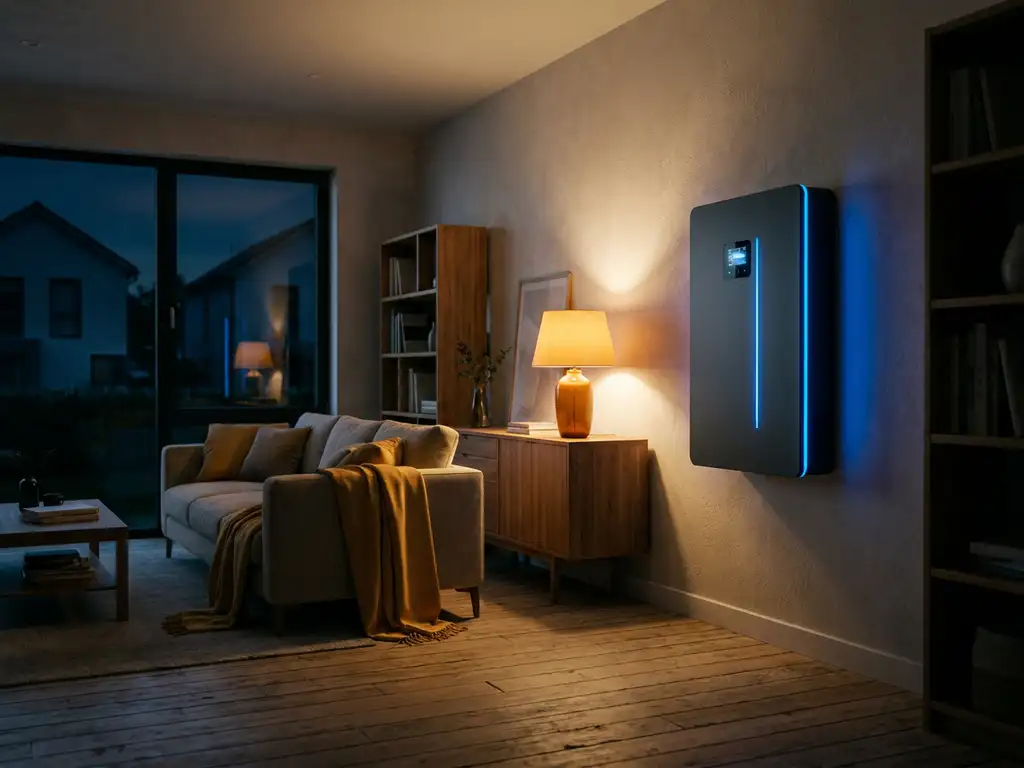
A blackout hits, the lights go out, and suddenly the question every homeowner and building manager asks is the same: will the home battery keep things running? It is a fair question, and the honest answer depends on several variables that are worth understanding before investing in a backup power system. From battery capacity to appliance loads, the gap between expectation and reality can be significant. This guide breaks down the key factors that determine whether a home battery can genuinely power a whole house during an outage, and what it takes to size a system that actually delivers.
For installation companies advising clients on battery storage, getting this conversation right matters. Homeowners and building managers increasingly rely on their installers to translate technical specifications into real-world performance expectations. Understanding the mechanics behind solar battery capacity and runtime is the foundation of that conversation.
How much power a home battery actually stores
A home battery stores electrical energy measured in kilowatt-hours (kWh). The most widely installed residential systems currently range from around 5 kWh on the smaller end to 20 kWh or more for larger or stacked configurations. The usable capacity is typically lower than the rated capacity because most batteries are designed to operate between a minimum and maximum state of charge to protect battery longevity.
A 10 kWh battery, for example, might offer around 9 kWh of usable energy depending on the system settings and the manufacturer’s depth-of-discharge specifications. That sounds like a lot until you start accounting for what a typical household actually consumes. Average daily household energy use varies considerably by country, home size, and occupant behavior, but a moderate European household might consume anywhere from 8 to 20 kWh per day. A single battery can cover part of that, but rarely all of it without careful load management or solar input.
Which appliances drain a battery fastest during a blackout
Not all appliances are equal when it comes to energy consumption. High-draw devices deplete a battery reserve far faster than most people expect, and this is where realistic runtime planning becomes critical. The key distinction is between continuous loads, which run constantly, and intermittent loads, which cycle on and off.
The biggest culprits for rapid battery drain include:
- Electric boilers and immersion heaters — often drawing 2 to 3 kW continuously
- Air conditioning and heat pump systems — compressor startup draws can spike above their rated wattage
- Electric ovens and hobs — typically 2 to 4 kW when in active use
- EV chargers — even a slow 7 kW home charger will deplete a 10 kWh battery in under two hours
- Washing machines and tumble dryers — heating elements push consumption well above the motor load alone
Lower-draw essentials like LED lighting, a refrigerator, phone chargers, and a router consume far less. A well-managed backup setup that prioritizes these loads can stretch a single battery considerably further than one running everything without restriction.
When a single battery isn’t enough
For most households, a single battery unit is not sufficient to power the entire home through a prolonged outage without either solar recharging or deliberate load shedding. The math simply does not support it once high-consumption appliances are factored in. This is an important point for installers to communicate clearly during the sales and design phase.
Larger homes, households with electric heating, or properties with EV charging requirements will almost always need either multiple battery units or a hybrid system that combines storage with ongoing solar generation. Stacking batteries, where the system architecture supports it, is a common solution for clients who want genuine whole-home backup capability. Some battery platforms support expansion modules, allowing the system to grow as energy needs increase or as the client’s budget allows.
It is also worth distinguishing between backup power and off-grid capability. A backup system is designed to bridge short outages, while a true off-grid or islanding setup requires substantially more storage and generation capacity. Most residential battery installations fall into the backup category, which sets a realistic ceiling on what a single unit can achieve.
How solar panels extend battery life during an outage
When solar panels are paired with a battery system and configured for islanding mode, the dynamics of a blackout change significantly. Instead of drawing purely from stored energy, the system can replenish the battery during daylight hours, effectively extending backup duration from hours to days in favorable conditions.
The practical impact depends on solar array size, the season, and local irradiance. A 6 kWp solar array on a clear summer day might generate 30 kWh or more, which is more than enough to recharge a 10 kWh battery and cover household loads simultaneously. In winter or during overcast conditions, generation drops sharply, and the battery becomes the primary source again. This seasonal variability is an important part of the sizing conversation, particularly for clients in northern European markets where winter solar yields are modest.
Not all inverter and battery combinations support solar-plus-storage islanding automatically. The system must be specifically designed and configured for backup operation, with the appropriate grid-isolation relays and a compatible hybrid inverter. Installers should verify this capability during the design stage rather than assuming it is a standard feature. Using a battery calculator for solar systems can help model realistic runtime scenarios before the hardware is specified.
Key factors to check before sizing a backup system
Sizing a backup system correctly requires moving beyond headline kWh figures and looking at the specific energy profile of the property. Several factors shape the final recommendation:
- Daily energy consumption — review at least 12 months of meter data to account for seasonal variation
- Peak demand loads — identify the highest simultaneous draw the battery inverter needs to handle, particularly for motor-driven appliances with startup surges
- Backup duration requirement — is the client looking to cover a few hours or multiple days?
- Critical vs. non-critical loads — a sub-panel or smart load controller can isolate essential circuits, reducing required battery capacity
- Solar generation profile — existing or planned PV output directly affects how long stored energy needs to last
- Battery chemistry and depth of discharge — lithium iron phosphate (LFP) batteries generally offer better cycle life and deeper discharge than older chemistries
- Future load growth — heat pump installations, EV chargers, or home extensions will increase demand over time
Getting these inputs right at the design stage prevents undersized systems that disappoint clients and oversized systems that erode project margins. For installation companies handling multiple projects simultaneously, having a reliable and repeatable process for this kind of system sizing is as important as the technical knowledge itself.
How OpusFlow supports battery installation businesses
Accurately sizing and quoting battery backup systems is only one part of running a successful installation business. Managing the full project lifecycle, from initial calculation through to commissioning and aftercare, requires coordination across sales, planning, procurement, and field teams. That is where OpusFlow comes in.
OpusFlow is the most complete ERP platform built specifically for sustainable installation companies, including those specializing in solar, battery storage, heat pumps, and EV charging. Our platform helps installation businesses of all sizes manage the entire workflow without switching between disconnected tools. Key capabilities relevant to battery installation businesses include:
- Integrated calculation and quotation tools — build accurate, professional proposals directly from system design data
- Project management and planning — coordinate installation crews, subcontractors, and materials across multiple live projects
- Purchasing and stock management — track battery inventory, inverters, and components in real time
- Workflow automations — automatically trigger tasks, notifications, and document generation as projects progress through each stage
- AI-powered support via Toni — our AI agent helps teams move faster by handling repetitive operational tasks intelligently
- Customer portal — keep clients informed throughout the installation process without manual updates
Whether managing a handful of residential battery projects or scaling up to handle large commercial installations, OpusFlow gives installation companies the operational infrastructure to grow without adding unnecessary overhead. Get in touch with our team to see how OpusFlow fits your business.
Related Articles
- How do you set up a SEPA Direct Debit mandate for a new customer?
- What after-sales service do home battery customers expect from their installer?
- Which battery systems are compatible with the most common solar inverters?
- Why are tradespeople and installers starting to talk about AI?
- Why do so many installation quotes never turn into signed contracts?