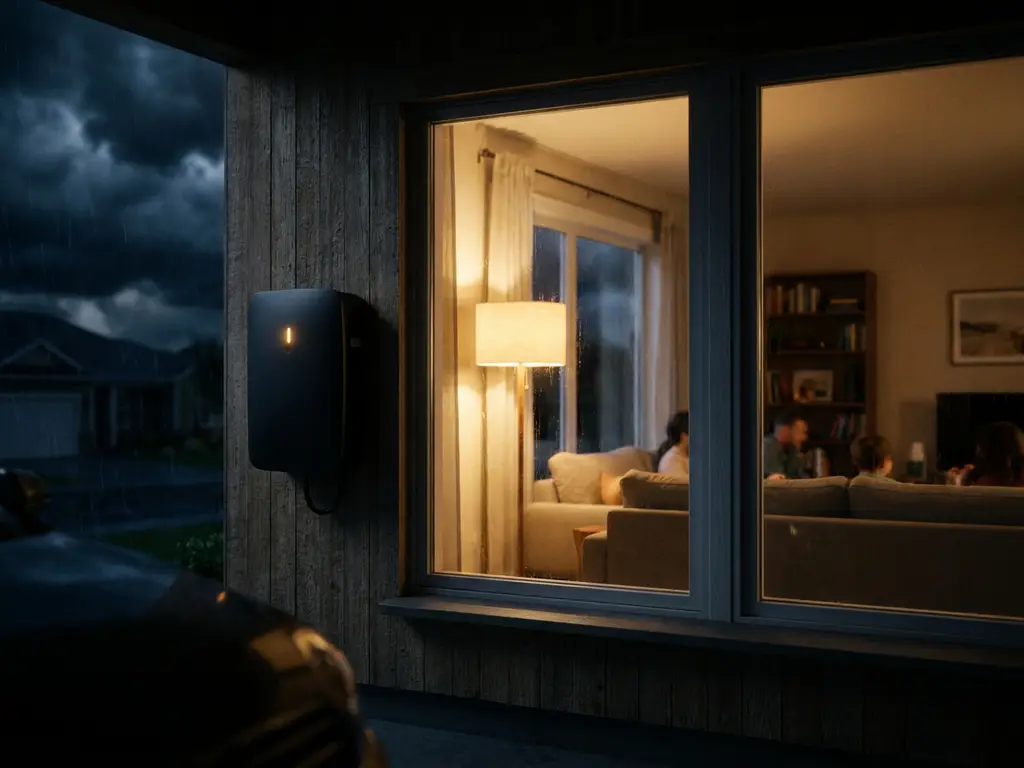
Power outages are unpredictable, and for homeowners who have invested in a home battery system, understanding exactly what happens when the grid goes down is essential. Whether a battery was installed alongside solar panels or as a standalone backup solution, its behavior during a blackout depends on several technical factors that are worth understanding clearly. This article walks through the mechanics, the limitations, and the common misunderstandings that surround home batteries and outage protection.
For installation companies working in the sustainable energy space, these are the questions that clients ask most often. Getting the answers right, and communicating them clearly during the sales and aftercare process, makes a real difference in customer satisfaction and long-term trust.
How a home battery detects and responds to a grid failure
When the grid fails, a home battery system does not simply switch on automatically in all configurations. The response depends entirely on whether the system is equipped with islanding capability, also known as backup or off-grid functionality. In a standard grid-tied setup without backup capability, the battery and any connected solar panels will shut down immediately when the grid fails. This is a safety requirement designed to protect utility workers from live current on downed lines.
In systems designed with backup functionality, the battery detects the grid failure within milliseconds and activates an automatic transfer switch. This switch physically disconnects the home from the grid and creates an isolated electrical island. The transition is typically fast enough that most sensitive electronics do not even register the interruption. The speed and reliability of this detection process depend heavily on the inverter technology used and how the system was configured during installation.
What a home battery can and cannot power during an outage
A home battery can power a meaningful range of household loads during an outage, but it is not a limitless resource. The total energy available is determined by the battery’s usable capacity, measured in kilowatt-hours (kWh), and the rate at which connected appliances draw power, measured in kilowatts (kW). Using a battery runtime calculator during the design phase helps set accurate expectations with clients before installation.
Typical loads that a home battery handles well include lighting, phone and laptop charging, a refrigerator, a router, and small appliances. High-draw appliances are where limitations become apparent:
- Electric ovens and cooktops draw between 2 and 5 kW and can deplete a battery quickly
- Electric vehicle chargers at full speed are generally not compatible with backup operation
- Air conditioning units, particularly larger heat pump systems, may exceed the battery’s continuous output rating
- Electric water heaters and tumble dryers are similarly power-hungry and should be used sparingly or not at all during an outage
The distinction between capacity (total stored energy) and power output (how fast energy can be delivered) is one that installation professionals should communicate clearly to every client. A battery may have plenty of stored energy but still be unable to run a specific appliance if that appliance’s peak draw exceeds the inverter’s output limit.
Full backup vs. partial backup: which setup fits your situation
Not every installation requires whole-home backup, and in many cases, a partial backup setup is the smarter, more cost-effective solution. Understanding the difference helps installation companies recommend the right configuration for each client’s actual needs and budget.
Full backup systems
A full backup system protects the entire electrical panel, meaning every circuit in the home remains live during a grid outage. This requires a larger battery capacity, a higher-output inverter, and careful load management. It is the right choice for clients who depend on medical equipment, run a home office with critical systems, or simply want complete peace of mind. The trade-off is a higher upfront cost and the need for more sophisticated installation design.
Partial backup systems
A partial backup setup protects only a selected set of critical circuits, typically lighting, a refrigerator, a few outlets, and communications equipment. These systems are less expensive to install and can still provide meaningful protection during most outage scenarios. For the majority of residential clients, a well-designed partial backup covers everything that genuinely matters during a short to medium-length outage. The key is identifying those critical loads early in the design process and sizing the battery accordingly.
How solar panels affect battery performance during a blackout
Solar panels can extend battery runtime significantly during a daytime outage, but only if the system is specifically designed to allow solar charging in backup mode. In many standard installations, solar inverters also shut down when the grid fails, for the same safety reasons mentioned earlier. Systems that support backup solar charging require either a hybrid inverter or a dedicated off-grid-capable configuration.
When solar charging is available during an outage, the panels can replenish the battery in real time, potentially extending backup duration from hours to days depending on sunlight conditions and household consumption. However, solar output is variable. Cloud cover, panel orientation, and the time of year all affect how much energy is actually generated. A solar and battery calculator that accounts for these variables gives a much more accurate picture of real-world backup performance than simple capacity figures alone. Installation teams that use these tools during the design phase tend to set expectations that hold up in practice.
Common misconceptions about home batteries and power outages
Several persistent misconceptions lead to client disappointment after installation, and addressing them proactively is part of delivering a professional service.
Misconception 1: Any home battery automatically provides backup power. This is not true. Many entry-level battery systems are designed purely for energy shifting, storing cheap overnight electricity or solar surplus for later use, but they have no backup capability whatsoever. Backup functionality must be explicitly specified and designed into the system.
Misconception 2: A bigger battery means longer backup. Capacity matters, but so does the load. A 10 kWh battery powering a single refrigerator and some lighting can last well over a day. The same battery running an air conditioning unit and an electric oven might last only a few hours. Educating clients about load management is as important as selling the right hardware.
Misconception 3: Solar panels keep charging the battery during an outage. As covered above, this is only true in systems specifically designed for it. Without a hybrid inverter or a properly configured off-grid setup, solar panels shut down along with the grid.
Misconception 4: Home batteries provide instant seamless backup for everything. The transition is fast, but the capacity is finite. Backup power is a managed resource, not an unlimited substitute for grid power. Clients who understand this from the beginning are far more satisfied with their systems.
How OpusFlow supports battery installation businesses
For installation companies managing a growing portfolio of battery and solar projects, the operational complexity behind each job adds up fast. Accurate system design, client communication, project scheduling, and aftercare all need to work together seamlessly. That is exactly where we come in.
OpusFlow is the all-in-one ERP platform built specifically for sustainable installation companies, and it includes tools that directly support the work described in this article:
- Battery and solar calculators built into the platform, allowing your team to generate accurate system designs and set realistic client expectations during the quoting phase
- Calculation and quotation tools that connect system design directly to pricing, reducing manual errors and speeding up the sales process
- Project management and planning modules that keep installation crews coordinated across multiple jobs simultaneously
- Workflow automations that trigger follow-up tasks, aftercare reminders, and documentation steps automatically as projects move through the pipeline
- Toni, our AI agent, the first AI-agentic capability in the sustainable installation ERP space, helping your team handle repetitive processes and surface insights faster
Whether you are scaling a battery installation business, managing multiple crews, or looking to reduce the operational overhead that eats into project margins, OpusFlow is designed to support that growth. Get in touch with our team to see how the platform fits your operation.
Related Articles
- How do you calculate solar self-consumption with and without a battery?
- Why do our technicians always call the office for information they should already have?
- What sustainability metrics should every installation company measure?
- How does ERP software help sustainable installers track their carbon footprint?
- How can installation companies use automated follow-ups to win more quotes?