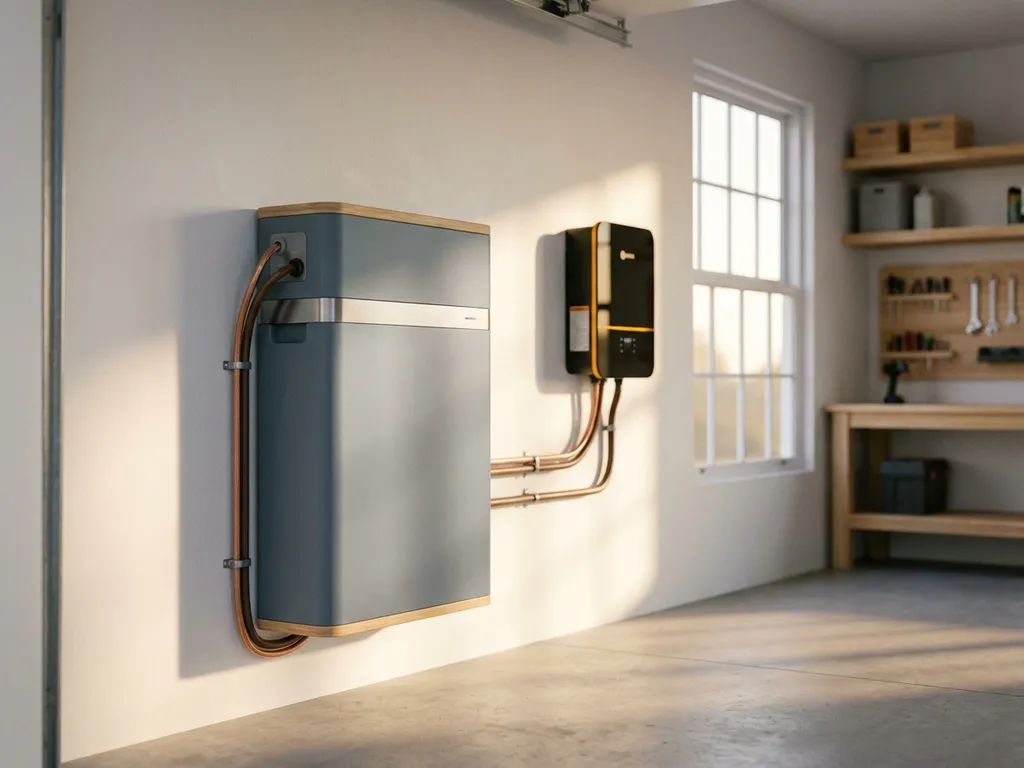
As battery storage becomes a standard component of modern solar and energy installations, one question keeps coming up among installers and project engineers: should the system be AC-coupled or DC-coupled? The answer shapes everything from system efficiency to installation complexity, retrofit feasibility, and long-term performance. Understanding the core differences between these two approaches is essential for any installation business looking to design the right solution for each project.
Both coupling types serve the same fundamental purpose: storing energy for later use. But the way they handle the flow of electricity differs significantly, and those differences have real consequences for how a system performs, what hardware it requires, and which scenarios it suits best. Whether a team is working on a new-build solar project or retrofitting storage onto an existing installation, getting this decision right matters.
How each coupling type handles energy flow
The distinction between AC-coupled and DC-coupled storage comes down to where in the electrical circuit the battery connects. In a DC-coupled system, the solar panels, battery, and inverter all operate on the same direct current (DC) side of the system. Energy generated by the panels flows into the battery without first being converted, and a single hybrid inverter handles the conversion to alternating current (AC) when power is needed for the building or the grid.
In an AC-coupled system, the battery connects on the AC side of the installation. Solar energy is first converted from DC to AC by a standard solar inverter, and then a separate battery inverter converts it back to DC for storage. When the battery discharges, that energy is converted to AC once more. This extra conversion step is the defining characteristic of AC coupling, and it has meaningful implications for both efficiency and system design.
AC-coupled storage: strengths and limitations
AC-coupled storage is particularly well suited for retrofit installations. Because the battery system connects on the AC side, it can be added to an existing solar setup without replacing or modifying the original inverter. This makes it a practical and cost-effective option when a client already has a functioning PV system and wants to add storage capacity later.
The flexibility of AC coupling also extends to system design. Different brands of solar inverters and battery inverters can be combined, giving installers more freedom to work with preferred hardware or meet specific budget requirements. Grid-tied systems benefit from this modularity, and the AC-coupled approach tends to be straightforward to commission and maintain.
The main limitation is efficiency. Because energy passes through two inverter stages before reaching the battery, there are additional conversion losses compared to DC-coupled systems. In most real-world installations, these losses are modest, but they add up over time and can affect the overall return on investment, particularly in high-throughput systems where the battery charges and discharges frequently.
DC-coupled storage: strengths and limitations
DC-coupled systems eliminate one of those conversion steps. Solar energy flows directly from the panels into the battery via a charge controller, and a single hybrid inverter handles all conversion to AC. This streamlined path means fewer conversion losses and generally higher round-trip efficiency, which is a meaningful advantage in systems designed to maximise self-consumption.
DC coupling also enables more precise control over how energy is managed within the system. Because everything operates on the DC bus, a hybrid inverter can intelligently route power between panels, battery, and loads in real time. This makes DC-coupled systems particularly well suited for new installations where the full system can be designed and optimised from the ground up.
The trade-off is reduced flexibility for retrofits. Adding DC-coupled storage to an existing installation typically requires replacing the original solar inverter with a compatible hybrid unit, which increases both cost and complexity. DC-coupled systems are also generally more dependent on a single manufacturer’s ecosystem, which can limit hardware choices and complicate future upgrades.
Which system fits which installation scenario
Choosing between AC and DC coupling is largely a question of project context. For new-build installations where the entire system is being designed from scratch, DC coupling is often the preferred approach. The efficiency gains are easier to realise, the system can be sized holistically, and a single hybrid inverter simplifies the overall setup. Large commercial or industrial projects with high energy throughput stand to benefit the most from the reduced conversion losses.
For retrofit projects, AC coupling is usually the more practical route. It preserves the existing inverter infrastructure, reduces installation time, and avoids the cost of replacing functional equipment. Residential clients who installed solar several years ago and now want to use a solar battery calculator to assess storage options will typically find AC-coupled solutions easier to implement without major system changes.
There are also hybrid scenarios worth considering. Some larger installations use both coupling types together, with DC-coupled storage for primary solar charging and AC-coupled batteries for additional capacity or backup functionality. This approach adds complexity but can deliver the best of both worlds when project requirements demand it.
Cost and efficiency differences between the two approaches
From a pure efficiency standpoint, DC-coupled systems have the edge. The single-conversion path typically results in round-trip efficiency figures that are a few percentage points higher than AC-coupled equivalents. Over the lifetime of a system, particularly one that cycles the battery daily, this difference translates into a measurable increase in usable energy and a better return on the storage investment.
On the cost side, the picture is more nuanced. DC-coupled systems often require a more expensive hybrid inverter, and for retrofit projects, the need to replace existing hardware adds to the upfront investment. AC-coupled systems can be more affordable to install in retrofit contexts because they work alongside existing equipment. For new installations, the total system cost of both approaches tends to be comparable, with DC coupling sometimes offering better long-term value due to its efficiency advantage.
Installation labour costs also factor in. AC-coupled systems are generally faster to commission, which can reduce on-site time. DC-coupled systems may require more careful configuration, particularly when integrating with energy management systems or monitoring platforms. For installation businesses managing multiple crews and projects simultaneously, these time differences can have a real impact on job profitability and scheduling efficiency.
How OpusFlow supports battery storage installation projects
Managing battery storage projects, whether AC-coupled or DC-coupled, involves a lot of moving parts: accurate system design, precise quoting, coordinated procurement, and smooth handover to aftercare. For installation businesses handling these projects at scale, having the right operational infrastructure in place is just as important as the technical decisions made on-site.
OpusFlow is the all-in-one ERP platform built specifically for sustainable installation companies working with solar, batteries, heat pumps, EV chargers, and related technologies. Here is how it supports teams working on battery storage projects:
- Built-in battery and solar calculation tools that help design accurate systems and generate professional quotes without switching between separate applications
- Integrated quoting and invoicing that connects system design directly to commercial output, reducing manual errors and speeding up the sales cycle
- Project and planning management that keeps installation crews coordinated across multiple jobs, with real-time visibility into schedules and task progress
- Purchasing and stock management to track inverters, batteries, and components across projects, reducing shortages and over-ordering
- Workflow automations powered by Toni, our AI agent, that handles repetitive tasks across the pipeline so teams can focus on delivery rather than administration
Whether a business is scaling up its battery storage offering or looking to run existing projects more efficiently, OpusFlow provides the operational backbone to make it work. Get in touch with our team to see how the platform fits the way an installation business operates.
Related Articles
- What is automated invoicing and how does it save time for installers?
- How do you manage battery stock levels across multiple installation crews?
- How do I know if a job was done right if I'm not on site?
- How do you build a real-time dashboard to monitor your service business?
- How do you know when your business has outgrown spreadsheets?