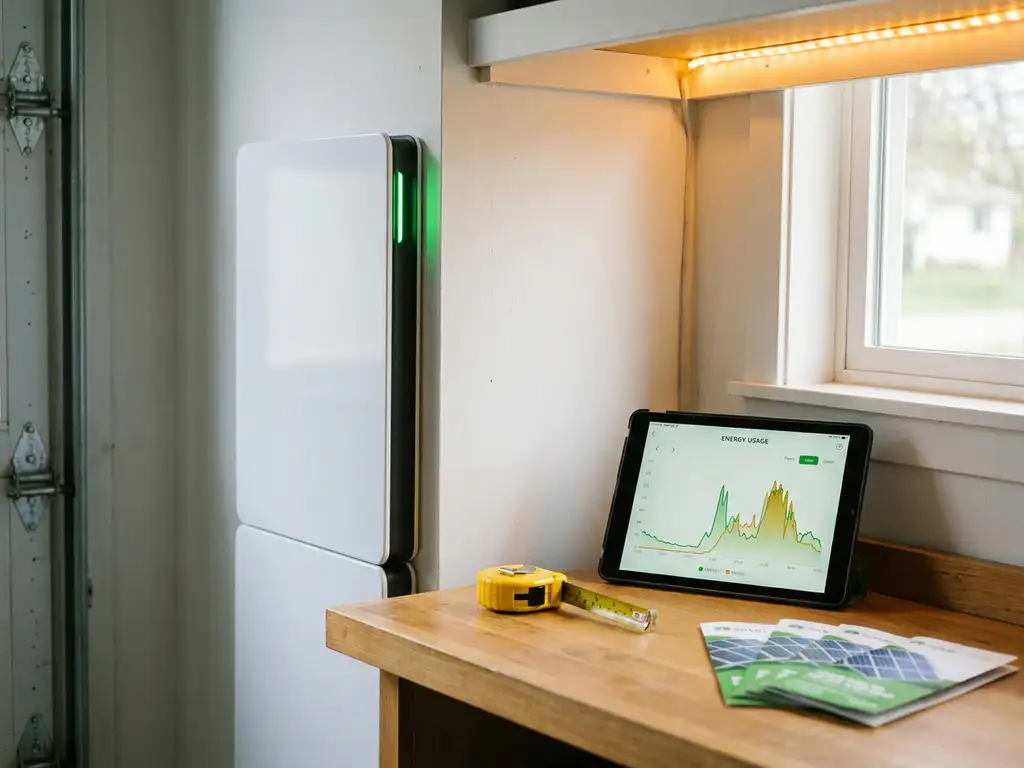
A battery calculator is a digital tool that estimates the storage capacity, cost, and performance of a home battery system based on a property’s energy consumption and generation profile. It helps installers, energy consultants, and their clients determine which battery size delivers the best return on investment and energy independence. The sections below unpack exactly how these tools work, what they calculate, and how professionals use them in practice.
How does a battery calculator work?
A battery calculator works by taking inputs about energy consumption, solar generation, and grid usage, then running calculations to model how a battery would perform under those specific conditions. The tool simulates charge and discharge cycles across a typical day or year to estimate how much stored energy a battery would actually deliver and when.
Most battery calculators use one of two modelling approaches. Simpler tools apply static averages, assuming consistent daily consumption and a fixed solar yield. More advanced calculators use dynamic modelling, which accounts for seasonal variation in solar output, time-of-use electricity tariffs, and peak demand patterns. The dynamic approach produces significantly more reliable output, particularly for commercial installations where energy loads are irregular.
The underlying logic connects three variables: how much energy is generated, how much is consumed at the moment of generation, and how much excess is available to store. The calculator then determines how much of that stored energy can be discharged effectively before the next generation cycle begins.
What does a battery calculator actually calculate?
A battery calculator calculates the recommended storage capacity in kilowatt-hours, the estimated self-consumption rate, the projected payback period, and the potential reduction in grid imports. These outputs together give a clear picture of whether adding a battery to a solar installation makes financial and practical sense.
The specific outputs typically include:
- Recommended battery size: The capacity in kWh that best matches the site’s consumption and generation profile
- Self-consumption rate: The percentage of solar energy used on-site rather than exported to the grid
- Self-sufficiency rate: The share of total energy demand covered by solar and stored energy combined
- Grid import reduction: How much less energy the site will need to draw from the grid
- Financial return: Estimated savings per year and the payback period based on current energy prices
For installation companies, these figures form the basis of a professional proposal. Rather than offering a generic battery recommendation, the calculator grounds the advice in the client’s actual data, which strengthens the sales conversation and reduces the risk of under- or over-specifying a system.
What information do you need to use a battery calculator?
To use a battery calculator accurately, you need the site’s annual energy consumption in kWh, the existing or planned solar capacity in kWp, the local solar irradiation data, and the applicable electricity tariff structure. Without these inputs, the results will be too approximate to base a commercial recommendation on.
The most important inputs in practice are:
- Annual or monthly energy consumption: Ideally from a meter reading or energy bill, broken down by time of day if available
- Solar system size: The peak capacity of the PV installation, which determines how much energy is available to store
- Consumption pattern: Whether the site has daytime or evening-heavy usage, which affects how much solar energy is consumed directly versus stored
- Energy tariff: Fixed or variable pricing, including any feed-in tariff for exported electricity
- Battery specifications: The usable capacity, round-trip efficiency, and maximum charge and discharge rate of the battery being considered
For commercial projects, load profiles from building management systems provide the most accurate input. For residential projects, smart meter data or annual consumption figures from the energy supplier are usually sufficient to produce a reliable estimate.
What’s the difference between a battery calculator and a solar calculator?
A solar calculator focuses on sizing and yield, estimating how much electricity a PV system will generate based on roof orientation, panel capacity, and location. A battery calculator starts where the solar calculator ends, using the generation profile as an input to determine how much of that energy can be stored and used later rather than exported.
The two tools are complementary rather than interchangeable. A solar calculator answers the question: how large should the solar system be? A battery calculator answers: given that solar system, does adding storage make sense, and if so, what size? Running both in sequence gives a complete picture of a combined solar and storage installation.
Some advanced tools, including the solar battery calculator, combine both functions in a single workflow. This integrated approach is particularly valuable for installation companies quoting combined solar and storage projects, as it eliminates the need to transfer data between separate tools and reduces the risk of calculation errors.
How accurate are battery calculator results?
Battery calculator results are as accurate as the inputs provided and the quality of the underlying model. When fed with real consumption data and accurate solar yield figures, a well-built battery calculator can produce estimates that are reliable enough to form the basis of a commercial proposal. Generic or averaged inputs will produce ballpark figures rather than precise projections.
Several factors influence accuracy:
- Input data quality: Actual meter readings outperform estimated averages every time
- Model sophistication: Dynamic models that account for seasonal variation produce better results than static averages
- Battery specifications: Using the actual round-trip efficiency and depth of discharge of the chosen battery improves precision
- Tariff assumptions: Energy prices can change, so results are most accurate when based on current, verified tariff data
For installation companies, the practical standard is whether the results are accurate enough to support a confident recommendation and a defensible quote. A well-configured calculator meets that standard consistently. Where projects involve unusual consumption patterns or complex tariff structures, the calculator output should be reviewed alongside an energy audit.
Who uses a battery calculator and for what purpose?
Battery calculators are primarily used by solar and storage installation companies, energy consultants, and project developers to size battery systems accurately and build evidence-based proposals for clients. They are a professional tool designed to support the sales and specification process, not a consumer-facing decision aid.
In practice, the main use cases are:
- Sales and quotation: Installers use battery calculators to generate accurate, data-driven recommendations during the sales process, replacing rule-of-thumb sizing with verifiable figures
- Project specification: Engineers and technical consultants use them to confirm that the proposed battery size matches the site’s actual needs before procurement
- Portfolio analysis: Larger installation companies use battery calculators across multiple projects to standardise their approach to storage sizing and improve proposal quality at scale
- Client communication: The outputs provide clear, quantified evidence that supports the installer’s recommendation and helps clients understand the financial case for adding storage
As battery storage becomes a standard component of solar installations across the Netherlands, Germany, Belgium, and Spain, the ability to calculate and communicate storage value accurately is increasingly a competitive differentiator for installation companies operating at scale.
How OpusFlow supports battery and solar calculations
OpusFlow integrates battery and solar calculation directly into the broader sales and project workflow, so the numbers generated during the calculation phase flow straight into quotations, proposals, and project records without manual re-entry.
Here is what that looks like in practice:
- Integrated solar and battery calculator: Size PV and storage systems in a single tool, with outputs that feed directly into the quotation module
- Automated proposal generation: Turn calculation results into professional, branded proposals without rebuilding the figures in a separate document
- CRM and pipeline connection: Calculation data is linked to the deal in the CRM, giving account managers and project teams a single source of truth from first contact through to installation
- AI-powered support via Toni: OpusFlow’s AI agent Toni assists teams in navigating workflows, surfacing relevant data, and accelerating the sales process
- Scalable across your portfolio: Whether your team is handling ten projects or several hundred, the same standardised calculation and quotation process applies across every deal
For installation companies looking to reduce manual work, improve proposal accuracy, and scale their operations, OpusFlow brings every step of the process into one platform. Get in touch with us to see how the platform fits your workflow.
Related Articles
- How do you design a solar and battery system for a household with an EV?
- What would it look like if your scheduling ran itself?
- Should installation companies invest in AI for ERP in 2026?
- How long does it really take to switch to new software?
- How does ERP software help with quality control in installation projects?