ERP software helps installation businesses manage cash flow by automating invoicing, tracking payments in real time, and providing comprehensive financial visibility across all projects. This integrated approach centralises cash flow data from multiple sources, enabling better forecasting and helping prevent common payment delays that plague project-based businesses. Comprehensive cash flow management is essential for sustainable installation companies dealing with complex project timelines and material costs.
What is cash flow management and why is it critical for installation businesses?
Cash flow management involves monitoring, analysing, and optimising the timing of money flowing in and out of an installation business. For sustainable installation companies, this means tracking project payments, material costs, labour expenses, and operational overheads to maintain positive cash flow throughout varying project cycles.
Installation businesses face unique cash flow challenges that make traditional accounting methods insufficient. Projects often require significant upfront material investments in solar panels, heat pumps, or charging stations before customer payments are received. These businesses typically operate on milestone-based payment schedules, creating gaps between expenses and revenue that can strain working capital.
Seasonal fluctuations add another layer of complexity, particularly for solar and heat pump installations that peak during specific months. Traditional accounting software cannot adequately handle the project-based nature of installation work, where multiple jobs run simultaneously with different payment schedules, material requirements, and completion timelines.
The sustainable installation sector’s rapid growth has intensified these challenges. Companies expanding their operations need robust financial visibility to support growth without compromising cash flow stability. Without proper cash flow management, even profitable installation projects can create financial stress if payments arrive after expenses are due.
How does ERP software track and monitor cash flow in real time?
ERP software tracks cash flow for installation businesses through automated invoice generation, integrated payment monitoring, and real-time financial dashboards that consolidate data from all business operations. The system captures every financial transaction automatically, from purchase orders and material costs to customer payments and operational expenses.
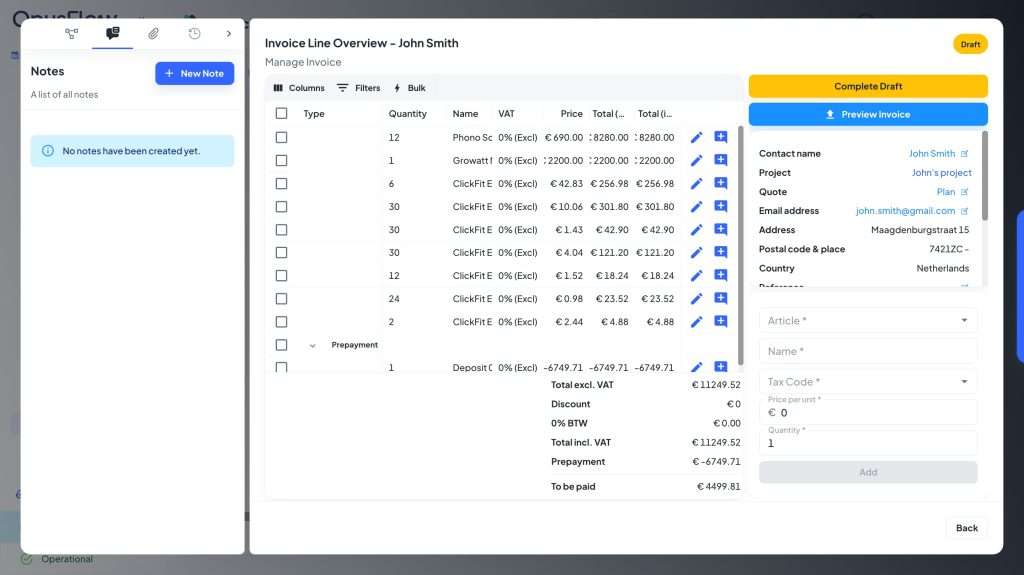
Comprehensive tracking begins with automated invoice creation tied to project milestones. When installation teams complete specific project phases, the ERP system automatically generates invoices and sends them to customers, eliminating delays that traditionally occur with manual invoicing processes. Payment tracking monitors when customers receive, view, and pay invoices, providing complete visibility into the payment pipeline.
Real-time financial dashboards integrate multiple data sources to provide comprehensive cash flow visibility. These systems pull information from project management modules, purchasing systems, payroll data, and customer payments to create accurate, up-to-date financial snapshots. Installation businesses can view current cash positions, upcoming expenses, expected payments, and projected cash flow across different timeframes.
Advanced ERP systems include predictive analytics that forecast cash flow based on historical patterns, current project pipelines, and seasonal trends. This enables installation companies to anticipate cash flow challenges before they occur and make informed decisions about new projects, material purchases, and resource allocation.
What cash flow problems can ERP software help installation companies avoid?
ERP software helps installation businesses avoid common cash flow problems, including project delays, material cost overruns, late customer payments, and seasonal revenue gaps, through automated alerts, payment reminders, and predictive forecasting capabilities.
Project delays represent a significant cash flow risk for installation companies, as extended timelines increase labour costs while delaying milestone payments. ERP systems track project progress against planned schedules and automatically alert managers when projects fall behind. This early warning system enables proactive intervention to keep projects on track and maintain expected cash flow timing.
Material cost overruns can devastate installation project profitability and cash flow. ERP software monitors material usage against project budgets in real time, alerting project managers when costs approach predetermined thresholds. The system tracks material prices, supplier performance, and inventory levels to help prevent unexpected cost increases that affect cash flow projections.
Late customer payments create immediate cash flow pressure for installation businesses. ERP systems automate payment reminders, track payment terms, and escalate overdue accounts according to predefined workflows. Some systems integrate with customer portals, making it easier for clients to view and pay invoices promptly, reducing payment delays.
Seasonal revenue gaps challenge many sustainable installation businesses, particularly those focused on solar or outdoor installations. ERP cash flow forecasting helps companies plan for slower periods by analysing historical patterns and current pipeline data. This enables better resource planning, strategic project scheduling, and financial preparation for seasonal fluctuations.
One Platform to Run Your Entire Installation Business
Manage leads, projects, stock, and invoicing — everything in one smart system built for sustainable installers.
How do installation businesses use ERP software to improve payment collection?
Installation businesses use ERP software like OpusFlow to accelerate payment collection through automated invoicing, milestone-based billing, integrated customer portals, and systematic payment tracking that reduces delays and improves cash flow timing.
Automated invoicing eliminates the delays typically associated with manual invoice creation and delivery. ERP systems like OpusFlow generate invoices automatically when project milestones are completed, ensuring customers receive bills immediately upon work completion. This automation reduces the time between service delivery and payment requests, directly improving cash flow timing.
Milestone-based billing capabilities allow installation companies to structure payments throughout project lifecycles rather than waiting until completion. ERP systems track project progress and automatically trigger invoices when predetermined milestones are reached, such as material delivery, installation completion, or system commissioning. This approach spreads cash flow more evenly across project timelines.
Customer Portal streamlines the payment process by giving clients easy access to invoices, project updates, and payment options. Customers can approve quotations, view project progress, and pay invoices online without requiring phone calls or email exchanges. This self-service approach reduces friction in the payment process and accelerates collection times.
Systematic payment tracking provides installation businesses with complete visibility into their accounts receivable. ERP systems monitor payment terms, track overdue accounts, and automatically escalate collection activities according to predefined workflows. This systematic approach ensures no payments slip through the cracks while maintaining professional customer relationships throughout the collection process.
Modern ERP solutions such as OpusFlow designed for sustainable installation companies integrate these cash flow management capabilities into comprehensive business platforms. By centralising financial data with project management, customer relationships, and operational activities, these systems provide the visibility and control installation businesses need to maintain healthy cash flow while scaling their operations effectively.
If you want to see how ERP software like OpusFlow can improve your operations in practice, you can book a free demo and explore how it works for your installation business.