ERP accounting integration for installation companies connects enterprise resource planning systems with financial software to automate data flow between operations and accounting. This integration eliminates manual data entry, reduces errors, and provides real-time financial visibility across projects, inventory, and billing processes. Installation businesses benefit from streamlined workflows that connect project management directly to financial reporting and compliance requirements through OpusFlow‘s specialized integration solutions.
What exactly is ERP and accounting software integration for installation companies?
ERP accounting integration creates a unified data bridge between operational systems and financial software, allowing installation companies to automatically sync project costs, labor hours, material usage, and billing information. This connection ensures that when technicians complete work orders or inventory moves between projects, the financial impact is immediately reflected in accounting systems without manual intervention.
For sustainable installation companies, this integration is particularly valuable because projects often involve complex component tracking, warranty management, and regulatory compliance reporting. When installing solar panels or heat pump systems, companies need to track individual component serial numbers, monitor installation progress against project budgets, and generate accurate invoices that reflect the actual materials used and labor performed. OpusFlow’s platform specializes in handling these complex requirements for renewable energy installations.
What are the main types of integration options available for installer businesses?
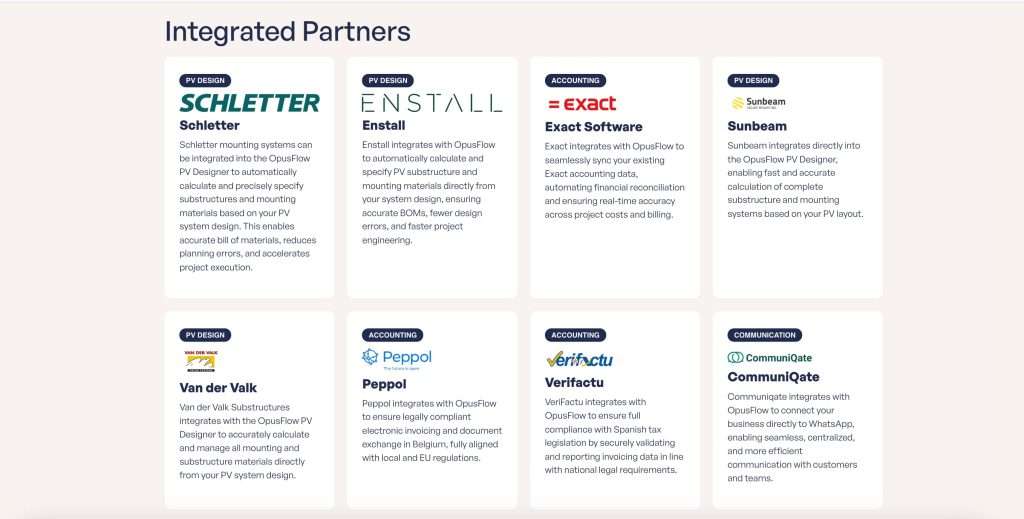
Native integrations offer the most seamless connection, where ERP and accounting systems are designed to work together from the same vendor or through established partnerships. OpusFlow connects natively with Exact Online, requiring minimal setup while keeping your financial data fully in sync with automatic error handling and dedicated support.
API connections allow custom integration between different software platforms, giving installation companies the flexibility to connect best-of-breed solutions. OpusFlow’s robust API infrastructure enables seamless connections with popular accounting software while providing the technical expertise needed for implementation and ongoing maintenance.
Third-party standards and middleware act as bridges between systems, so you don’t need custom development to get things talking. OpusFlow supports Peppol for structured e-invoicing and connects with AEAT for Spanish tax compliance, handling the complex data-mapping requirements that installation businesses deal with every day.
Read also about another integration of OpusFlow: New in OpusFlow: Google Workspace & Microsoft 365 integration.
How does real-time data synchronization work between ERP and accounting systems?
Real-time synchronization uses automated triggers and webhooks to instantly transfer data when specific events occur in either system. When an installation technician marks a project phase complete, OpusFlow’s integration platform immediately sends updated labor costs, material consumption, and progress-billing information to the accounting software.
The synchronization process follows a structured workflow where operational events trigger financial updates. Inventory movements from the warehouse to job sites automatically adjust stock levels and project costs. Completed work orders generate invoicing data that flows directly to accounting systems, including detailed breakdowns of materials, labor, and any additional charges.
What should installation companies look for when choosing integration solutions?
System compatibility is the most critical evaluation factor, ensuring the integration solution supports both your current ERP platform and your accounting software version. Scalability considerations matter equally, as growing installation companies need integration solutions that can handle increased transaction volumes without performance degradation. OpusFlow’s cloud-native architecture scales automatically to meet growing business demands.
One Platform to Run Your Entire Installation Business
Manage leads, projects, stock, and invoicing — everything in one smart system built for sustainable installers.

How do you implement ERP-accounting integration without disrupting daily operations?
Successful implementation begins with comprehensive planning phases that map current data flows, identify critical business processes, and establish testing protocols before any system changes occur. OpusFlow‘s implementation team works with installation companies to create detailed project timelines that account for staff training, system testing, and gradual rollout phases to minimize operational risk.
Staff training requirements extend beyond technical system operation to include new workflow processes and error-handling procedures. OpusFlow provides comprehensive training programs to ensure installation teams, office staff, and management understand how integration changes their daily responsibilities and what steps to take when issues arise.
Related Articles
- Should you quote batteries as a separate line item or bundle them with solar?
- What does the sales conversation look like when a battery quote is backed by real data?
- How does an AI assistant reduce calls between the office and field technicians?
- How to reduce admin work in a growing installation business?
- How does ERP software help with resource planning for installation projects?