The solar installation industry has reached a critical inflection point where artificial intelligence is transforming how businesses operate at every level. From project planning to customer service, AI for solar installation companies is no longer a futuristic concept but a competitive necessity that’s reshaping the sustainable energy landscape.
For installation companies managing complex workflows across multiple projects, teams, and customer touchpoints, artificial intelligence offers unprecedented opportunities to streamline operations, reduce errors, and scale efficiently. The question isn’t whether AI will impact your solar business, but how quickly you can harness its capabilities to stay ahead of the competition.
Why Solar Installation Companies Need AI Solutions
Solar installation businesses face unique operational challenges that traditional software solutions struggle to address effectively. Managing project timelines, coordinating installation teams, tracking inventory, and maintaining customer relationships across dozens or hundreds of active projects creates complexity that overwhelms manual processes and basic digital tools.
The financial impact of operational inefficiencies in solar installation is substantial. Delayed projects, miscommunicated requirements, and resource misallocation directly affect profit margins in an industry where precise timing and accurate execution determine success. Artificial intelligence solar business applications address these pain points by processing vast amounts of operational data to identify patterns, predict bottlenecks, and recommend optimal resource allocation strategies.
Modern AI systems excel at handling the interconnected nature of solar installation operations. Unlike traditional software that requires manual data entry and interpretation, AI continuously analyzes real-time information from multiple sources, including weather patterns, equipment availability, team schedules, and customer requirements. This comprehensive analysis enables proactive decision-making rather than reactive problem-solving, fundamentally changing how installation companies approach project management and business growth.
How AI Streamlines Solar Project Management
Project management in solar installations involves coordinating multiple variables simultaneously: site assessments, permit approvals, equipment procurement, team scheduling, weather dependencies, and customer communication. Solar installation automation through AI transforms this complex orchestration into streamlined, predictable workflows that minimize delays and maximize resource utilization.
AI-powered project management systems analyze historical project data to identify optimal scheduling patterns and resource allocation strategies. These systems can predict which projects are likely to experience delays based on factors like permit processing times, weather forecasts, and team availability. By providing early warnings about potential bottlenecks, AI enables project managers to make proactive adjustments that keep installations on schedule and within budget.
The automation capabilities extend beyond scheduling to encompass task assignment, progress tracking, and quality control. AI installation management systems automatically create task sequences when projects reach specific milestones, assign work to appropriate team members based on skills and location, and monitor completion rates to ensure projects stay on track. This level of automation reduces administrative overhead while improving consistency across all installations.
Intelligent Resource Optimization
AI systems excel at optimizing resource allocation by analyzing patterns across multiple projects simultaneously. The technology considers factors like team expertise, geographic proximity, equipment availability, and project complexity to recommend the most efficient assignment strategies. This optimization reduces travel costs, minimizes downtime between projects, and ensures that specialized skills are deployed where they create the most value.
What AI-Powered Customer Experience Looks Like
Customer experience in solar installation extends far beyond the initial sale, encompassing consultation, design, installation, and long-term maintenance relationships. AI transforms each touchpoint by providing installation companies with instant access to comprehensive customer information, project history, and predictive insights that enable more personalized and responsive service delivery.
AI-powered customer relationship management goes beyond traditional CRM capabilities by analyzing communication patterns, project preferences, and service history to anticipate customer needs. When customers contact the company with questions or concerns, AI systems immediately surface relevant project details, previous interactions, and potential solutions, enabling support staff to provide informed, efficient responses. This capability significantly improves response times and customer satisfaction while reducing the workload on customer service teams.
The technology also enhances the consultation and design process by analyzing site-specific data, energy consumption patterns, and local regulations to generate accurate proposals quickly. Machine learning solar applications can process satellite imagery, utility bills, and municipal codes to create detailed installation recommendations that address each customer’s unique requirements. This level of personalization and accuracy builds trust while accelerating the sales cycle.
Proactive Communication and Follow-up
AI enables installation companies to maintain ongoing relationships with customers through automated yet personalized communication. The system can schedule follow-up contacts based on installation timelines, send maintenance reminders at optimal intervals, and identify opportunities for system expansions or upgrades. This proactive approach to customer engagement generates repeat business while ensuring optimal system performance over time.
AI Integration Challenges Solar Installers Face
Despite the clear benefits of AI solar industry applications, installation companies encounter several obstacles when implementing these technologies. Data integration represents one of the most significant challenges, as many companies operate with disparate systems that don’t communicate effectively. Legacy software, spreadsheet-based processes, and manual record-keeping create data silos that limit AI effectiveness.
Training and adoption present additional hurdles, particularly for established companies with experienced teams accustomed to traditional workflows. Successful AI implementation requires not just technological integration but also cultural adaptation as teams learn to trust and leverage AI recommendations. The learning curve can temporarily impact productivity while teams adjust to new processes and decision-making frameworks.
Cost considerations also influence AI adoption decisions, especially for smaller installation companies operating with limited technology budgets. While AI delivers significant long-term value, the initial investment in software, training, and integration can strain resources. Companies must carefully evaluate AI solutions to ensure they provide measurable returns that justify the implementation costs and ongoing maintenance requirements.
Overcoming Implementation Barriers
Successful AI integration requires a phased approach that addresses technical, operational, and cultural challenges systematically. Starting with specific use cases like scheduling optimization or customer communication allows companies to demonstrate AI value while building internal expertise. This gradual implementation strategy reduces risk while creating momentum for broader AI adoption across the organization.
How OpusFlow Helps with AI-Powered Solar Installation Management
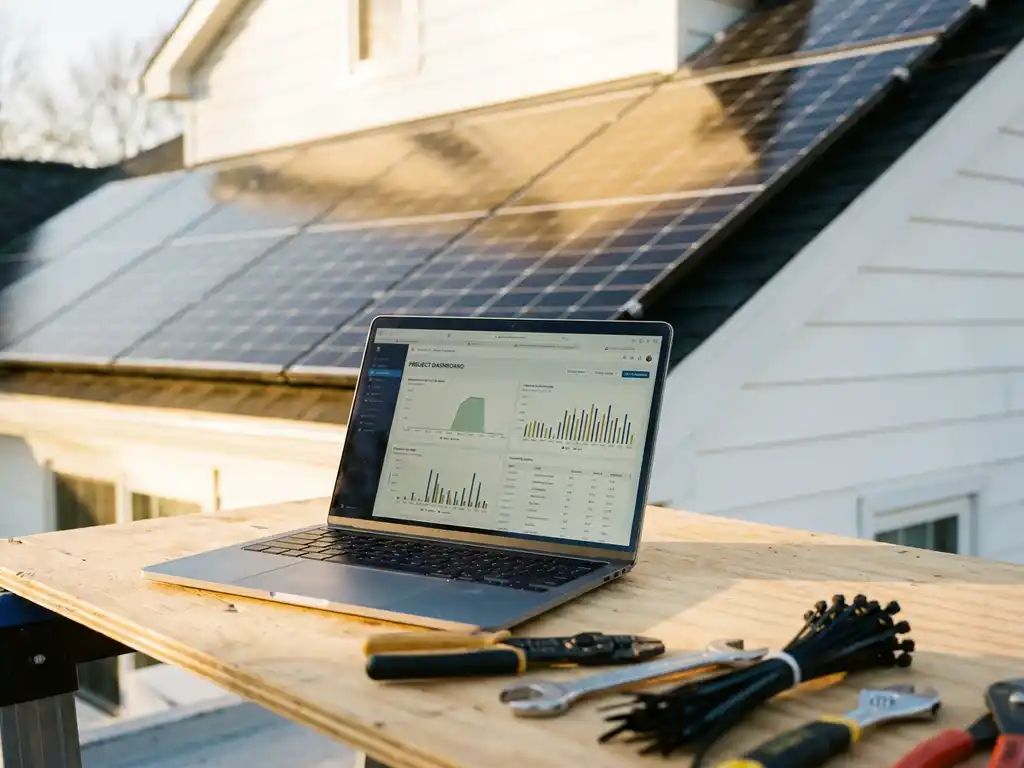
OpusFlow addresses the AI integration challenges facing solar installation companies through our comprehensive ERP platform featuring Toni, the industry’s first AI-agentic system designed specifically for sustainable installation businesses. Our AI-powered ERP solution transforms complex operational data into instant, actionable insights without requiring separate dashboards or business intelligence tools.
Our platform delivers immediate value through:
- Real-time operational insights: Toni processes live ERP data to provide instant answers about project status, team performance, and resource allocation
- Automated workflow management: Smart task creation, assignment, and tracking across sales, project management, and customer service functions
- Integrated customer experience: Seamless communication tools, automated follow-ups, and comprehensive project visibility for enhanced service delivery
- Scalable implementation: Modular design allows gradual AI adoption with dedicated onboarding support and comprehensive training
Ready to transform your solar installation business with AI? Contact our team to discover how OpusFlow’s AI-powered ERP platform can streamline your operations, improve customer satisfaction, and accelerate your company’s growth in the competitive solar installation market.
Related Articles
- Which battery systems are compatible with the most common solar inverters?
- How do you keep track of multiple installation projects without losing overview?
- Why does it take so long to get quotes out the door?
- How to choose a business software?
- How can installation companies reduce employee turnover with better tools?