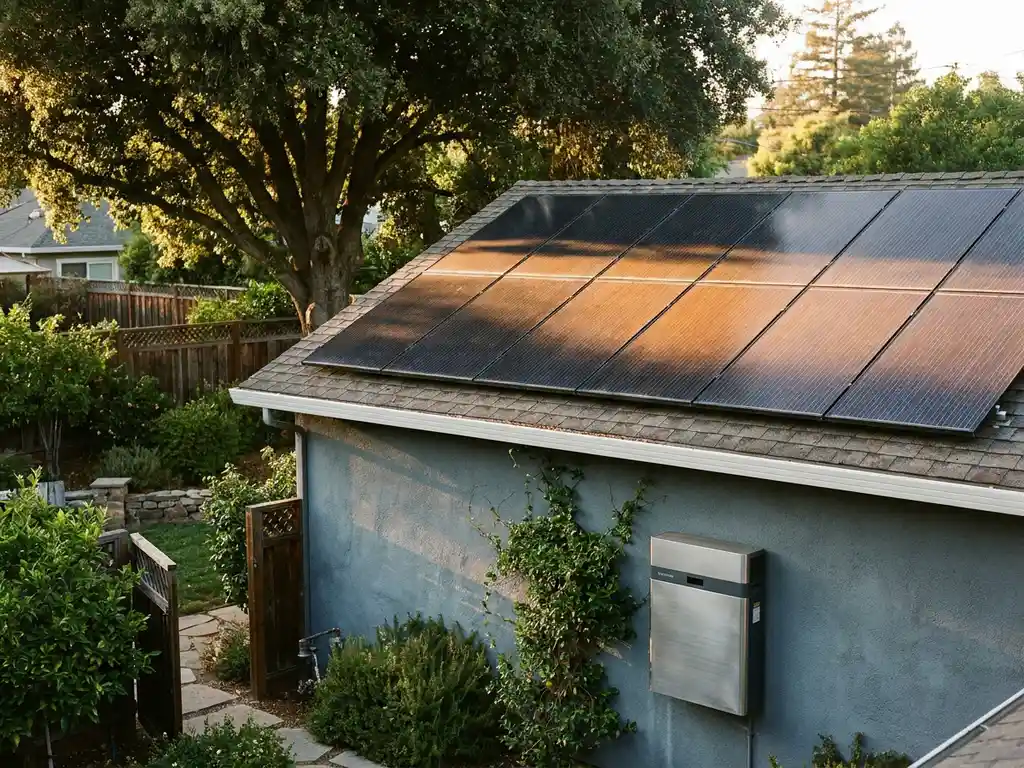
Shading is one of the most consequential variables in photovoltaic system design, yet it is frequently underestimated during the planning phase. Even partial shadow coverage on a solar array can trigger disproportionate losses in energy output, and those losses directly influence how a battery storage system should be sized and configured. For installation companies working with corporate clients or large-scale residential portfolios, getting this analysis right is not optional. It is the foundation of a credible, technically sound proposal.
Understanding the relationship between shading, yield reduction, and battery storage recommendations requires both solid methodology and the right tools. The sections below break down each dimension of this relationship, from the physics of shading losses to the practical steps that lead to better system designs and more accurate solar battery calculations.
How shading reduces energy output in PV systems
Shading reduces solar yield by blocking irradiance from reaching the photovoltaic cells that convert sunlight into electricity. Even a small shadow on one part of a panel can reduce the output of that entire string, because solar cells in a series circuit are limited by the weakest-performing unit. This is sometimes called the “Christmas light effect,” where one failing bulb dims the entire chain.
The actual energy loss depends on several factors: the duration of shading throughout the day, the proportion of the array affected, and whether the system uses string inverters, microinverters, or power optimisers. Systems without module-level power electronics are significantly more vulnerable to partial shading. In practical terms, even a shadow cast by a nearby chimney for two hours per day can reduce annual yield by a meaningful percentage, which compounds over the lifetime of the installation.
Types of shading and their varying impact on yield
Not all shading behaves the same way, and distinguishing between types is essential for accurate yield modelling. The two primary categories are hard shading and soft shading, each with distinct characteristics and design implications.
Hard shading
Hard shading occurs when a solid object, such as a chimney, tree, neighbouring building, or rooftop structure, casts a defined shadow on part of the array. This type is predictable and can be mapped using solar path simulations. Its impact is highly localised but intense, often causing significant mismatch losses in string-based systems.
Soft shading
Soft shading results from diffuse conditions such as haze, dust accumulation, or light cloud cover. It affects the entire array more uniformly and is generally less damaging per incident, but it occurs far more frequently. Over a full year, the cumulative effect of soft shading on total energy production can be substantial, particularly in climates with frequent overcast conditions.
Seasonal variation adds another layer of complexity. The sun sits lower in the sky during winter months, meaning shadows from fixed obstacles extend further and persist longer. A rooftop installation that appears unobstructed in summer may experience significant shading losses between October and February, which is precisely when battery storage tends to play a more critical role in energy independence.
How shading data shapes battery storage recommendations
Accurate shading analysis directly informs battery sizing because it determines the realistic energy profile of the solar array throughout the year. A system with significant shading losses will produce less energy during peak hours and may generate surplus at unexpected times, which changes the optimal storage capacity and charge strategy.
When shading is factored in properly, the battery storage recommendation shifts in several important ways. If shading consistently reduces midday production, a smaller battery may actually suffice because there is less surplus to store. Conversely, if shading is intermittent and the array produces strong bursts of energy between shadow periods, a larger capacity buffer becomes more valuable. Using a battery capacity calculator that incorporates site-specific yield data rather than generic irradiance figures produces far more defensible recommendations.
For commercial installations, this distinction matters enormously. Oversizing a battery system to compensate for poorly understood shading losses inflates project costs unnecessarily. Undersizing it leaves the client with unmet expectations. Both outcomes damage the installer’s credibility and profitability.
Tools and methods for accurate shading analysis
Reliable shading analysis depends on combining on-site observation with simulation software. Several methods are widely used across the industry, and the most accurate results typically come from layering multiple approaches.
- Solar path simulators: Tools that model the sun’s trajectory across different seasons and calculate when and where shadows will fall based on the geometry of surrounding obstacles.
- Drone surveys and 3D modelling: Particularly useful for complex commercial rooftops or ground-mounted systems, where manual assessment is impractical.
- Fish-eye photography and horizon analysis: A cost-effective field method that captures the sky view from the installation point and identifies obstruction angles.
- Irradiance sensors and data loggers: Used on larger projects to gather actual on-site irradiance data over a period before system design is finalised.
The output from these tools feeds directly into yield simulation platforms, which then produce hour-by-hour energy generation estimates. Those estimates are the foundation of any credible battery storage recommendation, as well as the broader financial case for the installation.
Minimizing shading losses during system design
The most effective way to manage shading is to address it during the design phase rather than attempting to compensate for it after installation. Several design strategies can significantly reduce the impact of unavoidable shading.
Module-level power electronics, such as microinverters or DC optimisers, are the most impactful technical solution. They allow each panel to operate independently, preventing a shaded module from dragging down the output of its neighbours. For installations where partial shading is unavoidable, this technology typically delivers a strong return on the added investment.
String configuration also plays a role. Grouping modules with similar shading profiles into the same string reduces mismatch losses. Where the roof geometry allows, orienting certain strings away from known shadow sources, even at a slight efficiency cost in terms of tilt or azimuth, can improve overall annual yield.
Vegetation management is another practical consideration for ground-mounted or low-roof systems. Trees that appear distant during initial site assessment can cast significant shadows as they grow over the system’s operational lifetime. Including this in the long-term yield model, and discussing it with the client upfront, reflects the kind of technical rigour that differentiates professional installers from those who focus only on the installation day.
How OpusFlow supports accurate solar yield and battery sizing
Getting shading analysis and battery recommendations right requires not just technical knowledge but efficient tools that keep the entire workflow connected, from site survey through to proposal and project delivery. This is where we come in.
OpusFlow is built specifically for sustainable installation companies and includes functionality designed to support technically complex projects like these:
- Integrated solar battery calculator: Our built-in solar and battery calculator allows teams to generate accurate storage recommendations based on real yield data, not generic assumptions.
- PV Designer tool: A comprehensive design environment that supports site-specific system planning, including shading considerations, directly within the platform.
- Calculation and quotation module: Translates technical design outputs into professional proposals without manual rework, reducing errors and saving time.
- Workflow automation: Connects every step from sales to planning to aftercare, ensuring that shading data and design decisions flow through the entire project lifecycle without being lost between departments.
- AI-powered support through Toni: Our AI agent Toni helps teams work faster and more accurately across the platform, supporting smarter decision-making at scale.
For installation companies managing multiple crews, complex commercial projects, or rapid growth, having all of this in one platform eliminates the fragmentation that leads to costly mistakes. If you want to see how OpusFlow can strengthen your technical workflow and proposal quality, get in touch with our team to arrange a demonstration.
Related Articles
- What is the difference between battery capacity and usable battery capacity?
- Is AI only for big companies or can small installation businesses use it too?
- How do service businesses manage scheduling when plans change last minute?
- How do you manage technician scheduling with ERP software?
- How can ERP systems help installers reduce operational costs?