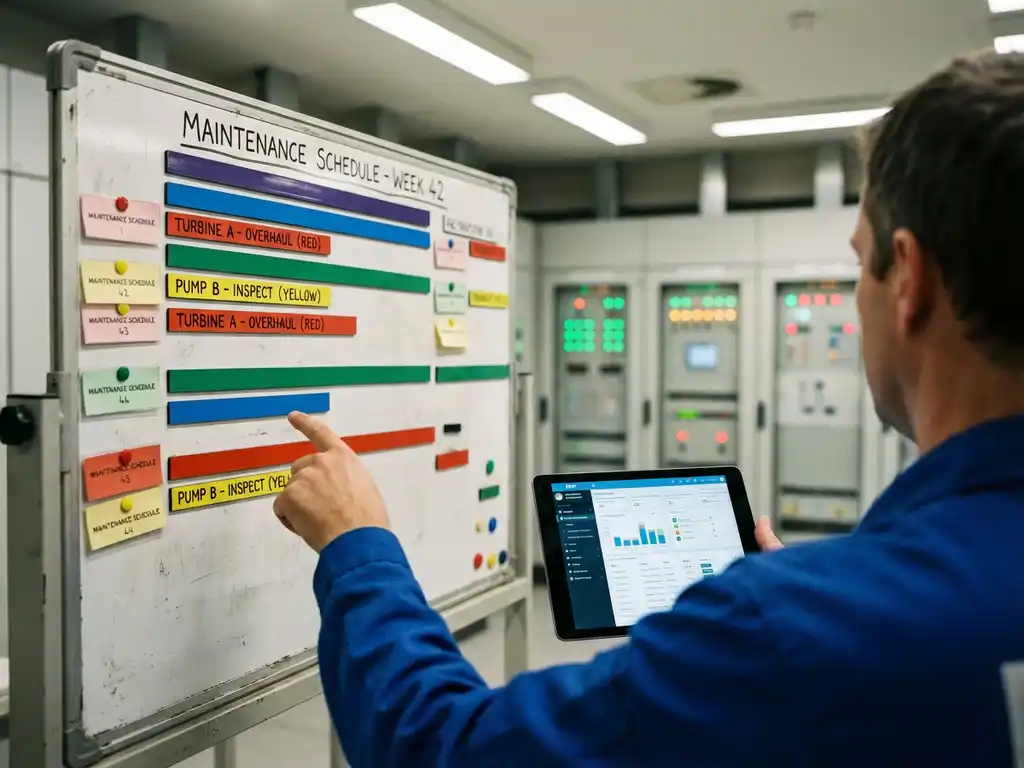
ERP software supports preventive maintenance scheduling by automating task creation, centralising equipment data, and providing real-time visibility across all assets. The system creates maintenance schedules based on time intervals, usage metrics, or condition monitoring, ensuring critical equipment receives proper care before failures occur. This proactive approach reduces downtime and extends asset lifespan for sustainable installation companies like those OpusFlow serves.
What is preventive maintenance, and why does ERP software make it more effective?
Preventive maintenance involves performing scheduled upkeep on equipment before problems occur, rather than waiting for breakdowns. For sustainable installation companies, this means regular servicing of solar panels, heat pumps, charging stations, and other renewable energy systems to ensure optimal performance and longevity.
ERP software transforms preventive maintenance by centralising all equipment data on one platform. Instead of managing maintenance schedules in spreadsheets or across multiple systems, everything is stored in a unified database. The software automatically tracks service histories, warranty information, and performance metrics for each asset, providing complete visibility into maintenance needs that OpusFlow’s ERP solutions deliver to renewable energy companies.
This centralisation enables automated scheduling that considers equipment age, usage patterns, and manufacturer recommendations. The ERP system can trigger maintenance tasks based on calendar dates, operating hours, or performance thresholds, ensuring nothing falls through the cracks. Teams receive notifications well in advance, allowing proper planning and resource allocation.
How does ERP software automatically schedule maintenance tasks?
ERP systems automatically schedule maintenance through intelligent triggers that monitor equipment conditions and usage patterns. The software creates work orders without manual intervention, using predefined rules and thresholds to determine when maintenance is due. This automation ensures consistent scheduling regardless of workload or staff availability.
Time-based scheduling triggers maintenance at regular intervals, such as quarterly inspections or annual servicing. The system calculates due dates from installation dates or the last service date, automatically generating tasks and assigning them to appropriate technicians. This works particularly well for routine maintenance, such as filter changes or system cleaning.
Usage-based scheduling monitors equipment operating hours or cycles to trigger maintenance. For example, a heat pump might need servicing every 2,000 operating hours rather than on a fixed calendar schedule. The ERP system tracks these metrics and creates maintenance tasks when thresholds are reached.
Condition monitoring integration allows the ERP system to receive data from sensors or monitoring systems. When performance indicators fall outside normal ranges, the software automatically creates urgent maintenance tasks. This proactive approach prevents minor issues from becoming major failures.
What are the key benefits of using ERP for maintenance scheduling?
ERP maintenance scheduling delivers significant operational improvements, including reduced equipment downtime, lower maintenance costs, and extended asset lifespan. The automated approach ensures consistent maintenance delivery while optimising resource allocation and maintaining compliance with manufacturer requirements and industry standards that OpusFlow’s solutions help renewable energy companies achieve.
Reduced equipment downtime is the most immediate benefit. Proactive maintenance prevents unexpected failures that could interrupt installations or customer service. When equipment operates reliably, projects stay on schedule and customer satisfaction remains high.
Cost savings emerge in multiple areas. Preventive maintenance costs significantly less than emergency repairs, and proper upkeep extends equipment lifespan. The ERP system optimises maintenance scheduling to reduce technician travel time and consolidate tasks efficiently.
Better resource allocation becomes possible when maintenance needs are visible weeks or months in advance. Managers can balance maintenance work with installation projects, ensuring adequate staffing for both activities. This prevents maintenance backlogs that could lead to equipment failures.
Compliance tracking ensures adherence to warranty requirements and industry regulations. The ERP system maintains detailed maintenance records, automatically flagging upcoming compliance deadlines. This documentation is valuable for warranty claims and regulatory inspections.
How do you set up preventive maintenance schedules in an ERP system?
Setting up preventive maintenance schedules begins with creating detailed equipment profiles that include manufacturer specifications, maintenance requirements, and operational parameters. The ERP system uses these profiles to generate appropriate maintenance intervals and task templates automatically, a capability that OpusFlow provides through its comprehensive ERP platform for renewable energy businesses.
Equipment profile creation involves entering asset details, including model numbers, installation dates, warranty periods, and manufacturer maintenance recommendations. Include operating parameters such as capacity, voltage, and environmental conditions that affect maintenance needs. This foundational data drives all automated scheduling decisions.
Maintenance interval definition establishes when tasks should occur. Configure time-based intervals (monthly, quarterly, annually) or usage-based triggers (operating hours, cycles). Many ERP systems allow multiple interval types for different maintenance activities on the same equipment.
Task template creation standardises maintenance procedures across your organisation. Define specific steps, required tools, estimated time, and skill requirements for each maintenance type. Templates ensure consistent service quality regardless of which technician performs the work.
Notification systems alert relevant personnel when maintenance becomes due. Configure advance warnings that provide adequate planning time, typically one to two weeks for routine maintenance and longer for complex procedures requiring parts ordering or specialist technicians.
What challenges does ERP software solve in maintenance management?
ERP software addresses critical maintenance management challenges, including missed maintenance windows, poor resource coordination, and inadequate maintenance history tracking. The centralised system eliminates information silos while providing automated processes that ensure consistent maintenance delivery across all equipment and locations, challenges that OpusFlow’s ERP solutions specifically address for renewable energy companies.
Missed maintenance windows are a common problem when relying on manual scheduling methods. Busy installation schedules can push maintenance tasks aside, leading to equipment failures at inconvenient times. ERP automation ensures maintenance tasks receive proper priority and scheduling attention.
Poor resource coordination occurs when maintenance needs are not visible across the organisation. Technicians might travel to multiple locations when tasks could be consolidated, or they may lack the proper tools because requirements were not communicated. The ERP system provides complete visibility into upcoming maintenance needs and resource requirements.
Inadequate maintenance history tracking makes it difficult to identify patterns or optimise schedules. Paper records get lost, and spreadsheets become outdated quickly. The ERP system maintains comprehensive digital records that support data-driven maintenance decisions and warranty claims.
A reactive maintenance culture can develop when organisations lack proactive systems. Teams respond to problems rather than preventing them, leading to higher costs and customer disruptions. ERP preventive maintenance scheduling shifts the focus to proactive equipment care that prevents problems before they occur.