As battery storage becomes an increasingly attractive addition to solar installations, one question comes up again and again among installation professionals: is this client’s existing solar system actually ready for it? The answer is not always straightforward. A system that looks compatible on paper may have inverter limitations, aging infrastructure, or financial dynamics that make battery integration more complex than expected. Understanding the key readiness indicators helps installation companies give accurate advice, avoid costly surprises, and deliver projects that genuinely perform.
Whether assessing a system installed two years ago or one that is nearly a decade old, the evaluation process follows a consistent set of checkpoints. From inverter compatibility to roof load capacity to the client’s actual energy consumption patterns, each factor plays a role in determining whether battery storage is a viable next step. A reliable solar battery calculator can support this assessment by modeling capacity requirements before any hardware decisions are made.
Signs your solar setup can support battery storage
The first indicator of battery readiness is how well the existing solar system is actually performing. A system that consistently produces excess energy during daylight hours but exports most of it to the grid is a strong candidate for storage. If the client’s monitoring data shows regular surplus generation that does not align with their consumption peaks, that energy is essentially being wasted at low feed-in tariff rates.
Beyond generation patterns, the age and condition of the existing panels and wiring matter significantly. Systems installed within the last five to eight years are generally more compatible with modern battery technology, both in terms of electrical standards and component condition. Older systems may still be viable, but they typically require a more thorough inspection before any battery integration work begins. Reviewing inverter logs and checking for any history of faults or performance degradation provides a clearer picture of overall system health.
How inverter compatibility determines battery readiness
Inverter compatibility is often the single most decisive factor in a battery readiness assessment. Not all inverters can communicate with or charge a battery system. String inverters, which are common in older residential and commercial installations, typically require either a replacement or the addition of a separate hybrid inverter to support battery storage. Microinverters present a different challenge, as they operate at the panel level and may not integrate cleanly with AC-coupled battery systems without additional equipment.
Hybrid inverters, by contrast, are designed from the ground up to manage both solar generation and battery charging within a single unit. If the existing installation already uses a hybrid inverter from a major manufacturer, the path to adding storage is considerably simpler. The key questions to ask during assessment include whether the inverter supports AC or DC coupling, what battery chemistries it is compatible with, and whether the firmware is current enough to support modern battery management protocols.
AC versus DC coupling
DC-coupled systems connect the battery directly to the solar array before the inverter, which tends to be more efficient since energy is only converted once. AC-coupled systems connect the battery on the AC side of the inverter, making them easier to retrofit onto existing installations but introducing a small efficiency loss due to double conversion. For retrofit projects, AC coupling is often the more practical route, while new installations benefit from DC coupling where the inverter supports it.
Roof and electrical infrastructure requirements
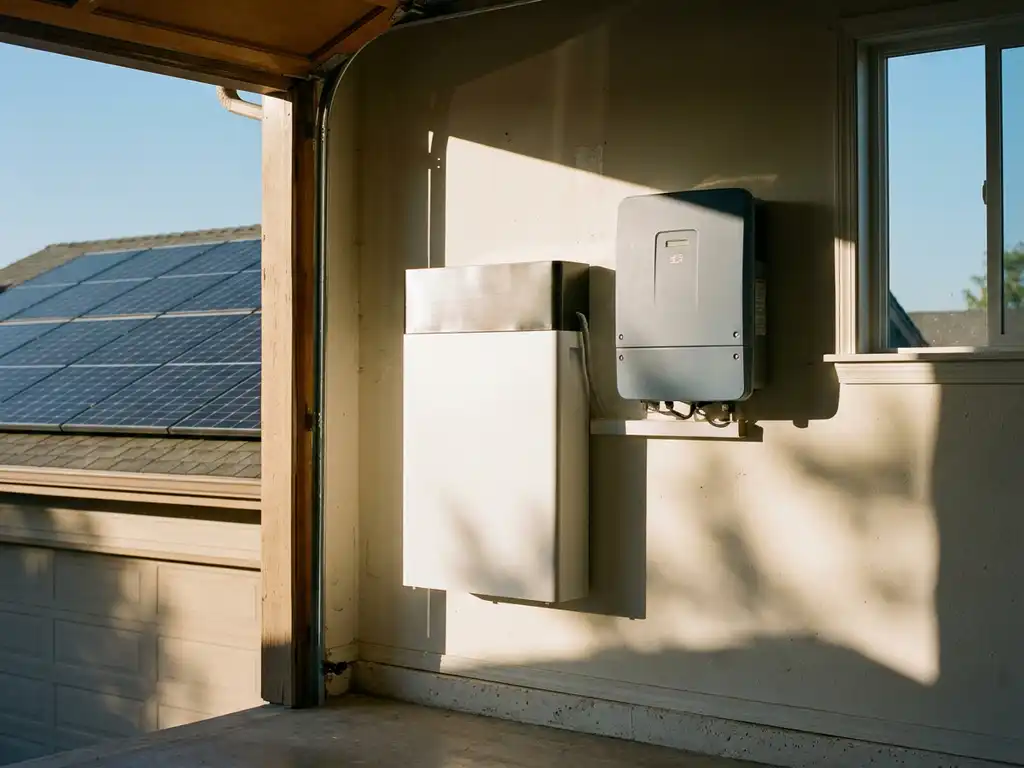
Battery storage systems require physical space and a stable electrical environment. Wall-mounted battery cabinets need adequate clearance, ventilation, and protection from extreme temperatures, which means the installation site itself needs evaluation alongside the solar system. Garages, utility rooms, and dedicated plant spaces are typically suitable, but cramped or poorly ventilated locations can affect battery performance and lifespan.
On the electrical side, the main distribution board needs to be assessed for available capacity. Adding a battery system often requires a dedicated circuit, and older boards may not have the spare capacity or may lack the modern safety features needed to support it safely. In some cases, a board upgrade is a prerequisite for battery installation. Checking the earthing arrangement and confirming compliance with current wiring regulations is equally important, particularly for commercial properties where grid connection agreements may impose additional requirements.
Load calculations are another critical step. Understanding the client’s peak demand, overnight consumption, and backup power needs allows the installer to recommend the right battery capacity rather than oversizing or undersizing the system. This is where a battery capacity calculator becomes genuinely useful, allowing installers to model different scenarios based on real consumption data before committing to a specification.
When battery storage makes financial sense
The financial case for battery storage depends heavily on the client’s energy usage profile and their current electricity tariff structure. Clients on time-of-use tariffs, where electricity costs significantly more during evening peak hours, stand to benefit most from a battery that charges during the day and discharges in the evening. The payback calculation changes considerably if the client is on a flat-rate tariff with a relatively high feed-in rate, since storing energy rather than exporting it may not always improve the financial return.
In 2026, battery prices have continued to fall, which has improved the economics of storage considerably compared to just a few years ago. However, the financial case still needs to be built on accurate data rather than assumptions. Factors such as the client’s annual energy consumption, the size of the existing solar array, local electricity prices, available incentives, and expected battery lifespan all feed into the calculation. Using a solar and battery calculator that accounts for these variables gives both the installer and the client a realistic projection rather than a rough estimate.
For commercial clients, the analysis often extends to demand charge management, where a battery can reduce peak demand drawn from the grid and lower monthly charges from the network operator. This additional dimension can significantly strengthen the financial case for larger systems.
Next steps for installation companies assessing client systems
A structured assessment process is what separates installation companies that consistently deliver well-specified battery projects from those that run into unexpected costs and rework. The process should begin with a data review, pulling together the client’s historical generation and consumption data, inverter specifications, and any existing grid connection documentation. This groundwork makes the site visit far more productive.
During the site visit, the focus should be on verifying what the data suggests: confirming inverter model and firmware version, inspecting the main board and earthing arrangement, evaluating the proposed battery location, and identifying any infrastructure upgrades that will be needed. Documenting findings systematically, rather than relying on memory or informal notes, ensures that nothing is missed when the project moves to the quotation and planning stage.
Building a repeatable assessment workflow also helps when managing multiple crews across multiple client sites. Standardized checklists, consistent documentation practices, and clear handoff processes between assessment, design, and installation teams reduce the risk of errors and keep projects on budget. For companies looking to scale this kind of work efficiently, having the right operational infrastructure in place is just as important as technical expertise.
How OpusFlow supports battery storage assessments and project delivery
Managing battery storage projects alongside a growing solar portfolio creates real operational complexity, from tracking assessment findings across multiple sites to coordinating crews and keeping quotes accurate. OpusFlow is built to handle exactly this kind of complexity for sustainable installation companies. Here is how the platform supports the full process:
- Solar battery calculator: OpusFlow includes a dedicated tool for calculating battery capacity and runtime requirements, helping installation teams build accurate specifications before committing to a design.
- Calculation and quotation module: Generate precise, professional quotes that account for inverter upgrades, infrastructure work, and battery hardware, reducing the risk of underpricing complex projects.
- Project management and planning: Coordinate assessment visits, installation crews, and follow-up tasks from a single platform, with automated task creation as projects move through the pipeline.
- Forms and documents: Standardize site assessment checklists and technical documentation so every team member captures the same information consistently.
- Workflow automations powered by Toni: OpusFlow’s AI agent Toni can automate follow-up actions, flag projects that need attention, and keep the sales-to-installation handoff running smoothly without manual intervention.
For installation companies that want to grow their battery storage business without adding unnecessary administrative overhead, OpusFlow provides the operational foundation to make that possible. Get in touch with our team to see how the platform fits your current workflow and where it can make the biggest difference.
Related Articles
- How do you calculate the payback period for a home battery system?
- How do you prevent material shortages on installation job sites?
- What role does customer data play in growing an installation business?
- How does ERP software facilitate communication between office and field teams?
- How can ERP software improve productivity for renewable energy contractors?