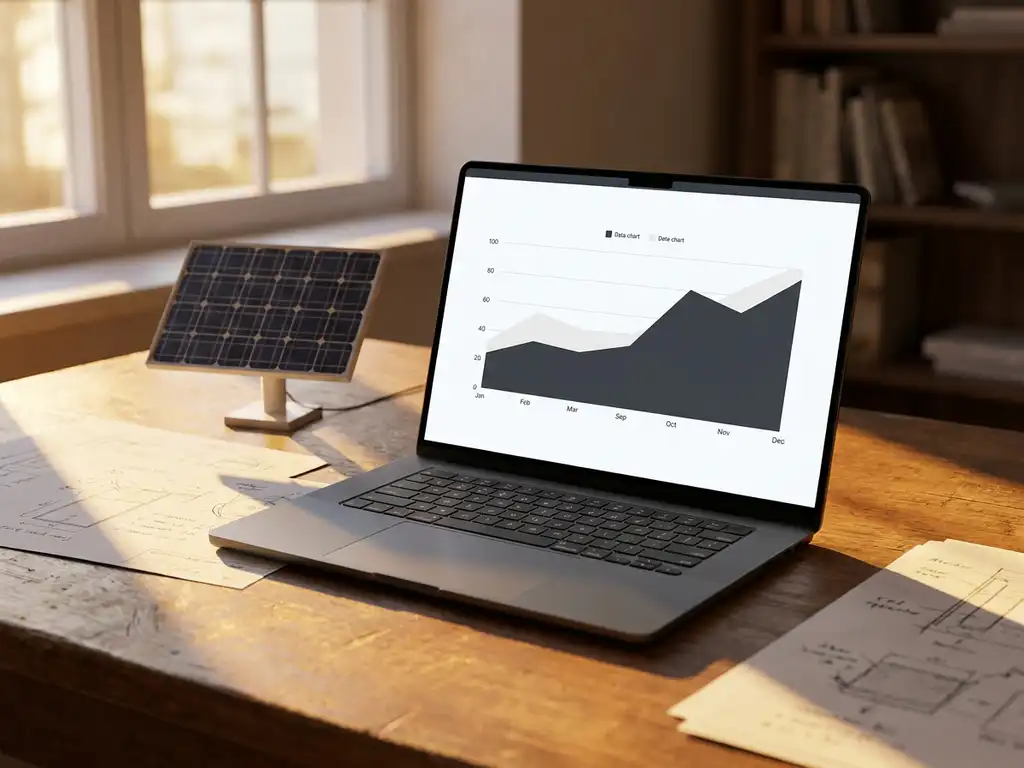
AI can generate comprehensive business reports for solar installation companies by automatically analyzing operational data, financial metrics, project performance, and customer insights to create actionable intelligence for strategic decision-making. Modern AI reporting tools integrate with existing business systems to transform raw data into visual dashboards, trend analyses, and predictive forecasts that help solar installers optimize operations, identify growth opportunities, and improve profitability. This automated approach eliminates manual report creation while providing deeper insights than traditional reporting methods.
What types of business reports can AI generate for solar installers?
AI can generate over a dozen critical report types for solar installation companies, including financial performance dashboards, project profitability analyses, customer acquisition cost reports, installation timeline tracking, equipment inventory forecasts, and sales pipeline analytics. These automated reports cover every aspect of solar business operations, from initial lead generation through project completion and ongoing maintenance.
The most valuable AI-generated reports for solar installers include:
- Project Performance Reports: Track installation timelines, cost overruns, and resource utilization across multiple projects simultaneously
- Sales Analytics: Monitor conversion rates, lead quality scores, and revenue forecasts based on pipeline data
- Financial Dashboards: Analyze cash flow, profit margins per project type, and seasonal revenue patterns
- Customer Satisfaction Reports: Aggregate feedback data and identify service improvement opportunities
- Equipment and Inventory Analytics: Predict component needs, track warranty claims, and optimize stock levels
- Team Productivity Reports: Measure installer efficiency, identify training needs, and allocate resources effectively
These reports update in real time as new data flows into your systems, providing solar companies with immediate visibility into operational changes and emerging trends. The AI can also generate custom reports tailored to specific business questions or regulatory requirements unique to different markets.
How does AI analyze solar installation data for reporting?
AI analyzes solar installation data through machine learning algorithms that process structured and unstructured information from multiple business systems, identifying patterns, correlations, and anomalies that humans might miss while automatically categorizing and contextualizing the findings for meaningful business insights.
The AI analysis process typically involves several sophisticated techniques:
Data Integration and Cleaning: AI systems connect to various data sources, including CRM platforms, project management tools, accounting software, and field service applications. The algorithms automatically clean and standardize data formats, remove duplicates, and fill in missing information where possible.
Pattern Recognition: Machine learning models identify recurring trends in installation timelines, seasonal demand fluctuations, equipment failure rates, and customer behavior patterns. This helps predict future outcomes and highlight potential issues before they become problems.
Predictive Analytics: AI uses historical data to forecast future performance metrics such as monthly revenue, project completion dates, and maintenance requirements. These predictions become more accurate as the system processes more data over time.
Natural Language Processing: For companies with significant text-based data like customer communications, service notes, or feedback forms, AI can extract sentiment, categorize issues, and identify common themes that inform business decisions.
The analysis happens continuously in the background, with AI systems learning from new data inputs to refine their accuracy and discover previously unknown relationships between different business metrics.
Which AI tools work best for solar company reporting?
The most effective AI reporting tools for solar companies are industry-specific ERP platforms with built-in AI capabilities, business intelligence solutions like Microsoft Power BI or Tableau with AI features, and specialized solar industry analytics platforms that understand the unique metrics and workflows of renewable energy installations.
Leading AI reporting solutions for solar installers include:
Integrated ERP Platforms: Comprehensive business management systems with native AI reporting capabilities offer the best value because they eliminate data silos and provide holistic business insights. These platforms understand solar-specific workflows and can generate reports that traditional business intelligence tools might miss.
Business Intelligence Platforms: Tools like Microsoft Power BI, Tableau, and Qlik Sense offer powerful AI-driven analytics capabilities when properly configured for solar industry data. They excel at creating interactive dashboards and can handle large datasets from multiple sources.
Specialized Solar Analytics Tools: Industry-specific platforms designed exclusively for renewable energy companies often provide the most relevant insights because they’re built around solar installation workflows and common performance indicators.
When evaluating AI reporting tools, solar companies should prioritize data-driven decision-making capabilities that align with their specific operational needs and growth objectives.
The key is choosing tools that can integrate seamlessly with your existing systems while providing the flexibility to create custom reports as your business evolves and regulatory requirements change.
What data sources should you connect for comprehensive AI reports?
Comprehensive AI reports require integration with all core business systems, including CRM platforms, project management software, accounting systems, field service applications, inventory management tools, and customer communication platforms to ensure complete visibility across the entire solar installation lifecycle.
Essential data sources for solar company AI reporting include:
Customer Relationship Management (CRM): Lead sources, conversion rates, customer communications, and sales pipeline data provide insights into marketing effectiveness and revenue forecasting. This data helps identify the most profitable customer segments and optimize acquisition strategies.
Project Management Systems: Installation timelines, resource allocation, milestone tracking, and project profitability data enable performance optimization and accurate scheduling. Key performance indicators from project data reveal operational bottlenecks and improvement opportunities.
Financial and Accounting Data: Revenue, expenses, cash flow, and profit margins by project type, customer segment, or geographic region inform strategic business decisions and pricing strategies.
Field Service and Maintenance Records: Equipment performance data, maintenance schedules, warranty claims, and customer service interactions help predict future service needs and identify quality issues.
Inventory and Supply Chain Systems: Component availability, supplier performance, pricing trends, and delivery schedules enable better project planning and cost control.
External Data Sources: Weather data, utility rate structures, government incentive programs, and market conditions provide context for performance analysis and strategic planning.
The more data sources you connect, the more comprehensive and accurate your AI-generated reports become, enabling better decision-making across all aspects of your solar installation business.
How do you set up automated report generation workflows?
Setting up automated report generation workflows involves defining report schedules, establishing data refresh intervals, configuring distribution lists, and creating trigger-based alerts that ensure stakeholders receive relevant business intelligence automatically without manual intervention.
The setup process typically follows these key steps:
Define Report Requirements: Start by identifying which reports different stakeholders need, how frequently they need them, and in what format. Operations managers might need daily project status updates, while executives prefer weekly financial summaries and monthly strategic overviews.
Configure Data Connections: Establish secure connections between your AI reporting tool and all relevant data sources. Set up appropriate refresh schedules, ensuring reports reflect the most current information while balancing system performance.
Create Report Templates: Design standardized report formats that can be automatically populated with fresh data. Include key metrics, visualizations, and contextual information that make reports immediately actionable for recipients.
Set Up Distribution Rules: Configure automated delivery schedules and recipient lists for different report types. Ensure sensitive financial information only reaches authorized personnel, while operational updates reach relevant team members.
Implement Alert Systems: Create threshold-based alerts that trigger immediate notifications when key metrics exceed acceptable ranges, such as project delays, cost overruns, or inventory shortages.
For growing solar companies, establishing scalable reporting workflows prevents operational chaos as teams expand and data complexity increases.
How OpusFlow Helps with AI Business Report Generation
OpusFlow revolutionizes solar installation company reporting through Toni, our AI-powered assistant that automatically generates comprehensive business reports by analyzing data across all integrated modules. As the first AI-agentic ERP specifically designed for sustainable installation companies, we eliminate the complexity of connecting multiple data sources and manual report creation.
Our integrated approach delivers superior reporting capabilities:
- Unified Data Platform: All business data flows through a single system, ensuring complete accuracy and eliminating data silos that plague multi-tool approaches
- Industry-Specific Intelligence: Toni understands solar installation workflows, seasonal patterns, and renewable energy market dynamics to generate relevant insights
- Real-Time Automation: Reports update continuously as new data enters the system, with automated distribution to stakeholders based on customizable schedules
- Predictive Analytics: Advanced forecasting capabilities help solar companies anticipate market changes, resource needs, and growth opportunities
- Scalable Architecture: Our modular platform grows with your business, supporting everything from small installers to large enterprise operations
Ready to transform your solar installation business with AI-powered reporting? Contact our team to discover how OpusFlow can streamline your operations and provide the business intelligence you need to scale successfully in the competitive renewable energy market.
Related Articles
- What is depth of discharge and why does it change your battery recommendation?
- How do you build a real-time dashboard to monitor your service business?
- How do you manage technician scheduling with ERP software?
- How do renewable energy contractors measure the environmental impact of their projects?
- What ERP features do wind farm contractors need most?