Running a solar or heat pump installation business gets harder as you grow. More leads come in, projects overlap and your team starts relying on spreadsheets, WhatsApp messages and separate tools just to keep up, especially as the German solar market continues to expand. What used to feel organised now feels scattered. Quotes slow down, planning becomes reactive and it gets harder to see where projects are stuck.
If your systems can’t keep pace with your workload, it might be time to look beyond HERO and explore stronger HERO alternatives, platforms built for the full installer workflow.
Why look beyond HERO?
HERO is a strong ERP tool for general craft businesses, but solar and heat pump installers need more. Your work depends on fast quotes, accurate designs and clear communication between sales, planning and field teams. When these live in separate tools, everything slows down.
Here’s what usually goes wrong:
- Information gets lost between systems
- Quotes take too long to send
- Teams work in silos and rely on WhatsApp to fill the gaps
- Managers can’t see what is stuck or why
- Customers wait longer for answers
This is when installers start looking beyond HERO. Not because the software itself is “bad”, but because it was never built around the full solar workflow. Modern installer platforms bring sales, design, planning and after-care together in one place so every project moves with fewer mistakes and less manual work.
If you want fewer systems, fewer handovers and a smoother customer experience, it makes sense to explore alternatives made for growing renewable businesses.
How we selected these HERO alternatives
Choosing a HERO alternative is a big decision, so we focused on criteria that matter most to installers in the German market. The goal was simple: find tools that reduce complexity, improve collaboration and support your full workflow from first contact to final installation.
Here’s what we looked for:
- Solar-ready workflows: Tools had to support the full installer process from lead to installation without forcing extra systems
- German market fit: Platforms needed to serve German installers with language, support or compliance features
- Real time savings: We focused on software that cuts manual work and speeds up quoting, planning or project delivery
- Scalable for growing teams: Solutions had to fit both smaller companies and installers adding more crews or services
- Easy for teams to adopt: Clear interfaces and simple onboarding were essential so everyone can use the system with confidence
- Reliable documentation and compliance: Preference for tools that help navigate EEG, KfW and DIN requirements
One Platform to Run Your Entire Installation Business
Manage leads, projects, stock, and invoicing — everything in one smart system built for sustainable installers.

1. OpusFlow: One of the leading HERO alternatives for installers

OpusFlow, as one of the HERO alternatives, is built for installers who want one connected workflow instead of juggling separate tools for sales, planning, stock and installation. Everything sits in a single system so your team always works from the same information. Quotes move straight into projects, materials are tracked in real time and every department sees what needs to happen next without chasing updates.
For growing solar and heat pump companies, this clarity makes the biggest difference. Instead of losing time to handovers and manual steps, your team focuses on delivering jobs faster and with fewer mistakes. OpusFlow replaces tool chaos with one simple way of working that fits how installers actually operate. That is why it is considered as a HERO alternative.
Advantages of OpusFlow
- Keeps sales, planning, stock and installation in one connected workflow
- Helps teams work faster with fewer handovers and no duplicate data
- Easy for all departments to use with a clean interface and simple onboarding
Disadvantages of OpusFlow
- Offers fewer deep customisation options compared to large enterprise ERPs
If you want to compare features of OpusFlow and HERO,
read this: OpusFlow vs HERO Software.
2. Odoo: A flexible ERP among popular HERO alternatives
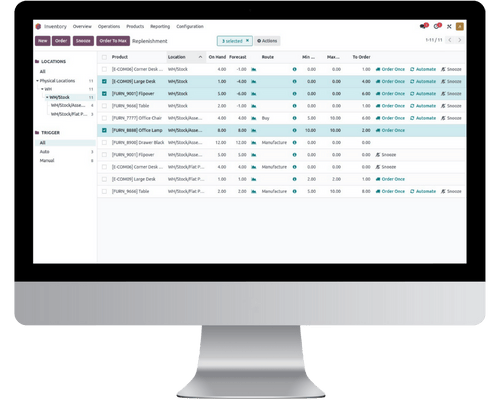
Installers, who are comparing HERO alternatives, often consider Odoo. It is a modular ERP that lets companies build their own setup from dozens of apps like CRM, sales, inventory, accounting and field service. It gives installers a flexible way to manage operations without committing to a large enterprise system. Many teams choose Odoo because it’s affordable, well-supported and can grow with the business.
Even so Odoo is considered as a striking HERO alternative, it is not designed around solar workflows. To handle quoting, PV design, technical checks or installation planning, most installers need extra apps, custom fields or third-party tools. It can work well with the right configuration, but businesses looking for an out-of-the-box solution often find the setup and maintenance more demanding than expected.
Advantages of Odoo
- Wide range of modules covering most business processes
- Flexible setup that can grow as the business grows
- Affordable price point with many community resources
Disadvantages of Odoo
- Not solar-specific so requires customisation to fit installer workflows
- Setup and maintenance can be time consuming for non-technical teams
- Quoting and design tools are not integrated into the core system
3. Autarc: A planning-focused HERO alternative
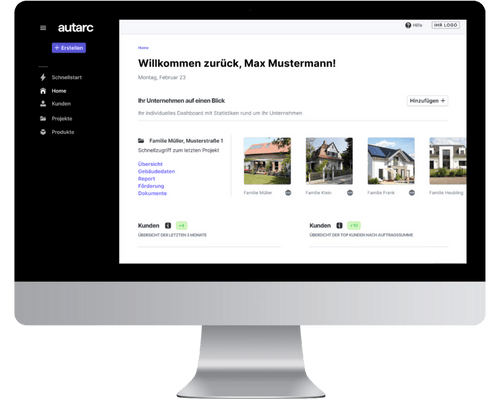
Autarc is a Germany-based software platform focused on technical planning and documentation for renewable energy installations, particularly PV systems, heat pumps and electrical infrastructure. Among modern HERO alternatives, it positions itself as a specialist for engineering and compliance workflows rather than a full business ERP.
Autarc is a good fit for companies that already manage sales and project coordination elsewhere, but want to reduce risk, errors and manual effort in technical planning and approval workflows.
Advantages of Autarc
- Strong focus on German regulations and standards
- Specialised technical planning
- Supports multiple technologies (PV, heat pumps, electrical components, and more)
Disadvantages of Autarc
- Does not currently include a dedicated purchasing and inventory management module
4. SurgePV: A design-driven option among HERO alternatives
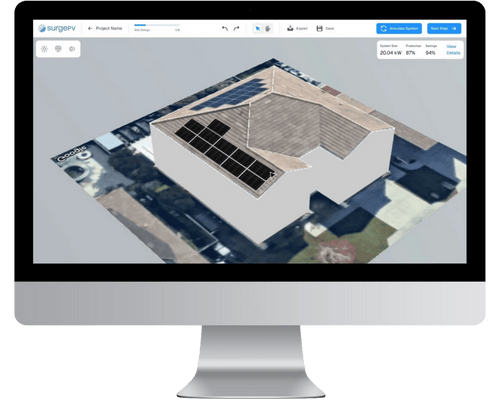
SurgePV is built for German installers who need precise design and financial modeling. Its AI-driven system creates detailed layouts with LIDAR, shading analysis and P50/P90 simulations. It also includes EEG and KfW calculators, making it a strong tool for German compliance.
SurgePV is a powerful HERO alternative, but it is focused mostly on pre-sales and design, so teams still need another platform for planning jobs, scheduling crews, or managing stock.
Advantages of SurgePV
- Accurate LIDAR and shading tools
- Built-in EEG and KfW financial modeling
- Fast layout-to-proposal workflow
- Provides German-language proposals
Disadvantages of SurgePV
- Not an all-in-one ERP
- Can feel complex for smaller installation teams
- Higher cost than lightweight design tools
5. OpenSolar: A free tool among HERO alternatives
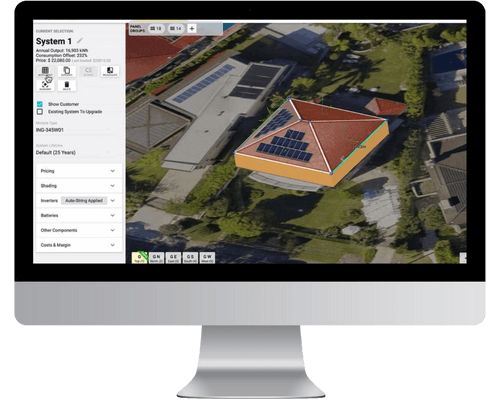
OpenSolar is a free design and proposal platform built for installers who want a simple way to create layouts and quotes. It includes 2D and 3D tools, templates and basic CRM features. For new or budget-conscious companies, it’s a low-risk way to start digitalizing the sales process.
It includes helpful features for Germany, like EEG tariff logic, that makes it a great HERO alternative. But the company lacks advanced automation or operational tools.
Advantages of OpenSolar
- Free to use
- Easy layout tools for residential projects
- Includes EEG tariff logic
Disadvantages of OpenSolar
- Limited automation and project management
- No native e-signature or advanced proposal features
- Not suitable for scaling or complex installations
6. Solargraf: A fast quoting HERO alternative for residential solar
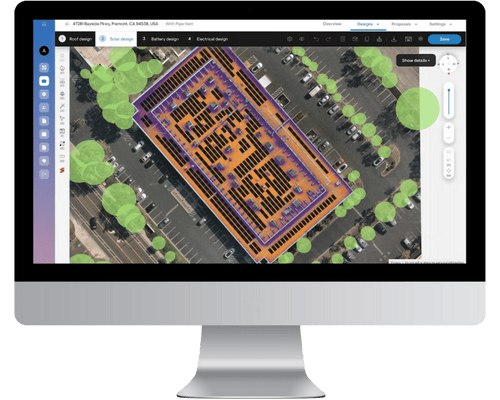
Solargraf, as one of HERO alternatives, centers on fast quoting and intuitive solar design. Its browser-based tool uses LIDAR data to quickly generate layouts, and it produces clean, visually appealing proposals that help installers close residential projects faster.
It’s strong for speed and simplicity but does not include advanced financial or regulatory modeling for the German market.
Advantages of Solargraf
- Fast design tools that improve quote turnaround
- Easy, browser-based interface
- Clean proposals that support residential sales
- No complicated setup needed
Disadvantages of Solargraf
- No built-in EEG or KfW modeling
- Limited engineering depth
- Not suitable for full operational management
7. Splandid: An ERP-style choice among HERO alternatives

Splandid is a Dutch ERP designed for installation companies that want a straightforward way to manage sales, planning, operations and field work. The interface is clean and simple, which helps teams adopt it quickly without long onboarding cycles.
Its integration with Solar Monkey makes it a striking HERO alternative and a good match for installers who want planning and scheduling features without giving up advanced PV design.
Advantages of Splandid
- Simple and user-friendly interface
- Strong planning and scheduling tools
- Integrates with Solar Monkey for design
Disadvantages of Splandid
- Less comprehensive than full ERPs
- Limited customisation for complex processes
- Not built for the German market specifically
8. PV*SOL: An advanced technical HERO alternative
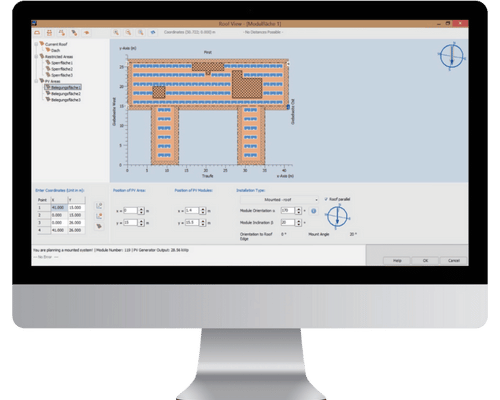
PV*SOL is a technical simulation tool built for installers who need highly accurate energy modeling. It offers 3D shading, terrain modeling and 8760-hour simulations that meet German standards. It’s often used for feasibility studies, commercial projects and technical validation.
Because it’s focused on engineering, installers typically pair PV*SOL with separate tools for quoting, sales and project management.
Advantages of PV*SOL
- Highly accurate simulations used widely in Germany
- Strong shading, terrain and string design capabilities
- Supports DIN and EEG-compliant calculations
Disadvantages of PV*SOL
- Not designed for fast quoting or sales workflows
- Steeper learning curve, especially for new users
- Requires other tools for operations
9. Sollit: A scalable platform HERO alternatives
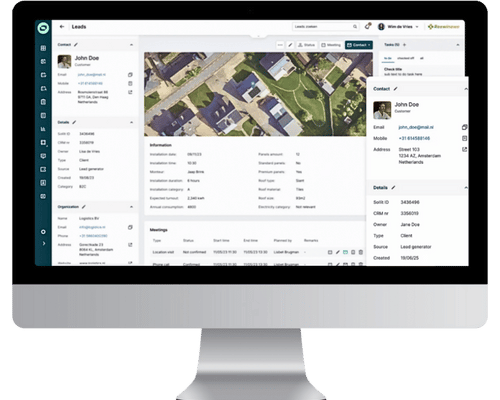
Sollit is a large European platform used by installers for selling, planning and delivering solar, heat pump and EV charging systems. Considered as a HERO alternative, it covers the full customer journey and is designed to support both smaller installers and large enterprises. Sollit is expanding its presence in Germany, which includes localised support and onboarding.
Because it serves many types of businesses, workflows may need configuration to fit the way each installation company operates.
Advantages of Sollit
- Covers sales, planning, installation and service in one platform
- Supports multiple products like PV, heat pumps and EV chargers
- Strong European presence with active expansion in Germany
Disadvantages of Sollit
- Can feel heavy for small teams
- May require external help for setup
- Not specialized for PV design or engineering
10. Solar Monkey: A lightweight PV tool among HERO alternatives
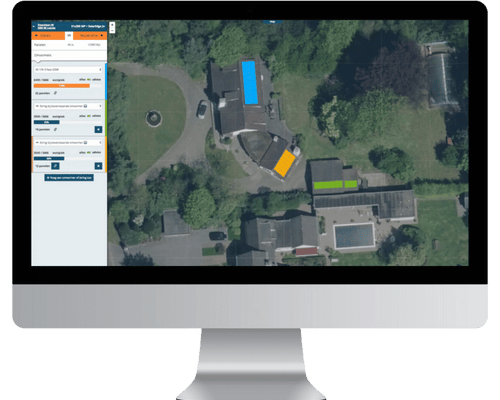
Solar Monkey, as a HERO alternative, focuses on PV design and proposal quality. It delivers accurate shading analysis, clean layouts and strong sales tools that help installers create professional quotes quickly. For teams that want reliable design tools without adopting a full ERP, Solar Monkey offers a simple and approachable solution.
The platform also provides templates built for the expectations of German customers, which makes communication clearer and reduces back-and-forth during the sales process.
Advantages of Company name
- Simple to use and easy to onboard
- Templates fit German sales expectations
- Integrates with ERPs like Splandid or HERO
Disadvantages of Company name
- Not an all-in-one platform
- Limited operational and project management features
- Requires export or integration for installation planning
Do you need some advice on how to choose the most fitted software for your business?
Read this: How to choose the best solar design software: features, benefits and examples.
A quick comparison of the top 10 HERO alternatives
Alternative
Key strengths
German market suitability
Notes
OpusFlow
End‑to‑end ERP; PV design; planning; CRM; automations
Multilingual; used by DACH installers
Best overall pick
Odoo
Modular ERP covering CRM, sales, inventory and accounting
Local partners; localisation available
Requires configuration
Autarc
Technical planning & documentation; German compliance
Built in Germany; local standards
Best for engineering & approval workflows
SurgePV
OpenSolar
Solargraf
Splandid
Multilingual; limited integrations
PV*SOL
Sollit
Solar Monkey
Focus on design & sales
How to choose the best HERO alternative
Choosing the right software shapes how your team works every day, so it helps to focus on what actually keeps projects moving. The best HERO alternative should reduce the number of tools you use, remove manual steps and give everyone a clear view of what needs to happen next. Most importantly, it should fit the way your solar and heat pump installers work, not the other way around.
Here’s what to look for when comparing your options:
Solar-specific workflows and compliance
Your ERP software should follow the same steps your team follows every day. Look for tools built around the full solar workflow so leads, quotes, design, planning and installation all move together without manual handoffs.
German compliance and tariff modeling
The platform should support EEG tariffs, KfW programs and the documentation your customers expect. Accurate financial models help you avoid mistakes and give customers clear numbers from the start.
Automation and time savings
Good software reduces repetitive work. Automations for reminders, follow-ups, stock updates or project handoffs save hours each week and help your team stay consistent even during busy seasons.
Built-in quoting and design tools
Fast quoting is critical. When design and pricing live inside your system, proposals go out sooner and with fewer errors. This also keeps your sales and planning teams aligned around the same information.
Scalability and customisation
As your business grows, your software should grow with you. Choose a platform that supports more crews, more jobs or new product lines without forcing a full rebuild.
Integrations with your workflow
If you rely on external tools, make sure your new platform connects with them in a simple and stable way. Integrations help avoid duplicate data and keep your process clean.
Local support and language
Teams work better when the software speaks their language and support is easy to reach. Look for platforms with German-language interfaces or active support for the DACH region.
One Platform to Run Your Entire Installation Business
Manage leads, projects, stock, and invoicing — everything in one smart system built for sustainable installers.
Read also: 10 best solar design software in 2026 and discover what software for installers are leading on other markets.
Why OpusFlow is one of the strongest ERP among HERO alternatives
OpusFlow is built for installers who want one connected system to run their entire operation. Instead of juggling separate tools for sales, design, planning, stock and customer communication, OpusFlow brings everything into one workflow your whole team can follow. This gives you real visibility, fewer handoffs and a smoother experience for every customer.
Because OpusFlow is designed specifically for solar, heat pump and HVAC businesses, every part of the platform supports the way installation teams actually work. Quotes move straight into projects, materials and stock update in real time and your installers know exactly what is expected when they arrive on site. With one clear source of truth, your business becomes easier to manage and much easier to scale.
Installers across Europe use OpusFlow to reduce errors, speed up delivery and regain control as demand grows. If you want a system that helps your team work faster with less manual effort, OpusFlow is the most complete option on the market.
Ready to see how it works in your business? Book a free demo and get a tailored walkthrough of OpusFlow.
All your questions answered...
Is OpusFlow available in Germany?
Yes. OpusFlow is fully available to German installers and used by teams across the DACH region. The platform supports multilingual teams and fits the workflows of solar and heat pump companies operating in Germany.
What should I prioritize when choosing a HERO alternative?
Look for tools that support the full installer workflow from sales to installation. Solar-ready features, German compliance, built-in design and quoting, automation and strong onboarding should be at the top of your list.
How can I test an alternative solution before fully committing?
Most platforms offer a product demo, trial environment or guided onboarding session. Use this time to run through your real workflow with sample projects so you see how the system handles quoting, planning and installation tasks.