Solar Monkey is a popular choice in the Netherlands and Belgium, especially for PV design and proposals. But as solar businesses grow, many installers start to ask the same question: “Is this still enough for the way we work today?” Planning, follow-ups, invoices, stock, teams in the field, suddenly one tool doesn’t cover it all anymore.
Why these Solar Monkey alternatives were selected
The list of Solar Monkey alternatives is not based on ads, popularity contests, or generic software rankings. It is based on how solar installers in the Netherlands and Belgium actually work today, and the pressure they face in a fast-growing market.
Here’s how the selection was made.
1. Solar market growth in Europe demands better installer software
Solar installation is no longer a side business, it is a core pillar of Europe’s energy strategy. The European Commission confirms that solar PV is one of the fastest-growing renewable energy sources in the EU, driven by energy security and rising energy costs.
For installers, this growth means:
- More projects at the same time
- Tighter deadlines
- Higher customer expectations
- More administrative complexity
Software that only supports quoting or basic design is often no longer enough. This is why Solar Monkey alternatives were evaluated based on their ability to support today’s solar installation reality, not yesterday’s.
2. Focus on Netherlands and Belgium installer workflows
Not all software works well in the Benelux market. Solar installers in the Netherlands and Belgium deal with:
- Local VAT and invoicing rules
- Country-specific compliance
- SME-sized operations that need speed, not complexity
According to Eurostat, rooftop solar adoption is particularly strong in countries like the Netherlands and Belgium, where small and mid-sized installers play a major role. For this reason, Solar Monkey alternatives were selected based on local relevance, not global branding.
3. Solar Monkey alternatives must support the full installer workflow
Solar Monkey is mainly associated with solar design and proposals. However, most operational challenges appear after the quote is approved.
This selection prioritises tools that help with:
- Lead and customer management
- Quotations and contract follow-up
- Planning and resource management
- Project execution
- Invoicing and financial flow
- Collaboration between office and field teams
Some alternatives cover the full process, while others focus on specific steps, but each tool on this list solves real, recurring installer problems.
Now that the selection logic is clear, it’s time to dive into the list.
Starting with #1: OpusFlow, and why many Dutch and Belgian installers see it not just as a Solar Monkey alternative, but as a complete operational platform.
If you are not sure what software fits best and what choice you need to make, read this article: How to choose the best solar design software: features, benefits and examples.
1. OpusFlow: The all-in-one Solar Monkey alternative for installers

Installers who start looking beyond design-only tools often end up exploring OpusFlow as one of the most complete Solar Monkey alternatives on the market. Instead of focusing on just proposals or layouts, OpusFlow supports the full operational flow of a renewable installation business.
From lead intake and CRM to quoting, planning, installation, invoicing, and after-sales, everything lives in one connected platform. The software is designed to reduce manual handovers between tools, improve visibility across teams, and keep projects moving without unnecessary delays or errors. As your business grows, OpusFlow with its possibilities scales with you.
Advantages of OpusFlow
- Covers the full installer workflow: quoting, CRM, design, projects, stock, invoicing, and more
- Built specifically for installation companies, not generic service businesses
- Supports multiple technologies such as PV, batteries, heat pumps, and EV chargers
- Automates repetitive tasks with templates, workflows, and internal tools
- Can replace several separate systems, reducing software complexity and costs
Disadvantages of OpusFlow
- OpusFlow currently focuses only on serving markets such as the Netherlands, Belgium, Germany, Spain, and the UK to ensure high-quality support and local relevance. As the platform continues to grow, expansion into additional regions is planned over time
If you would like to compare the features of OpusFlow and Solar Monkey, read this: OpusFlow vs Solar Monkey.
2. Sollit: A well-known Solar Monkey alternative for Dutch solar companies
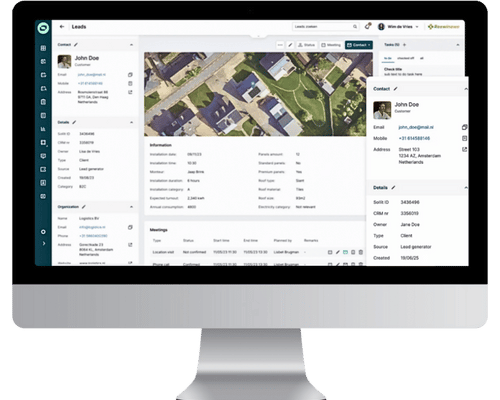
Sollit (formerly known as 2Solar) is often considered by Dutch installers who are looking for Solar Monkey alternatives with a strong focus on sales, customer journeys, and project follow-up. The platform is positioned around helping solar companies structure their commercial process, from lead registration and proposals to basic project coordination.
Sollit appeals mainly to teams that want more control over sales and customer communication without switching to a very complex system. For companies that prioritise clarity in quoting and customer interaction, Sollit can feel like a logical next step beyond pure design tools.
Advantages of Sollit
- Strong focus on sales flow, customer communication, and quotation management
- Designed for the Dutch solar market and local installer needs
- Helps organise leads, proposals, and follow-ups in one place
Disadvantages of Sollit
- Inventory / warehouse management is explicitly tied to integrations. This can work well, but it means full operational coverage may depend on external systems
- The support of Sollit is expensive. Changes to the environment are either expensive or not possible.
3. Syntess Atrium: An established Solar Monkey alternative

Syntess Atrium is often seen as a solid choice among Solar Monkey alternatives for installation and construction companies that want structure, control, and stability. The platform is positioned as a comprehensive business solution, covering commercial, operational, and administrative processes in one system.
It is widely used by medium to larger technical companies that handle complex projects and need strong coordination between office and field teams. For solar installers who value process consistency and long-term system reliability, Syntess Atrium can be a familiar and trusted environment.
Advantages of Syntess Atrium
- Broad ERP-style coverage including CRM, projects, planning, service, and invoicing
- Designed for installation and construction companies, not generic businesses
- Strong project and service management capabilities for complex operations
- Well-established solution with long-term presence in the Dutch market
Disadvantages of Syntess Atrium
- Solar PV design, yield simulation, or renewable-specific engineering calculations usually need to be handled with specialised external tools
- The company does not support renewable technologies such as heat pump, EV chargers, batteries with dedicated calculators
4. Vertuoza: A Belgian Solar Monkey alternative for construction and solar teams
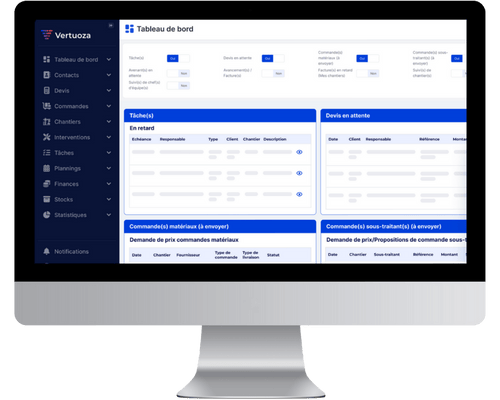
Vertuoza is often mentioned among Solar Monkey alternatives by Belgian and Dutch installation companies that want more structure around projects, planning, and field execution. The platform focuses on helping technical and construction teams organise their daily operations, from quotes and work orders to on-site activities and follow-up.
Vertuoza is especially attractive for companies that manage multiple crews and need better visibility between the office and the field. For installers looking to professionalise their operational flow without moving to a heavy ERP, Vertuoza offers a practical middle ground.
Advantages of Vertuoza
- Strong focus on project management, planning, and field operations
- Built for construction and technical service companies, including installers
- Helps connect office teams with technicians on-site
- Supports quotations, job tracking, and operational follow-up
Disadvantages of Vertuoza
- While supporting projects related to solar, Vertuoza does not provide native functionality for solar PV design, yield simulation, shading analysis, or renewable-specific engineering calculations. These activities typically need to be handled with external specialised tools
5. Splandid: One of the Solar Monkey alternatives for fast solar quoting

Splandid is mainly used by solar companies that want to speed up the commercial side of their business without adding unnecessary complexity. The platform puts strong emphasis on creating clear proposals, managing leads, and guiding customers through the decision process.
Instead of trying to cover every operational detail, Splandid concentrates on helping sales teams work faster and more consistently. For installers whose main challenge is converting interest into signed deals, Splandid is often considered before moving to broader Solar Monkey alternatives.
Advantages of Splandid
- Strong tools for solar proposals and lead conversion
- Helps standardise quotations and customer communication
- Well suited for companies with a strong sales-driven approach
Disadvantages of Splandid
- Splandid supports the commercial side of solar projects but does not include native solar design or engineering functionality
- While well suited for standard solar sales flows, Splandid does not position itself as a tool for handling complex projects that combine multiple renewable technologies like batteries, heat pumps, or EV chargers with advanced technical dependencies
6. Workmate: A practical Solar Monkey alternative for field service and installers
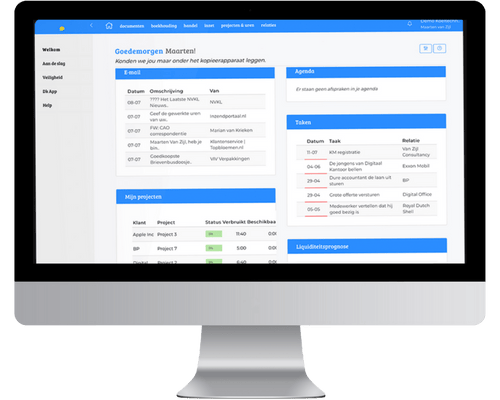
Workmate is designed for installation and service companies that want more control over daily operations rather than sales-heavy tooling. The platform focuses on planning, job management, and coordination between office staff and technicians in the field.
It is often used by companies that already have a way to generate leads and quotes, but need better structure once the work is scheduled. For teams that value clarity in tasks, time, and resources, Workmate regularly appears on shortlists of Solar Monkey alternatives.
Advantages of Workmate
- Strong emphasis on planning, job management, and field operations
- Improves communication between office and on-site teams
- Suitable for installation and service-based workflows
- Easy to integrate into existing operational processes
Disadvantages of Workmate
- Workmate is built as a generic field service and job management platform. It does not provide native functionality for solar PV design, yield calculation, system sizing, or renewable-specific engineering processes
- This software does not provide support to other renewable technologies such as batteries, heat pumps, and EV chargers, which may limit suitability for installers offering complex or multi-technology renewable solutions
7. Odoo: A Solar Monkey alternative for scalable solar businesses
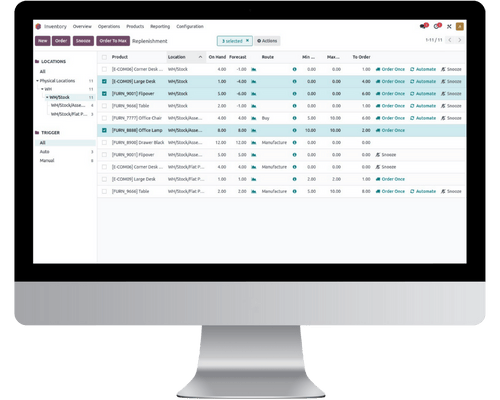
Odoo is frequently mentioned among Solar Monkey alternatives by installation companies that want maximum flexibility and long-term scalability. Originating from Belgium, Odoo is built as a modular platform where businesses can combine only the applications they need, from CRM and sales to projects, inventory, accounting, and field service.
This makes it attractive for solar companies that are growing, diversifying services, or operating across different markets. Rather than offering a fixed installer workflow, Odoo provides building blocks that can be shaped around specific business processes.
Advantages of Odoo
- Highly modular structure allows companies to activate only relevant functions
- Broad functional coverage including CRM, projects, inventory, accounting, and service
- Strong scalability for growing or multi-entity businesses
- Large European user base and active development ecosystem
Disadvantages of Odoo
- Odoo itself is a general-purpose business platform. While solar design workflows can be supported through integrations with specialised solutions, the solar engineering and calculation logic is not part of Odoo’s native functionality
8. Eturnity: A solar-focused Solar Monkey alternative
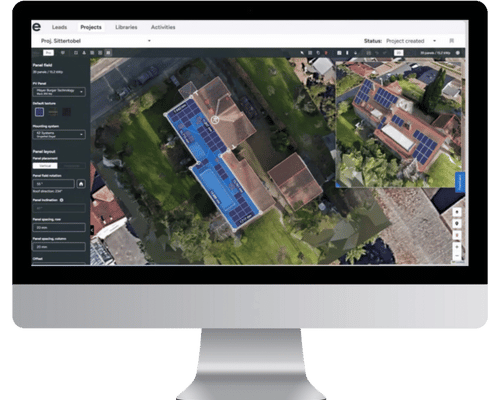
Eturnity is often evaluated by installers and energy professionals who want a dedicated tool for solar PV design and performance simulation. As a European company with strong roots in the DACH region, Eturnity focuses on helping users calculate yields, create system layouts, and produce technical reports with a high level of accuracy.
The platform is commonly used in early project phases, where feasibility and performance estimates matter most. For companies that mainly need strong design and simulation capabilities, Eturnity is regularly compared to other Solar Monkey alternatives.
Advantages of Eturnity
- Strong focus on solar PV design, yield simulation, and performance analysis
- Used by installers, EPCs, and energy consultants across Europe
- Provides technical reporting to support customer decisions
Disadvantages of Eturnity
- Eturnity is primarily built around solar design and performance simulation. While integrations can support additional business processes, key operational areas such as invoicing, purchasing and stock control are not native to the platform and typically rely on external systems
9. HERO Software: A Solar Monkey alternative for planning and installation workflows
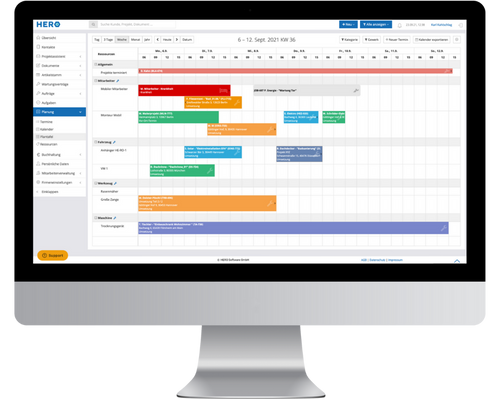
HERO Software is positioned around helping installation and service companies organise their day-to-day work more efficiently. Rather than focusing heavily on design or sales, the platform puts operational execution at the centre: planning jobs, coordinating technicians, tracking work orders, and following up on service activities.
This makes HERO Software relevant for solar installers who want better control once projects move into execution. For companies looking to strengthen operational structure and visibility, HERO Software is often evaluated as a practical Solar Monkey alternative.
Advantages of HERO Software
- Designed for installation and technical service businesses
- Clear overview of work orders, schedules, and technician activities
- Helps improve operational efficiency and day-to-day coordination
Disadvantages of HERO Software
- Renewable technology support is generic, not technology-specific. HERO Software serves installation and service companies across many technical trades. Solar, batteries, heat pumps, and EV chargers are not treated as distinct technology domains with dedicated workflows
Read also: Top 10 HERO alternatives for sustainable installers (2026).
Or if you want to compare features of HERO and OpusFlow, read this: OpusFlow vs HERO Software.
10. Teamleader: A versatile Solar Monkey alternative with broad business focus

Teamleader is often included among Solar Monkey alternatives by installation businesses that want a unified system for CRM, quotations, projects, and invoicing. Founded in Belgium as a SaaS platform for small and medium-sized enterprises, Teamleader brings customer data, sales pipelines, project tracking, and billing into one place.
Its strength lies in centralising core business functions for a variety of industries, helping teams keep organised and reduce tool sprawl. For installers who prioritise a consolidated platform for general business management, Teamleader is a practical option.
Advantages of Teamleader
- Integrated CRM, quotes, invoicing, and project management in a single platform
- Works well for small to mid-sized companies across diverse sectors
- Good ecosystem of integrations with third-party tools
Disadvantages of Teamleader
- As a general business platform not specialised in solar or renewable-specific workflows, it may need integrations or additional tools to fully support a solar installer’s end-to-end processes
- Any connection to solar, battery, or EV charging workflows typically depends on third-party tools rather than native functionality, increasing reliance on external systems as complexity grows
To explore offers within other markets, read this article: Top 10 proven Suntropy alternatives: the expert guide.
Read also: 10 best solar design software in 2026.
Why OpusFlow is a great choice among Solar Monkey alternatives?
If you’re exploring Solar Monkey alternatives, chances are you’re looking for more than just design software. While Solar Monkey focuses mainly on PV design, OpusFlow goes several steps further by supporting your entire installation workflow from start to finish.
It’s built specifically for solar and renewable energy installers who want everything in one place – from CRM and quotations to planning, purchasing, invoicing, and project management. Instead of juggling multiple tools, OpusFlow helps you keep sales, operations, and installations fully connected in a single, cloud-based platform.
What really sets OpusFlow apart from other Solar Monkey alternatives is that it’s not just a tool – it’s a complete all-in-one ERP solution tailored for real-world installer needs. With native features that support end-to-end workflows, OpusFlow scales with your business and adapts as you grow into new renewable technologies.
If you’re ready to streamline your processes, reduce manual work, and gain full visibility over your projects, book a free demo with OpusFlow today and see how it fits your business.