Are you questioning if NetSuite is the right tool for your solar installation business?
If you run solar, HVAC, batteries, or EV charger installations, your challenges go far beyond accounting. You’re managing leads, multiple projects, technical designs, stock, planning staff, on-site execution, and way more – often all at the same time.
That’s why more solar installers seek NetSuite alternatives designed around end-to-end installation workflows, rather than broad ERP platforms with limited solar-specific support. As the installer and solar market continues to evolve, choosing software that connects sales, operations, and the field is becoming a strategic decision.
In this guide, we explore 10 NetSuite alternatives used by installation businesses – and what makes each one worth considering.
Why these NetSuite alternatives were selected
Solar installers don’t all look for the same type of software when replacing or comparing against NetSuite. Some are focused on selling and designing PV systems faster, others need stronger control over field execution, and some are searching for a complete ERP to bring structure to a growing business.
That’s why this list intentionally includes both solar-focused platforms and more general business software. It reflects the real options solar installers typically evaluate – not just tools that claim to be “solar software,” but also systems that are often adapted for solar operations.
What factors were taken into account
When selecting these NetSuite alternatives, several practical criteria were considered:
- Relevance for solar installers: whether the software is built specifically for solar workflows or commonly used by solar installation businesses.
- Workflow coverage: which parts of the business the platform supports (sales, design, planning, field execution, finance, or a combination).
- Installer reality: whether the software can realistically be used as a main system or only as part of a larger tool stack.
- Adoption in practice: whether solar installers actually use the platform in day-to-day operations, not just in theory.List Item
This is why some tools on the list focus narrowly on design or sales, while others provide broader ERP or service-management capabilities.
With these criteria in mind, let’s take a closer look at the top 10 NetSuite alternatives and how each one supports solar installation businesses in different ways.
1. OpusFlow: One of the solar-focused NetSuite alternatives

Most ERP systems are built to work for everyone, which often means extra setup and compromises for solar installers. OpusFlow takes the opposite approach. It’s a cloud-based all-in-one ERP system created specifically for solar and renewable installation businesses.
It offers native features that support PV design, quoting, planning, stock, invoicing, battery calculator and more, all in one place. Instead of adapting a generic ERP to your solar installs, OpusFlow is built around how your installation business actually operates. As your business grows, OpusFlow scales with you.
Read also about our new feature: Introducing the OpusFlow battery calculator for smarter battery sales and ROI insights.
Advantages of OpusFlow
- It is built specifically for solar installers and companies working with renewable technologies such as heat pumps, batteries, EV chargers, air conditioning, etc.
- Its workflow automations reduce manual work across sales, planning, execution, and back-office processes.
- OpusFlow provides a native, easy-to-use PV designer that allows teams to design solar systems directly inside the ERP.
- Its planning module is directly linked to stock, enabling teams to reserve materials for future projects and track incoming and outgoing inventory in real time.
Disadvantages of OpusFlow
- OpusFlow is currently geared toward the European market and is not offered as a product or service in the USA.
2. Aurora Solar: A solar design platform among NetSuite alternatives
Aurora Solar is a well-known platform that helps solar installers move faster during the sales phase of a project. If your business focuses on selling solar systems and you want to create clear, professional proposals without long back-and-forth, Aurora can fit naturally into your workflow.
Among NetSuite alternatives, it’s often chosen by solar installers who want strong design-led sales processes, even though it sits alongside other tools rather than replacing a full ERP.

Advantages of Aurora Solar
- It is positioned as a solar design software to design and sell PV systems at scale.
- It includes tools like 3D visualisations, financial analysis, and automatic system design for residential sales.
- Higher tiers add LIDAR-assisted modeling and bankable shade reports for complex projects.
Disadvantages of Aurora Solar
- Aurora is mainly focused on PV design/sales, so it doesn’t present itself as an all-in-one ERP that helps deal with accounting, purchasing, or warehousing.
Read also: OpusFlow vs Aurora Solar and compare the features of these two companies.
3. ServiceTitan: A field service solution among NetSuite alternatives
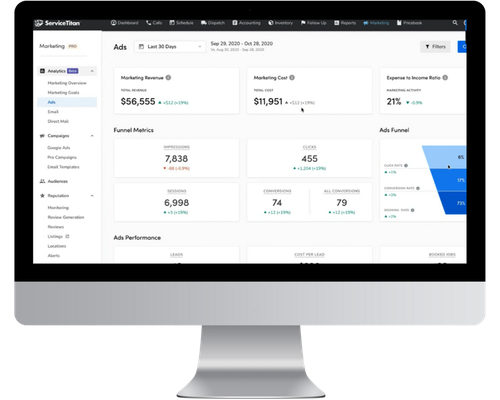
ServiceTitan is a business platform built for companies that manage field teams and on-site work every day. It helps you coordinate technicians, schedule jobs, and keep office and field teams in sync as projects move forward.
Among NetSuite alternatives, ServiceTitan is often chosen by businesses where dispatching, service execution, and technician workflows are the top priority – particularly in HVAC, electrical, and maintenance-driven service operations.
Advantages of ServiceTitan
- It is the end-to-end platform that connects office operations with field service execution in one system.
- Its Field Service app allows technicians to create and update estimates directly on-site, keeping sales and service activities connected.
- The platform includes built-in pricebooks that let field teams add products and services to estimates or invoices in real time from the mobile app.
Disadvantages of ServiceTitan
- ServiceTitan is not designed for solar. To create PV designs and layouts, solar installers have to use additional tools.
4. JobNimbus: A CRM-focused NetSuite alternative
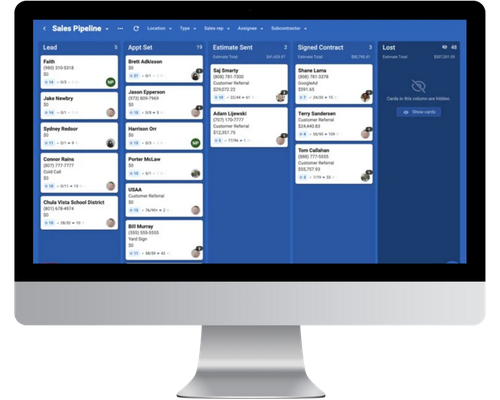
JobNimbus is a platform that combines CRM with project management. The company targets contractors (especially roofing), with integrations to keep estimating, payments, and job tracking connected.
It fits the NetSuite alternatives when you want a simpler system for managing jobs and customers – and you’re okay pairing it with accounting tools instead of forcing all-in-one ERP.
Advantages of JobNimbus
- Offers CRM with role-specific project management pricing for Admin, Sales, and Field team members.
- Supports a QuickBooks integration that syncs contacts, jobs, products/services, estimates, invoices, and payments.
- It supports contractor-friendly integrations like EagleView to attach roof measurement reports to the job folder.
- JobNimbus presents a 14-day free trial option on its pricing page.
Disadvantages of JobNimbus
- JobNimbus positions itself as CRM + project management, not as a complete ERP. So installers have to combine it with other tools related to design, accounting, etc.
5. HelioScope: A NetSuite alternative for commercial solar installation
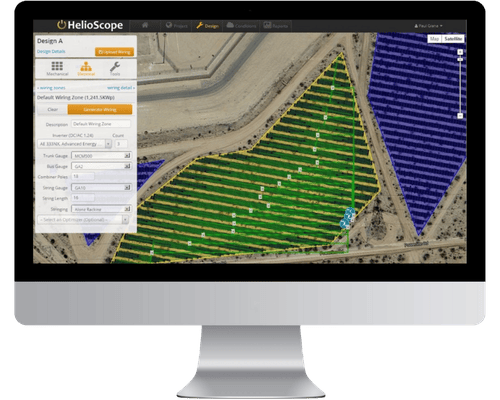
HelioScope is a cloud-based solar design and energy modeling platform focused primarily on commercial and industrial PV projects. It helps solar professionals design systems, simulate energy production, and evaluate performance using bankable modeling assumptions.
As a NetSuite alternative, HelioScope is relevant for solar installers who need accurate PV system design and production analysis, but it focuses on engineering and performance modeling rather than full business or operational workflows.
Advantages of HelioScope
- It provides detailed PV system design and energy production simulation for commercial and industrial solar projects.
- It supports bankable loss assumptions and component-level modeling used in professional solar engineering.
- The platform allows comparison of multiple design scenarios to optimise layout and system performance.
Disadvantages of HelioScope
- HelioScope does not include native CRM, project management, stock, or installation planning features.
- It is focused on PV design and energy modeling, not end-to-end solar installation workflows.
Read also: OpusFlow vs HelioScope and compare features of OpusFlow and HelioScope.
6. Microsoft Dynamics 365 Business Central: A scalable NetSuite alternative
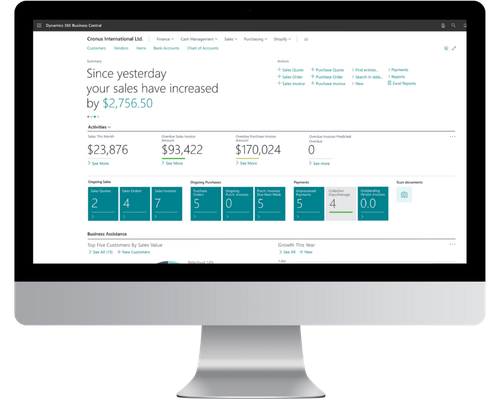
Dynamics 365 Business Central is Microsoft’s business management solution for small and mid-sized companies that need structure across finance, sales, service, and operations.
It’s designed as a general ERP that works across many industries, with strong ties to the Microsoft ecosystem you may already use, like Microsoft 365 and Power BI.
Among NetSuite alternatives, it’s often chosen by businesses looking for a well-supported, scalable ERP rather than software built for a specific installation niche.
Advantages of Microsoft Dynamics 365 Business Central
- It is a comprehensive business management software for SMEs.
- Helps manage finance, sales, shipping, project management, services, and more.
- Provides extensive official documentation and training resources for Business Central.
Disadvantages of Microsoft Dynamics 365 Business Central
- It is a broad ERP, so installer-specific workflows (especially the solar-focused) often require configuration and add-ons.
- Offers multiple Dynamics products and capabilities, which can increase decision complexity compared to single-purpose installer software.
7. Salesforce Field Service: A flexible NetSuite alternative
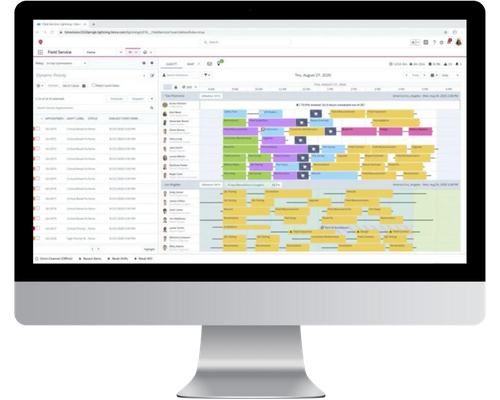
Salesforce Field Service is a cloud platform for managing a mobile workforce with scheduling, dispatch, job tracking, and inventory visibility – built for businesses that send technicians on-site.
In the NetSuite alternatives, Salesforce is often chosen when a company wants a customisable platform alongside the strong CRM, and then adds Field Service on top.
Advantages of Salesforce Field Service
- It provides managing mobile workforce operations with intelligent scheduling and automated dispatching.
- Managing work orders, scheduling, and a mobile workforce are the core capabilities.
- Inventory and asset visibility within field operations (inventory, warehouses, vehicles, and customer sites).
Disadvantages of Salesforce Field Service
- Salesforce Field Service can involve multiple paid components and add-ons, which can raise total cost as needs expand
- It is not an ERP system, so full back-office coverage typically requires additional Salesforce products or integrations.
8. Sage Intacct: A finance-led ERP among NetSuite alternatives
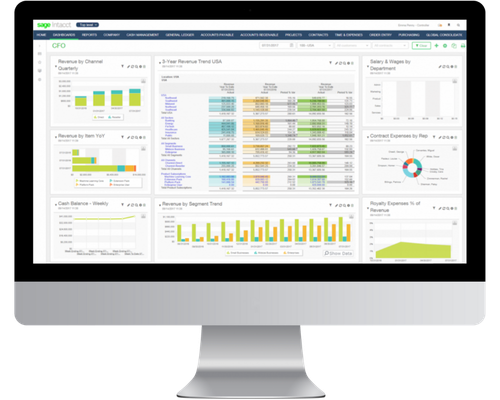
Sage Intacct tool is built around core financials. It covers accounting functions like Accounts Payables (AP)/Accounts Receivables (AR), cash management, general ledger, purchasing, and order management.
It combines the main features with multi-entity support for companies that need structure and reporting. Among NetSuite alternatives, Sage Intacct often makes sense when you want strong controls over finances without forcing every operational workflow into the ERP.
Advantages of Sage Intacct
- It includes accounts payable, accounts receivable, cash management, general ledger, order management, and purchasing.
- Offers multi-entity functionality to simplify multi-national and multi-entity management in a shared environment.
- Provides official multi-entity reporting guidelines and tooling for reporting across entities.
Disadvantages of Sage Intacct
- The feature focus is “core financials,” so installer-specific field workflows usually live in other tools. It means that for successful projects solar installers have to combine this tool with other software.
9. Acumatica: One of the cloud ERP NetSuite alternatives
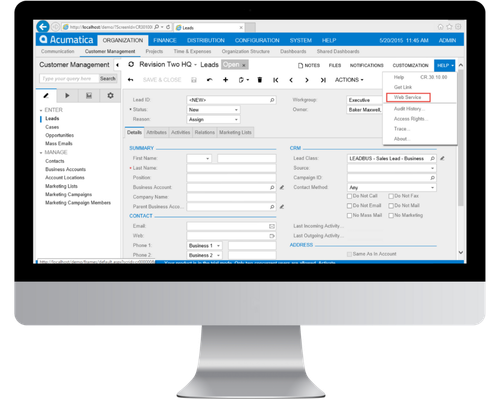
Acumatica is a cloud-based ERP designed for companies that need a high level of operational control across different departments and teams. It’s commonly used by businesses that want flexibility in how they configure their processes and scale their operations over time.
Among NetSuite alternatives, Acumatica is often considered by organisations looking for a broad, adaptable ERP that can support complex operations, rather than a system built specifically for solar or installation-focused workflows.
Advantages of Acumatica
- Fully integrated and connected to inventory, purchasing, and projects.
- Field teams can capture signatures, issue inventory, record expenses, and close work orders from the field.
- It provides modules such as CRM, project accounting, inventory management, and warehouse management.
- warehouse management. Acumatica provides a pricing calculator for certain industries like construction.
Disadvantages of Acumatica
- Because Acumatica is a broad ERP, implementation usually involves selecting modules and configuring processes to match your trade.
10. OpenSolar: A free-to-use solar NetSuite alternative
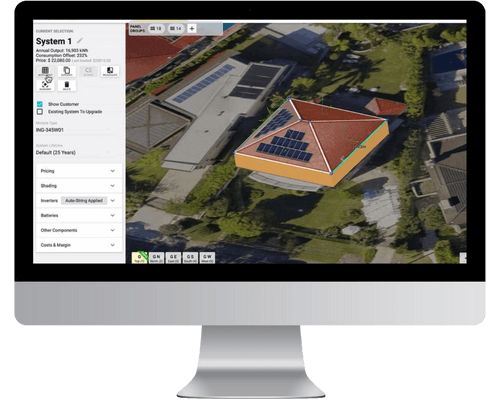
OpenSolar is a free platform created to support solar professionals with the core steps of selling and delivering solar projects. It’s built with the goal of removing software cost barriers for solar businesses, which makes it a very different option among NetSuite alternatives.
Instead of acting as a full ERP, OpenSolar focuses on helping you move solar projects forward with connected sales and project workflows, making it especially attractive for solar teams that want simple tools without committing to paid enterprise software.
Advantages of OpenSolar
- Free-to-use software system.
- Solar software trusted by 28,000+ professionals worldwide.
- OpenSolar offers proposal features like customisable proposals and integrated e-signatures.
Disadvantages of OpenSolar
- OpenSolar is explicitly solar-focused, so it’s less relevant if your installer business is multi-trade outside solar.
- OpenSolar positions itself around design/sell/manage workflows, not as a complete ERP for full accounting and procurement.
Read also: OpusFlow vs OpenSolar and compare features of these two software companies.
To explore other markets, read more:
10 best solar design software in 2026
Top 10 proven Suntropy alternatives: the expert guide
Top 10 HERO alternatives for sustainable installers (2026)
Why does OpusFlow stand out among NetSuite alternatives?
When comparing NetSuite alternatives, the key difference is often how well the software supports real installation workflows. Many platforms focus on a single part of the process – sales, design, field service, or finance – and require installers to connect multiple tools to cover the full lifecycle.
OpusFlow is built as a complete all-in-one ERP for installers of solar and other renewable technologies, with native features that support the entire workflow from lead and design to planning, stock management, installation, and invoicing. This end-to-end approach helps teams work from one system, with consistent data and fewer handovers between departments.
As a NetSuite alternative, OpusFlow combines ERP depth with installer-specific functionality, making it well suited for businesses that want structure without losing operational flexibility. Its native modules are designed to reflect how renewable installation projects are actually delivered, helping sales, operations, and execution teams stay aligned as the business scales.
If you’re looking for a single platform that connects commercial, technical, and operational processes in one system, OpusFlow offers a strong, focused choice among NetSuite alternatives. Book a free demo with OpusFlow to see how an installer-native ERP can support your end-to-end operations.